On the surface, there’s nothing wrong with being “just a girl.” It’s a social media trend marked by women sharing their weaknesses and playfully softening responsibility by claiming girlhood’s innocence. At its best, it allows women to poke fun at themselves and bond over common mistakes, quirks and shortcuts. Women use “girl math” to justify their spending habits, eat a haphazard “girl dinner” when they can’t be bothered to cook and work “lazy girl jobs” to avoid stress. It seems harmless, even self-aware.
However, the trend has concerning implications. Searching “#justagirl” on TikTok yields thousands of posts of women struggling with basic math, neglecting their health, needing a man’s help to complete everyday tasks, spending money excessively, driving dangerously and glorifying a lack of ambition.
Most of these posts are hyperbolic and weren’t made with the intent of being harmful. However, the punchline still relies on punching down. Women are framed as unintelligent, lacking life skills and not to be taken seriously, to the point that they aren’t even called women — they’re just girls.
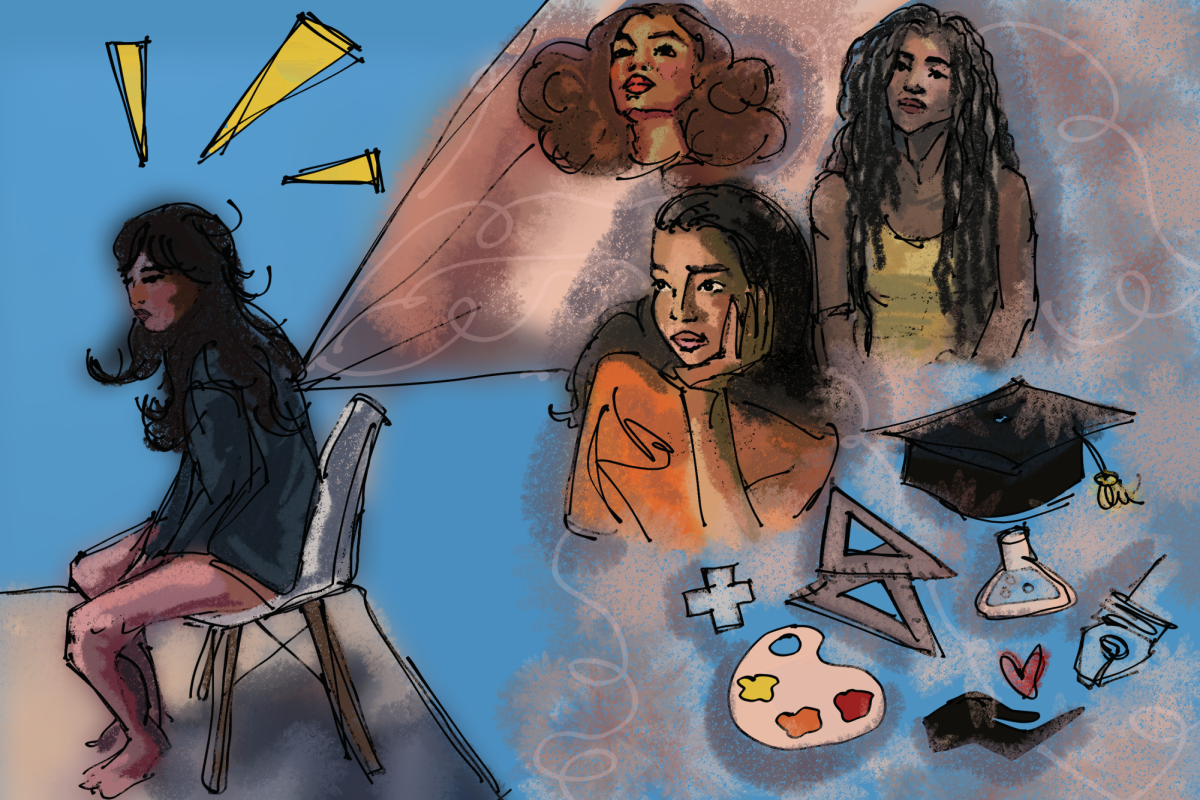
This kind of language reinforces regressive gender stereotypes under the guise of relatability and transforms the concept of girlhood into an experience of self-infantilization. Ultimately, it doesn’t matter if the original intention was to be humorous. In many ways, it’s humor that facilitates the spread of these harmful ideas.
Nicholas Palomares is a communication professor specializing in how communication affects psychological well-being. They argue that, regardless of intent, encountering stereotypes in humor strengthens neural pathways that associate those stereotypes with the groups that they target.
“Sometimes stereotypes are acceptable and positive, so I don’t think humor necessarily injects negativity into the use of a stereotype,” Palomares said. “But if the stereotype is something that is being applied to someone or groups of people in harmful ways, then I think the humor can cloud or obfuscate the negative impact.”
The stereotypes this kind of humor calls back to are, in many ways, classically misogynistic. As they continue to be referenced and spread online, that ideology is inadvertently allowed to gain a foothold in our consciousness. However, the women making jokes in this way often don’t view them as harmful. For many, the phrase, “I’m just a girl” speaks to girlhood as an empowering shared experience.
“Personally, I love being a girl,” advertising freshman Madeline Brown said. “Doing my makeup and hair and picking out an outfit is my favorite part of my day. So when I say, ‘I’m just a girl,’ it’s not like, ‘I’m so silly, I’m just a girl.’ It’s like, ‘I’m just a girl. It’s a privilege to be a girl.’”
There isn’t anything inherently reductive or regressive about embracing girlhood, but that doesn’t take away from the fact that this trend also normalizes harmful rhetoric about women.
“If I see a member of a group making fun of themselves in stereotypically negative ways, and they’re wanting me to laugh about it, then I know they’re going to be hyperbolic,” Palomares said. “I know it’s not 100% true, but is it 50% true? … I might generalize (the joke) to, ‘That must be very representative of the group because this is the person I know of this group, and this person is telling me x, y or z about their group, and making me laugh about it too.’”
The laughter that jokes evoke doesn’t protect us from the stereotypes they contain. Humor has a significant impact on how we view ourselves and others, even subconsciously, and preventing misogyny from tainting our perception of women means recognizing the deeper implications of our speech. It’s essential that women critically engage with the stereotypes that they choose to represent themselves, remain conscious of the consequences of seemingly harmless humor — and remember that they’re more than “just girls.”
Tuscano is a government sophomore from Round Rock, Texas.