The National Science Foundation will provide the University $72 million in the 2026 fiscal year for the country’s projected largest academic supercomputer.
In total, the NSF plans to award UT nearly half a billion dollars for the Horizon supercomputer project, the largest academic supercomputer in the nation. The project has already received $247 million of those funds, and will put the University as a top-ranking worldwide institution in supercomputer capabilities, said Dan Stanzione, executive director of the Texas Advanced Computing Center. The project is set to give researchers “unprecedented” artificial intelligence resources, according to a news release.
“Computation has become the center of a huge amount of not only the science and engineering research that we do at UT but really in the age of AI and large data analytics,” said Stanzione, who is leading Project Horizon. “Almost every department has activities in AI and computation, and often you’re limited by the scale of what you can do.”
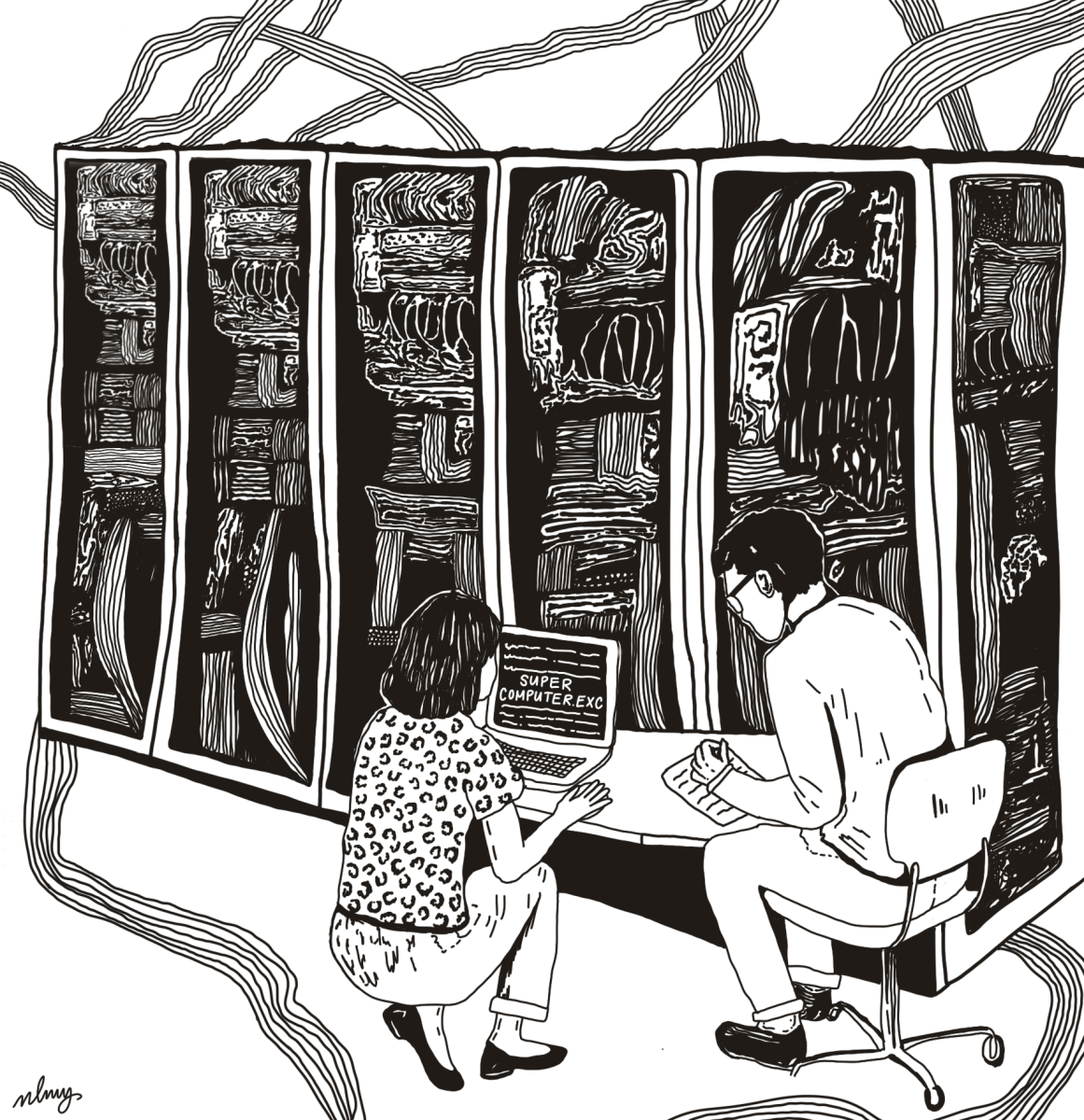
Supercomputers are largely used to run complex calculations, analyze large amounts of data and train algorithms to perform certain functions. Horizon will be running at 10 times the simulation speed of Frontera, the leading academic supercomputer in the nation, operated by the University. In addition, this will be the fifth consecutive year that UT has had the largest supercomputer nationally, according to Stanzione.
“It’s had an important impact on the caliber of faculty we can recruit,” Stanzione said. “The fact that we’re well known for having these (resources) certainly impacts our ability to hire top-notch researchers … (and) also (attracts) funding to do this large-scale research.”
Stanzione said there were challenges the team had encountered over the past few years of construction, including the cost of supercomputer parts.
“That’s been a challenge, just being in this more hyper-competitive marketplace,” Stanzione said. “Instead of being the niche of technical computing, we’re buying the same components as Microsoft, Google, Amazon and OpenAI, … who are spending hundreds of billions of dollars.”
The supercomputers are available to anyone for publishable research. The resource supports classroom teaching, lab research, competitions and clubs with no cost to the users. Students hoping to use it can ask a faculty member to set up a project and be added.
Matthew Murzaku, aerodynamics lead of the Longhorn Racing Team, said the organization uses other TACC supercomputers to simulate the airflow around car designs. He said the team plans to continue using the supercomputers for as long as the group exists.
“When we’re in the process of designing a car, we pretty much use it every single workday,” mechanical engineering junior Murzaku said. “TACC has honestly been very helpful for us. On a regular computer, it takes six hours to run a regular simulation. On TACC, it takes around 20 minutes.”
Students can also get involved with research with the supercomputer through TACC internships. Meagan Galvan, who works in an internship hosted by TACC, said it is both a supportive and educational opportunity for anyone who would like to learn about supercomputers.
“A supercomputer could do stuff a human could never do in that amount of time,” said Galvan, a mathematics junior. “You really get to see it all in action through something that is created by our University, which is amazing.”
Editor’s note: This article has been updated to accurately reflect the dollar amount in the headline. The Texan regrets this error.