Texas history is brimming with morally complicated figures.
Stephen F. Austin is widely known as the father of Texas, yet he was also active in defending and expanding the institution of slavery. George W. Littlefield was one of UT’s earliest major benefactors, but was also responsible for the memorialization of the Confederacy on iconic campus monuments. Mirabeau B. Lamar was instrumental in the foundation of Texas’ public school system, but also conducted genocidal wars of extermination against Native American tribes.
For many, there’s a clear answer to the question of these individuals’ morality. However, that isn’t necessarily the question we should be asking.
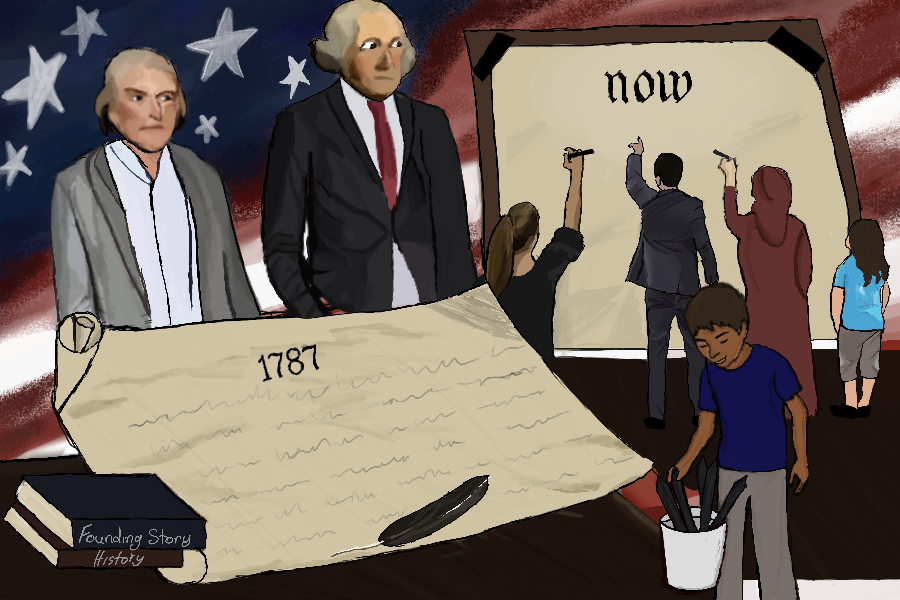
When presented with information about an individual, making these judgments is often second nature. However, immediately jumping to conclusions risks flattening history to the perceived moral standing of individuals, with little consideration for the larger systems they operated in.
History PhD candidate Danielle Sanchez specializes in Texas and Southern history. Her research revolves around figures like the Texas Rangers, who are both influential and heavily moralized. She argues that in learning and teaching about history, it’s more useful to condemn actions rather than people.
“If you can make a singular (moral) judgment about a historical figure, I think that you haven’t studied them enough,” Sanchez said. “A professor told me that one time, and I thought that was very poignant because you can say that about anyone throughout history. You can look at one part of their life and make this very strong judgment, and then not know anything about the rest of who they are and the rest of what they did.”
These judgments can be useful for understanding history. By placing historical figures within a modern moral framework, it becomes easier to make sense of their motivations and actions. We may either align ourselves with an individual or distance ourselves from them, and this mindset can be helpful in bridging the temporal gap and facilitating understanding.
“It’s good to learn about the controversy, and it’s good to learn about people’s past mistakes,” business freshman Taber Torres said. “Either you don’t repeat them, or see what they had caused or what consequences their actions had. You don’t have to shy away from those tougher situations.”
Condemning individuals may make this effort for understanding more difficult. Often, we’re reluctant to be perceived as affording nuance to those who don’t deserve it, especially controversial historical figures. With nuance comes the risk of inadvertently validating reprehensible actions or beliefs in the name of moral relativism.
However, avoiding condemnation of individuals isn’t the same as validating them. There are many historical figures who deserve outright condemnation — but this shouldn’t come at the cost of fully engaging with history. The goal isn’t to understand who was wrong in the past, but what was and continues to be wrong today.
“Getting really caught up in ideology is an issue, especially for Americans, because we tend to think we’re really right all the time and everyone else is wrong,” Sanchez said. “Other moral systems throughout the world and throughout history have changed and differed based on place, people, time and what they’ve grown up with. Understanding that and trying to see morality as more fluid would be very helpful as a society in making these very strong judgments about people from the past, or even in the present.”
Ultimately, people from the past are just as multifaceted, unique and emotional as we are, operating within a society just as complex as ours. In many ways, it’s this idea that’s vital to engaging with history more effectively; fixating on personal morality isn’t necessarily as useful as approaching history with the goal of nuanced, complete and systemic understanding.
By focusing our judgment on the actions people took, the institutions they aligned themselves with or the ideologies they perpetuated, we’re able to understand history beyond the personal failings of these complicated individuals — and better equipped to learn from them.
Tuscano is a government sophomore from Round Rock, Texas.