The University’s polling locations saw a 145% increase in ballots cast in the primary election last week compared to the last midterm primary in 2022.
Over 10,000 ballots were cast at UT polling locations this year across the early voting period and on election day, in comparison to the nearly 4,100 ballots cast in 2022. Out of the two polling locations on campus this year — the LBJ School of Public Affairs and the Texas Union — the Union received most of the votes.
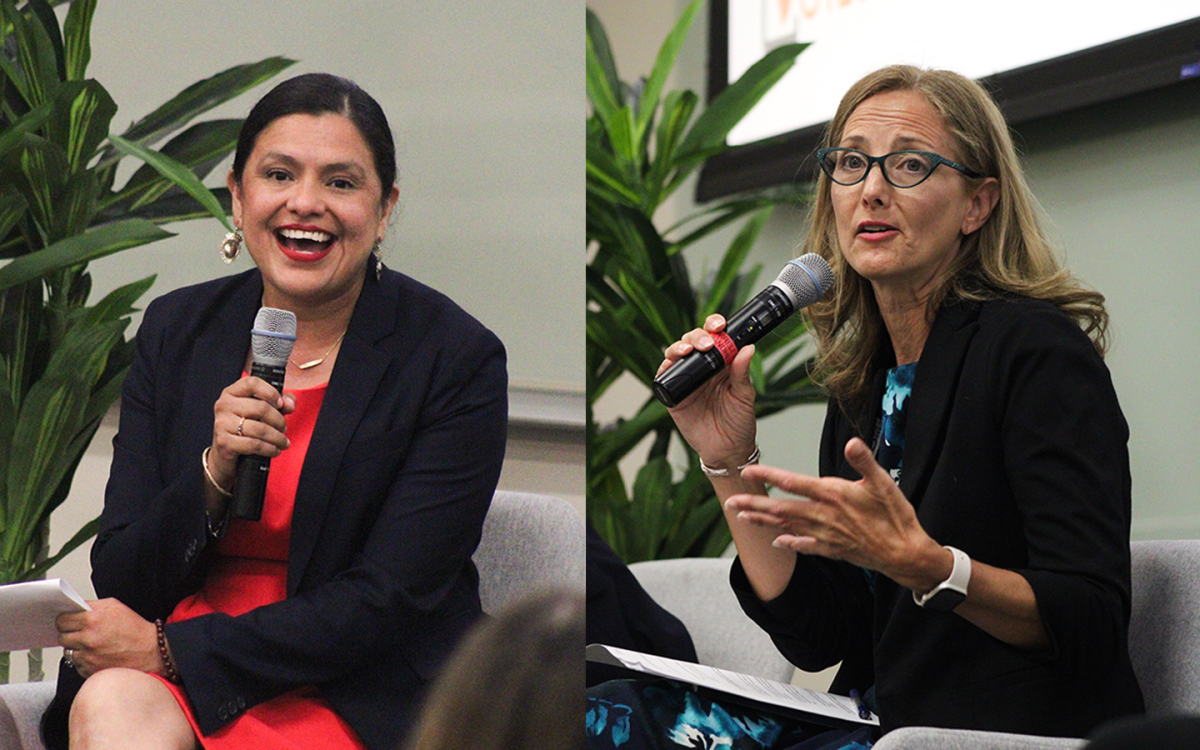
Travis County Clerk Dyana Limon-Mercado said the University campus has “more polling place access (and) more machine equipment allotted than anywhere else in Travis County,” as well as the most walkable access to these locations.
Limon-Mercado said the Union saw a large increase in voters in the last two days of early voting, when it extended hours until 10 p.m.
“People sometimes think that we have long lines because we don’t have enough ballot marking devices,” Limon-Mercado said. “But it mostly factors in because the ballot was so long … This combination of new, first-time primary voters plus a long ballot really started to back up the line.”
Joshua Blank, director of research for The Texas Politics Project, wrote in an email that the 2018 and 2026 primary midterm elections had higher turnout at UT polling locations because “Democratic primaries saw candidates who specifically sought to turn out younger voters.”
“The 2026 race saw a competitive primary at the top of the ticket in both the Democratic and Republican primaries for U.S. Senate,” Blank wrote. “Competitive races generally tend to lead to higher turnout compared to years in which the races are non-competitive.”
Becca Alonso, TX Votes program coordinator, said she expects to see even higher turnout for the midterm elections in November because “people feel more incentivized to vote if they have to choose between a political party.”
Sofia Westmoreland, a political communications junior and vice president of TX Votes, said for the primary elections, the organization focused on registering students to vote and informing them about every candidate and issue on the ballot.
Westmoreland said she would like to see more polling locations on campus to reduce the long wait times on election day, as it could potentially increase voter turnout even further.
“I don’t see any harm in having more, but I do see the detrimental harm in having too little,” Westmoreland said.