“Sender” premiered at South by Southwest on Saturday, opening with a woman, played by Jamie Lee Curtis, chopping onions, before opening a mysterious package she receives filled with used shin guards and grass clippings. Suddenly, she suffocates herself with bubble wrap.
From the start, Russell Goldman’s debut feature film, “Sender,” based on his 2022 short film, “Return to Sender,” proved hard to follow. The viewer does not get any context in the start of the film, and it’s just confusing, rather than frightening.
Cutting to Julia Day (Britt Lower) in an Alcoholics Anonymous group, she runs into an old co-worker, Dustin (Utkarsh Ambudkar), where viewers learn of her three-week-long sobriety. She shares a cigarette with Whitney (Rhea Seehorn), a seemingly harmless interaction that would later become important.
Back to Curtis’ character, she releases the plastic, gasping for air as she breaks the shin guards in half.
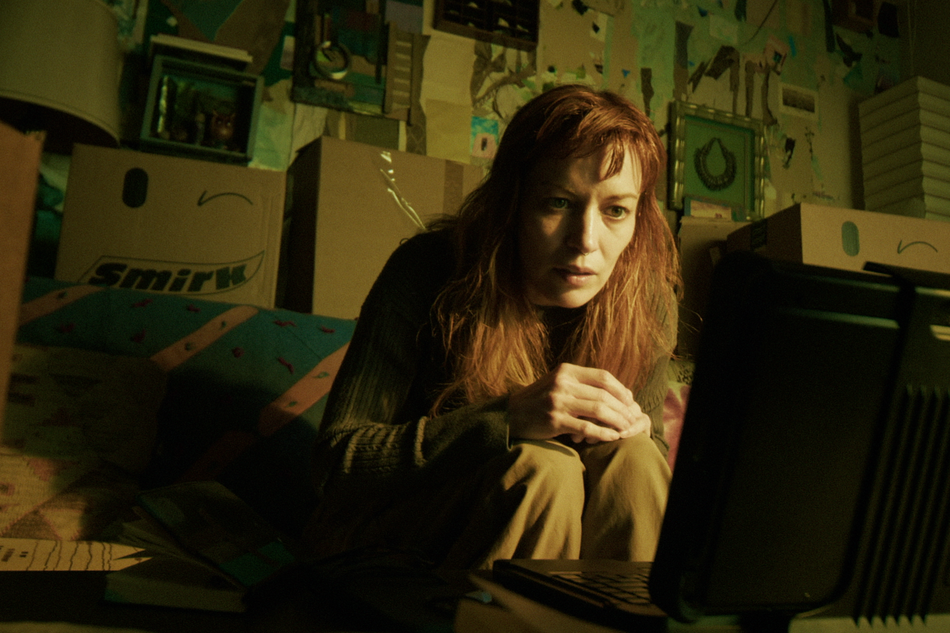
The film heads to Day’s house, where she receives a delivery from a company named “Smirk.” She opens the package that holds her usual lipstick, only she didn’t order it.
Day receives more packages, trying to pretend everything is normal to her sister, Tatiana (Anna Baryshnikov), who is convinced she needs help. From blenders to security systems, the number of easter eggs in the film overwhelms the need for them.
As Day researches online, she reads a headline: “Death of delivery victim ruled a suicide.” It cuts to Curtis’ character slitting her throat with the shin guards, then back to Day, feeling her own neck.
As strange and gruesome occurrences continue, the film seems like it’s out of a random idea generator. Coyotes, protein powder and an unnecessary affair: it’s hard to tell what to pay attention to in the interest of the mystery.
Lower’s performance as Day shines as Goldman puts the viewer inside her chaotic mind. In a standout scene, a camera films Lower from above, hiding in the bathtub in fear of surveillance from the customer service line she opted to work for, as a means of figuring out the sender.
The viewer eventually finds out the culprit in a dramatic turn of events, but is left to wonder why the other people in the story were acting so off-putting. Surely, corruption and manipulation occurred within the company, but the chosen instigator makes zero sense.
During the post-film Q&A, Goldman and the rest of the cast talked about the film’s commentary on addiction. As the audience thinks more about what they watched, the more the messiness fits. Aside from the obvious ties, the scatterbrain of the random elements of the film makes a little more sense when thinking about it through that perspective.
“I’ve been sober for a very long time,” Curtis said. “I don’t think I’ve ever seen a depiction of what it looks like better than (seeing ‘Sender’) today. That is as great an example of the conundrum and the complications of the addict mind and the struggle, that push, pull, that leaning in, that longing, that connection and being. It’s exquisitely told.”
3 flower vases out of 5