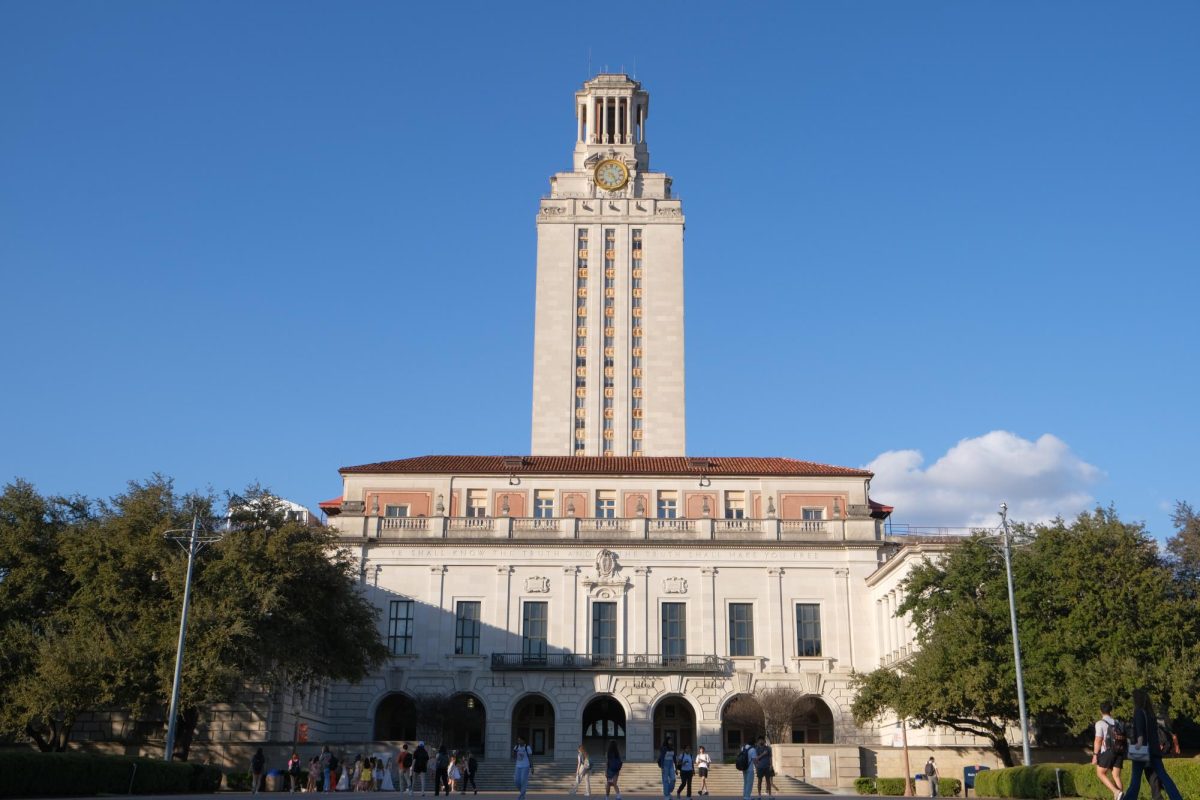
A 2025 proposal from the Trump administration to UT was meant to collect feedback rather than be signed or rejected, University President Jim Davis said in an exclusive interview on Thursday.
The Trump administration sent and asked for comments on the “Compact for Academic Excellence in Higher Education” to nine universities, including UT, in October 2025. The compact offers to prioritize federal funding for institutions that sign on in exchange for requirements such as a 15% cap on international student enrollment, five-year tuition freezes, implementing a stricter definition of “gender” and rewriting rules that “purposefully punish” conservative ideas.
The deadline for institutions to provide feedback was late October 2025, with a signing deadline of late November 2025. Though Kevin Eltife, chairman of the UT System Board of Regents, said the UT System would “(work) with the Trump administration on it,” the University did not announce a decision.
Davis said he interpreted the compact as not a proposition to sign, but rather an idea to provide comments on. He said the compact has not been on his radar since he was asked to provide feedback on the proposal in October.
“There’s nothing for me to sign, and I’m not in a conversation to debate or discuss or negotiate a thing to sign,” Davis said.
Seven of these institutions have already publicly rejected the compact, including Massachusetts Institute of Technology, Brown University and the University of Southern California, Vanderbilt University was also sent the compact, but the institution’s chancellor said they were not asked to sign but instead “provide feedback and comments” about the compact in a statement.
Davis said while other universities may have felt the need to publicly accept or decline the compact, that was not his interpretation.
“I didn’t perceive that we had a thing to accept or reject when it was sent over,” Davis said. “I saw an invitation to comment about an idea, and so we commented about the idea, and it has not materialized into a thing that has grown from there.”
In the weeks after the offer was sent and made public, students, faculty and alumni alike expressed opposition to signing on. An alumni-made petition garnered over 1,900 signatures, and other alumni withheld their donations and took to social media to say they would only keep funding UT if it rejected the compact. Alumni objected to the compact’s demands and expressed fears over “string-attached money.”
Since then, President Donald Trump said other institutions were open to signing on to the compact in a Truth Social post.
In an October 2025 interview with The Chronicle of Higher Education, William Inboden, the University executive vice president and provost, said UT already has many rules and policies in place that align with the compact’s demands. However, he said he worried about the enforcement aspect, especially within a public state institution.
“We’re certainly committed to the cardinal tenets of academic freedom,” Inboden said in the article. “As written, some of the procedural enforcements of the compact would clash with state law and some of our other institutional prerogatives.”
News Editor Maryam Ahmed contributed to this report.