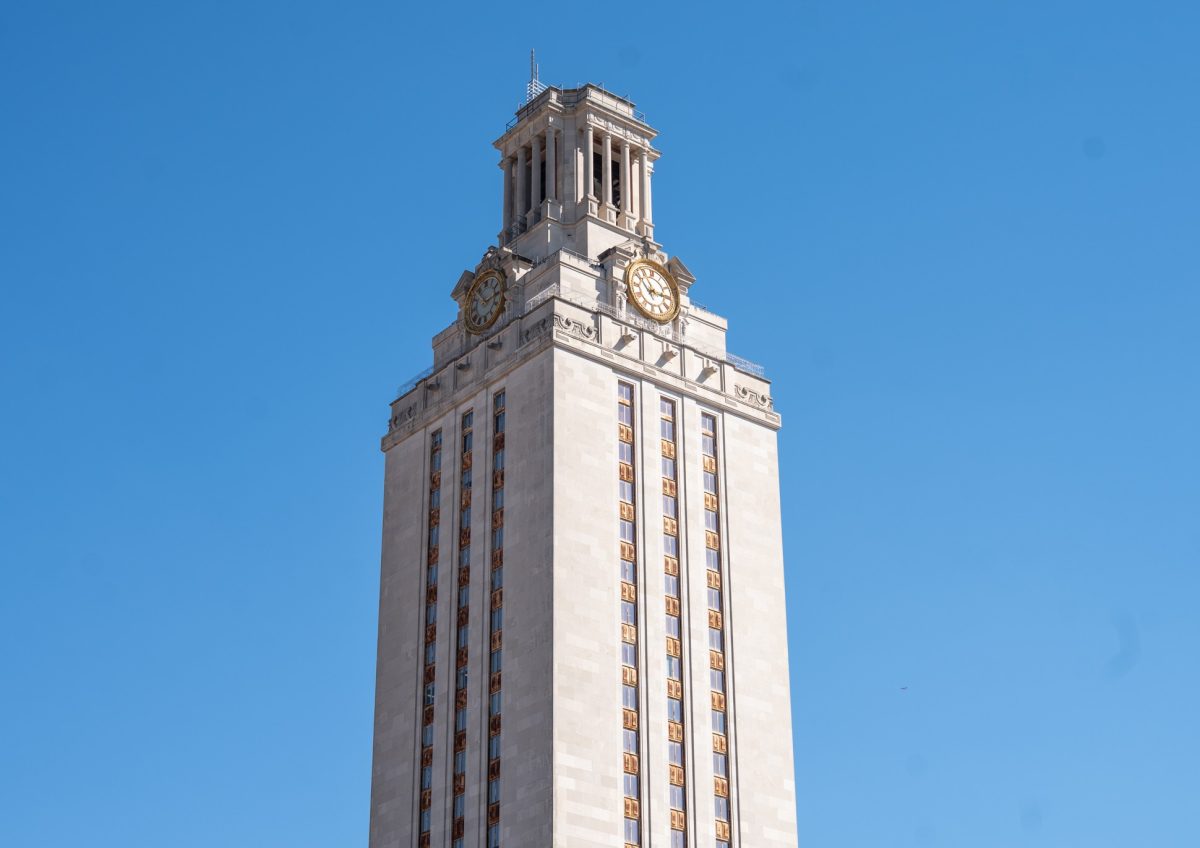
The UT System said it is reviewing a letter it received on Wednesday from President Donald Trump’s administration received on Wednesday that offers access to federal funds in exchange for abiding by requirements that align with the administration’s values.
The administration sent the “Compact for Academic Excellence in Higher Education” to UT-Austin, among eight other institutions, the Wall Street Journal and The New York Times reported. The compact also requires signing universities to restructure rules to not “purposefully punish, belittle and even spark violence against conservative ideas,” according to the Wall Street Journal.
Universities that sign on to the “compact” will receive benefits like federal grant funding, in exchange for meeting certain requirements, such as a 15% cap on enrollment for international undergraduate students, five-year tuition freezes, adopting a stricter definition of “gender” and banning the use of race or sex in their hiring or admissions process, among other requirements.
A University spokesperson did not confirm the contents of the compact.
UT System Chairman Kevin Eltife said the system will immediately review the compact, signed by the Secretary of Education Linda McMahon, in an email statement on Thursday.
“The University of Texas System is honored that our flagship — The University of Texas at Austin — has been named as one of only nine institutions in the U.S. selected by the Trump administration for potential funding advantages under its new ‘Compact for Academic Excellence in Higher Education,’” Eltife said in the statement. “Today, we welcome the new opportunity presented to us, and we look forward to working with the Trump administration on it.”
Education professor David DeMatthews said he believes the letter’s language oversimplifies beliefs in institutions. He said he is unsure how “conservative” ideas in universities would be properly determined and measured.
“It’s important that universities create spaces where there is rich dialogue across different viewpoints, using different bodies of knowledge, different methodological approaches,” DeMatthews said. “There’s lots of room for higher ed to improve. I just don’t see a 10-point memo that treats human thought and perspective and viewpoints as a binary as being very helpful.”
Although the compact demands a cap on international enrollment, tuition freezes and adopting a stricter definition of gender, the University has already implemented or been affected by some of these changes.
Earlier this week, the UT System announced it would audit classes related to gender studies at all their institutions. That move followed the passage of Texas Senate Bill 37, which handed more power over curriculum to universities’ governing power, and Texas House Bill 229, which established a gender binary into law.
In November 2024, Gov. Greg Abbott announced Texas public universities, including UT-Austin, would extend their tuition freezes from the 2023-24 academic year through 2027.
Additionally, the University’s international student enrollment in 2025 is down 1.7% from 2024, according to a news release. The University reserves 90% of its spaces for Texas residents, which means UT-Austin already has a 10% cap on international and out-of-state student enrollment.
Overall, although he believes higher education could be improved, DeMatthews said he believes the compact could prevent a proper learning environment at higher institutions.
“The U.S. government engages in contracts with universities following civil rights laws and protocols around data security with research grants,” DeMatthews said. “But something of this magnitude and some of the things that are included in there … are quite strange.”