The sound of birds chirping and voices of the Sweet Home Baptist Church choir rang through the air on a sunny Sunday afternoon in Pease Park. People walked around from stand to stand, buying lemonade and talking to familiar friends, while others lay out on the grass, enjoying the day. The RISE Freedom Festival was in full swing.
The RISE Freedom Festival is an annual event celebrating Black freedom communities, groups founded by formerly enslaved people after emancipation. These communities became centers of Black culture and community, according to Pease Park Conservancy’s website. The festival is part of Pease Park Conservancy’s interpretive plan to address the racial injustices of Pease Park’s history in collaboration with the RISE Project. The second annual festival took place this March.
RISE began as a documentary project that captured the history of Black freedom communities in Austin. The organization has since expanded to include digital archives, lessons and events, sharing what they call “untold histories,” according to the organization’s website. RISE also works to develop curriculum in middle, high school and college-level classrooms.
“The people who were involved in the creation of (the interpretive plan) just wanted to make sure … that the Conservancy was telling meaningful stories about the park and from the park,” said Allison Johnson, director of community engagement at Pease Park Conservancy.
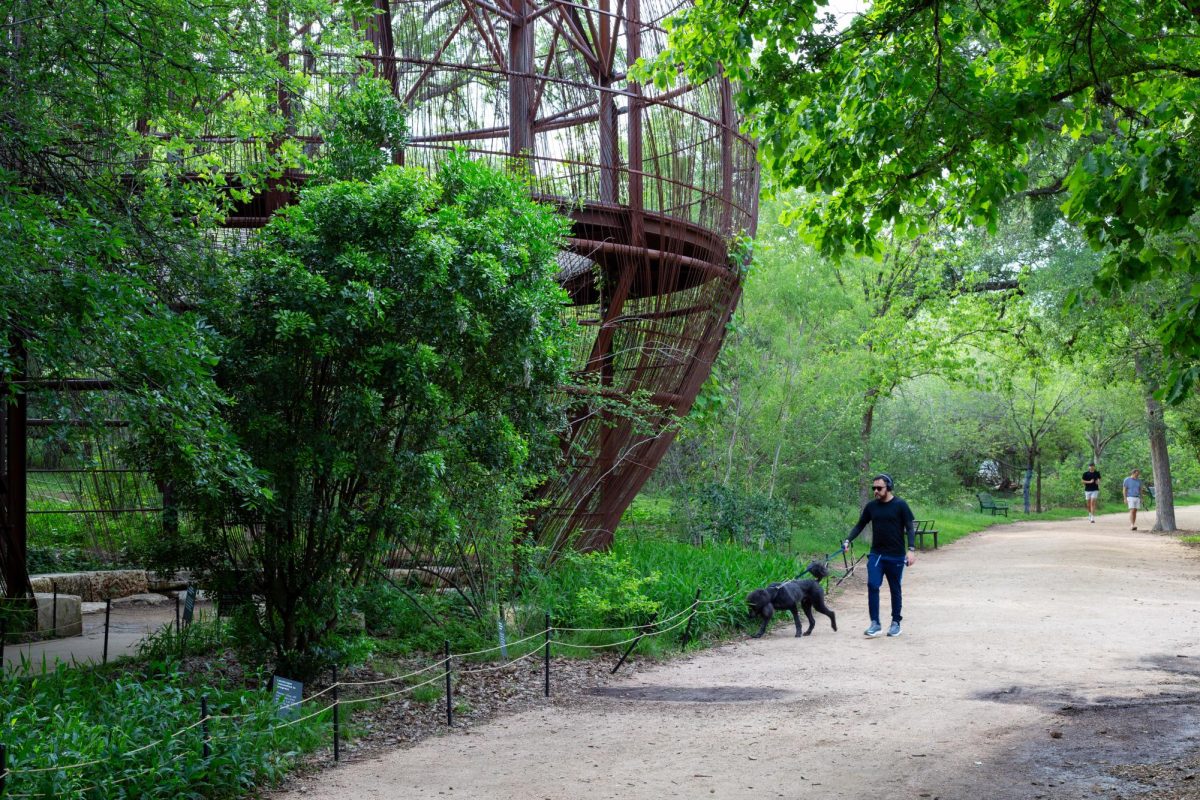
Pease District Park, Austin’s first public park, is nestled around Shoal Creek and spans 84 acres. The park is abundant with trees, trails and grassy hills. But the park has a history rooted in slavery and racial discrimination, according to Pease Park Conservancy’s website.
Former Texas Governor Elisha M. Pease, first elected in 1853, owned a 365-acre plantation that later became part of Pease Park, according to Pease Park Conservancy. Pease supported the Union in the Civil War but concurrently enslaved over 37 people, according to the Conservancy’s website. Pease officially deeded his land to the city of Austin in 1875.
After the Civil War, freed enslaved people established communities throughout the city, and a subset of the land previously owned by Pease became a freedom community called Clarksville, according to the Texas State Historical Association. In 1928, the city of Austin established a master plan that intentionally withdrew services like sewage and water to force Black residents into East Austin and legally segregate the city. Black residents of Clarksville shrank and moved away as a result, according to a map published by Pease Park Conservancy.
By 2008, the park had experienced multiple floods and was in a state of disrepair, according to the Texas Recreation and Park Society website. Pease Park Conservancy, established by Richard Craig, began as a volunteer organization whose purpose was to help restore the park and transform it into an inclusive and connective environment for the community, according to Pease Park Conservancy’s website.
The Conservancy’s 2019 Interpretive Plan is the outline Pease Park uses to explore, explain and acknowledge its cultural, historical and geological histories, according to the Conservancy’s website. Specifically, the plan’s second theme directly addresses the history of slavery, segregation and exclusion of Pease Park and how the Conservancy is working to create a welcoming environment in acknowledgement of this.
Johnson said the Conservancy wanted not only to share the history of the park’s land in this plan, but also to resonate with the community by being open about this knowledge.
“We now recreate on this land, but we know that it has a history that was really important and had some struggles and difficulties,” Johnson said. “We have to acknowledge all of those components of the history of the land that we now just get to enjoy.”
Johnson said the Conservancy surveyed community members about how Pease Park should honor Black history. It found that Black community members wanted to honor the park’s history through events and programming, going beyond the stories the Conservancy had been publishing on their page.
To do that, the Conservancy created “Lives Remembered: Black History in Pease Park,” a walking tour of Pease Park that recognizes the Black people enslaved by Governor Pease and shares some of their stories, according to Pease Park Conservancy’s website. The tour was developed in partnership with Black Austin Tours.
RISE director Funmi Ogunro said the organization has become a community archive for all of Austin.
“I think it’s beautiful that we have a tour where you can learn about some of the some of the history as it relates directly to that part, and then you can come to an event where we are commuting, we’re celebrating, we’re honoring elders from Black freedom communities,” Ogunro said.
Tandera Louie, an Austinite and RISE volunteer, said the project has been beneficial for the Black community, allowing locals to take control of the narrative.
Andrew Hairston, director of the Education Justice Project at Texas Appleseed, said he wishes there were more events like The RISE Freedom Festival. Texas Appleseed is a non-profit that utilizes volunteer lawyers to support social, economic and racial justice for Texans.
“It’s important for people in Pease Park to understand that history of the land and its namesake, and (to) always be striving to rectify the harms of the past and make a better future,” Hairston said.
Raasin McIntosh said the partnership between RISE and the Conservancy is making “creative magic” for the Black community, uplifting voices, elevating history and tying generations together. McIntosh is the founder and CEO of Raasin in the Sun, a nonprofit that aims to “transform spaces” through art, culture and community.
“(It feels) like it’s a family reunion in a historical park that Black people originated,” McIntosh said. “It’s wonderful to see all these amazing leaders and organizers that are of color and see (their) tents up.”