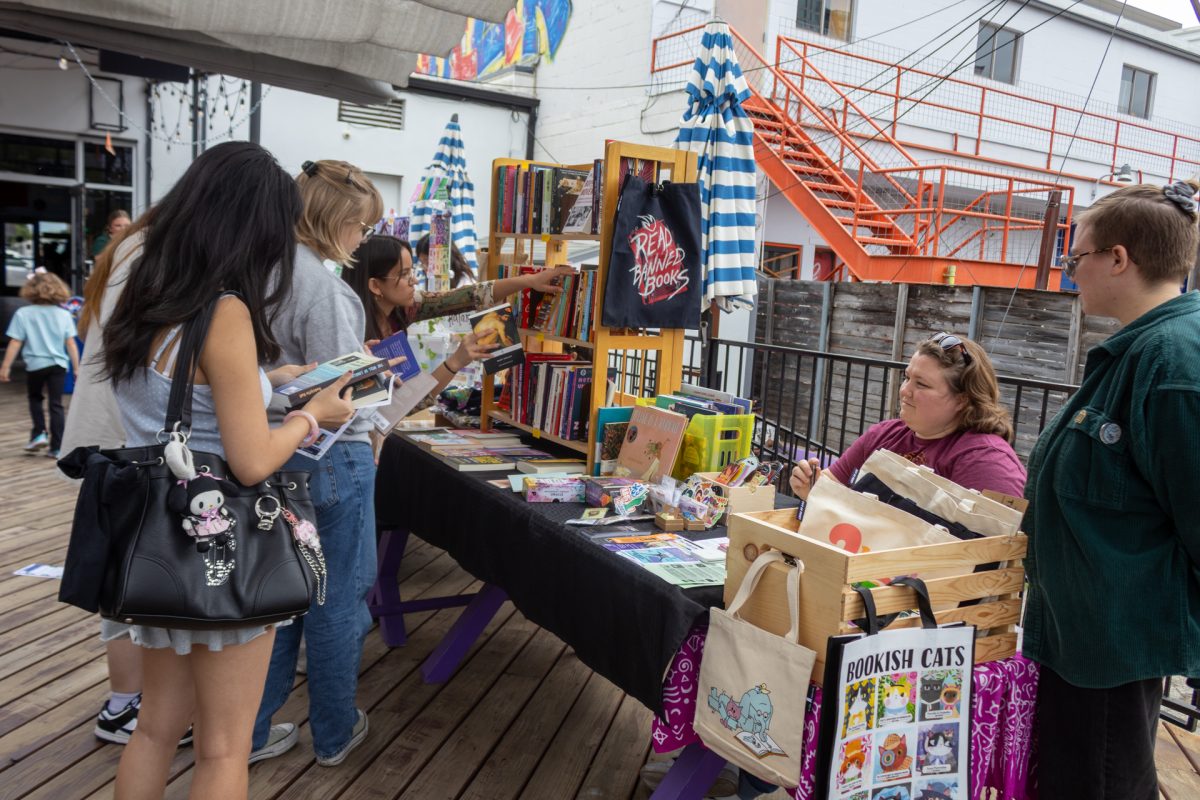
At the Austin African American Book Festival, tables are lined up with vendors and authors looking to sell their novels. With the opportunity to see Black authors, attendees wander around the event space and glance at all of the books offered to them.
The Austin African American Book Festival is an annual event that houses American authors who embody Black literature. Taking place at the George Washington Carver Museum from 10 a.m. to 4 p.m. on June 28, the festival offers free admission to all and invites book lovers from all over the Austin community. With a theme of “Our Stories, Our Voices,” the lineup includes authors such as Paul Coates, Marita Golden and keynote speaker Walter Mosley.
“To discover, to stumble upon (and) to see, to hear, a writer who looks like me and sounds like me, that opened a whole new world for my love of reading,” founding director Rosalind Oliphant said. “That has been the passion that has fueled this life, this career of being a bookseller (and) organizing a festival in its 19th year.”
Oliphant founded the first festival in 2007. Following her graduation from UT in organizational communication in 1987, she founded a bookstore in Austin called Folktales, which focuses on African American literature. After she closed the bookstore, she worked with Evelyn Anderson in the first three years of the festival.
“In 1992, it was very difficult to find books by Black authors,” Oliphant said. “Having a bookstore, taking my knowledge of literature and creating a space for (people) … to learn about different authors and …. history and literature … has been very rewarding.”
Oliphant invited people from her network of people to help produce an event with over 400 attendees. For example, Mark Cunningham, moderator of the event, also graduated from UT’s Moody College of Communication. He said he discovered part of his love for Black literature during his time at UT.
“(Helena Woodard and Jennifer Wilkes) opened my eyes to things that significantly changed the way I thought about literature (and) particularly the way I engage with Black literature,” Cunningham said. “(They) introduced me to authors I didn’t know existed (and) authors I probably would never have read.”
As a large festival, it involves many moving parts, from the authors who travel to showcase their stories to the founding director piecing it all together. The emcee, Christopher Michael, serves as one of the festival’s key pieces. Michael said the book festival provides a chance for the people involved to have their voices heard.
“The primary goal is giving all of us an opportunity we wouldn’t normally get,” Michael said. “(At a) larger (event) like the Texas Book Festival, we would absolutely get swallowed because there are bigger authors. Now, we have a smaller festival concentrated around one group of people with diversity within their culture that patrons can come and focus on.”