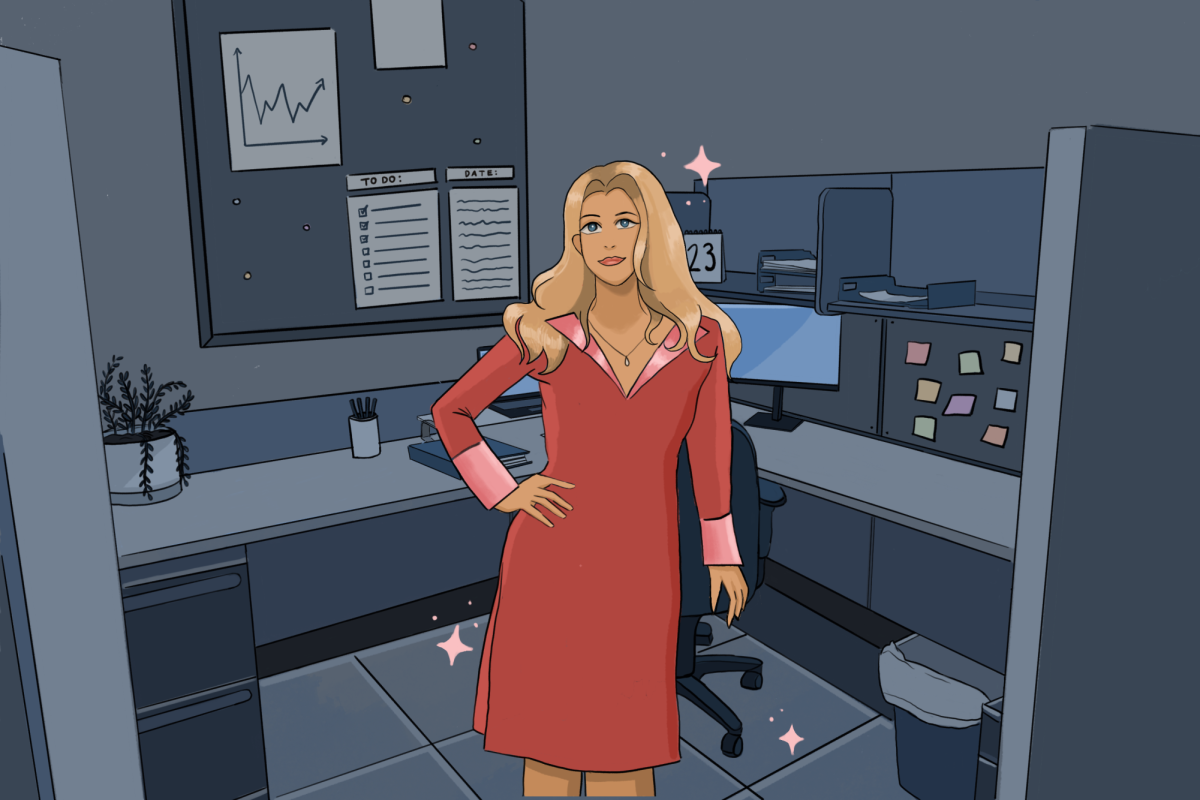
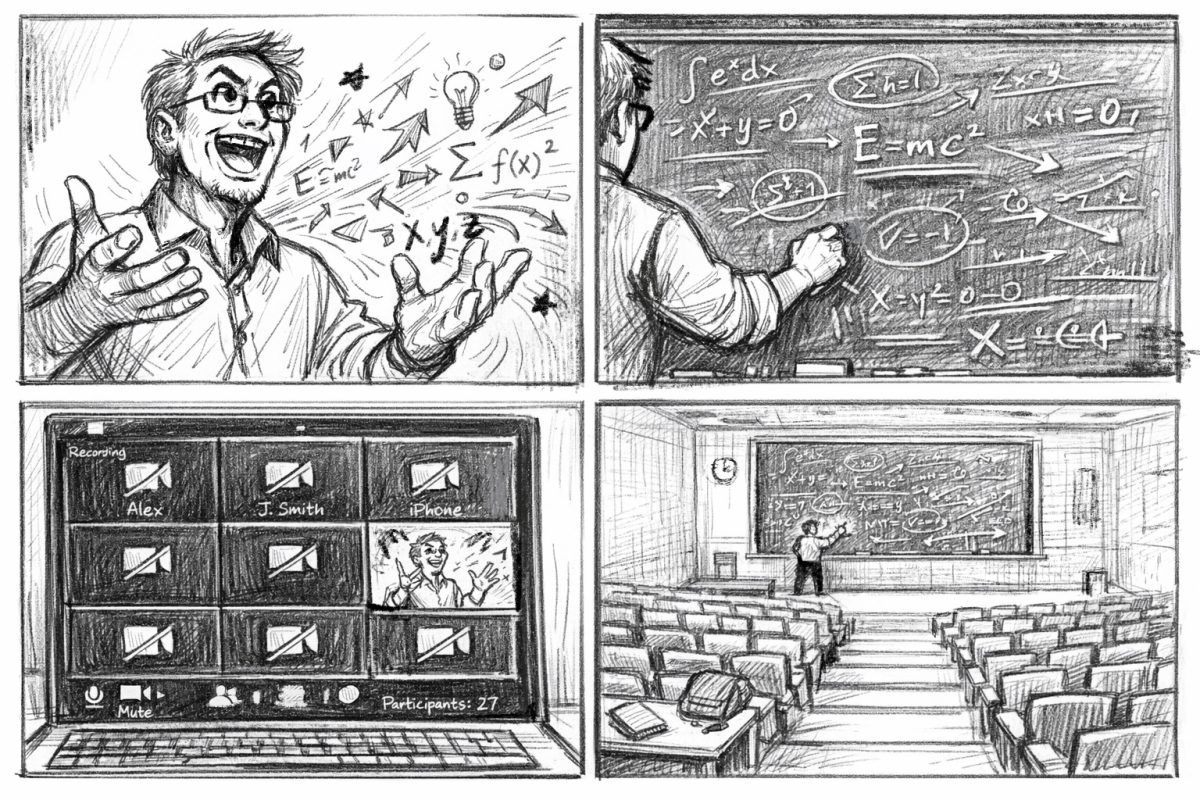
What does it mean to live a normal life? Coming out of college, the traditional goal for many was to get a well-paying job, live in a nice place and socialize with people their age. Due to the current economic struggles and social fragmentation, many in our generation are struggling to achieve this goal, experiencing loneliness and isolation. However, the traditional 9-to-5 work schedule still provides the opportunity to find essential social connections.
It is important to understand the current difficulties that young adults are facing. Chris Beevers, director of the Institute for Mental Health Research, explained the paradoxical dichotomy of modern connection.
“Young adults are more connected to other people via online methods, but at the same time report higher levels of loneliness than ever,” Beever said. “What we’re finding is that for a lot of adolescents, just having a lot of contact with friends online is not sufficient.”
Therefore, a traditional in-person work environment may be more optimal for socialization because working virtually does not provide the same personal experience.
Chemistry freshman Jesse Bridwell expressed his concerns with a fully virtual employment.
“If you’re in your home 24/7, you can box yourself in and get in a little depressive episode,” Bridwell said. “I can’t imagine it’d be too good.”
However, the workplace is not a straightforward solution to loneliness. Although the workplace does undeniably create opportunities for in-person connections, much of that is dependent on the workplace culture.
“If the culture is basically everybody goes off, works in their office, eats lunch by themselves and then they go home at the end of the day, that doesn’t really do a lot for increasing interaction,” Beevers said.
Thus, it takes an active effort to create connections amongst coworkers. Another way to establish personal connections is through shared interests.
“If you have that common interest, it’s almost like an automatic entry into a conversation,” Beevers said.
While forming personal connections through work helps combat isolation, employees must still maintain and strengthen those connections. Beevers’ research found that spontaneity may be the key to fighting off feelings of loneliness.
“We collected Bluetooth signatures, which helped us understand when they were spending time with people versus without people,” Beevers said.
With this data, Beevers’ team determined that performing a variety of activities was beneficial for one’s mental health.
“The people who reported being the least lonely were the ones spending time with the same people, but having some variety in their day-to-day living,” Beevers said.
Therefore, the solution to our current crisis of loneliness requires both routine and spontaneity. Young adults’ daily experience in the workplace should be seen as an opportunity to establish new social connections. However, to strengthen these connections, individuals should embrace novel experiences, taking chances on new activities. The 9-to-5 work schedule has long been seen as a producer of boredom, but with the right mindset, living 9-to-5 can be an adventure.
Stark is a chemical engineering freshman from Orange County, California.