Inside the Texas Union, students can be found studying, eating lunch, laughing with friends, playing video games, bowling, watching movies or performing music. The building carries 92 years of memories from students who have filled the same spaces.
“These buildings would be nothing without the people,” said James Buckley, director of facilities and operations for the University Unions. “Students being in the spaces, creating the energy and creating that spirit that lives in the vibe throughout the building and our buildings, that’s what makes it.”
Centrally located off Guadalupe Street, the Union offers a good environment for students studying or relaxing.
“It feels cozy,” Michelle Estrella, an arts and entertainment technologies sophomore, said. The architecture and the lighting is really nice. …There’s more of a community. … it’s very homey, and it’s also in a good location.”
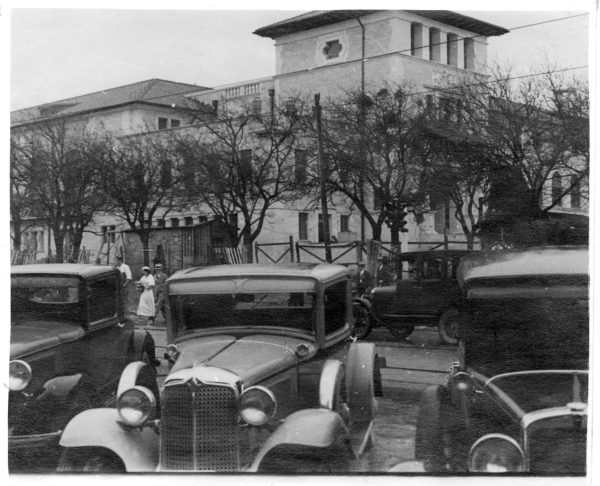
The Union’s creation is partly due to 1928 UT students, who advocated for a “home and neighborhood for the student,” according to a Daily Texan article from 1935.
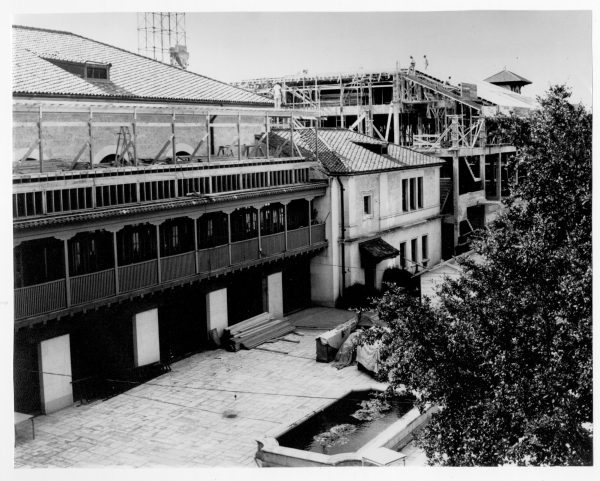
Since it opened in 1933, the Texas Union has strived to be a center for student life and a place for community, entertainment, culture and to create a more “intelligent interest in and love for the University of Texas.” It was created as part of a project spearheaded by the Ex-Students Association, now known as Texas Exes, and the University’s Board of Regents to construct a series of buildings. This reflected the University’s goals to create facilities that matched UT’s growing popularity as the state’s flagship university. The building was designed by Paul Cret, who also designed the Tower and Main Building.
The building’s original ground floor featured a cafeteria, a lunch room, a tea room, private dining rooms and a soda fountain, according to a Daily Texan article from 1933. The second floor, now the third, featured a ballroom and separate men’s and women’s lounges. The third floor, now the fourth, was divided into smaller rooms used for club meeting spaces. Many of these spaces, including the ballroom and meeting rooms, exist today.
The ballroom soon became the main venue for dances and allowed the school to take part in student entertainment, according to Local Memory, a public history project in Austin, Texas. In the ‘30s, the Union hosted All University Dances every Saturday of the semester, which were referred to as “Germans” and founded by the German Club in the early 1900s, originally held at off-campus event centers. The Union became the biggest host of live music acts in Central Texas in the ‘30s due to performances at Union dances. Around the mid-‘40s, most dances returned to being put on by student organizations.
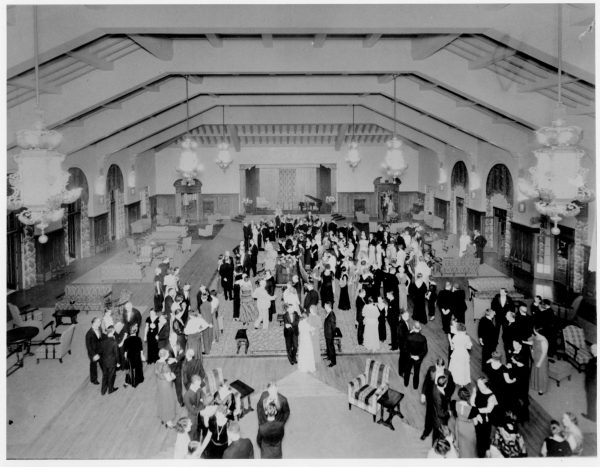
As dances became less popular, shifts in student recreation activities led to the 1960 Texas Union Theatre and the Union Underground, which featured bowling and table games and still serves students today.
“At the time, (college unions were) called the living room of campus,” Buckley said. “It’s not formal, but it’s that gathering spot. … But as we got into the ‘60s … recreation became a big staple.”
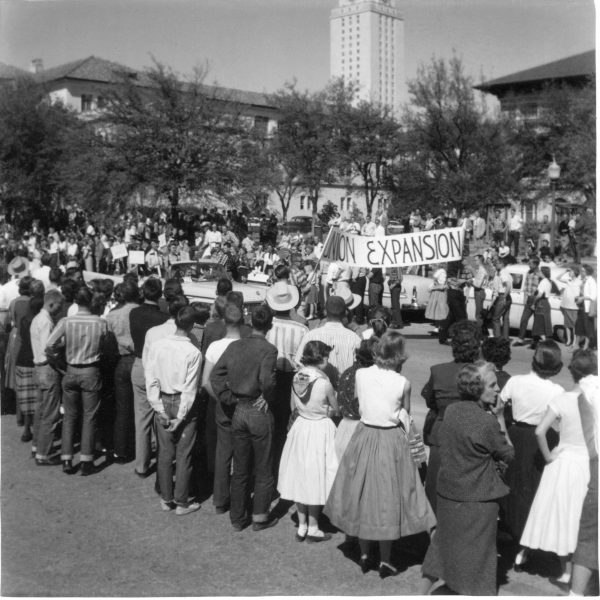
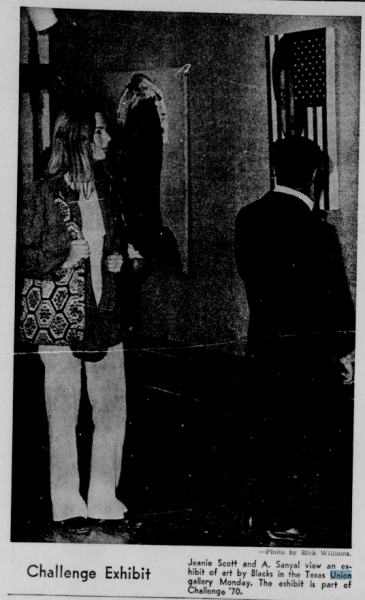
Since 1933, students have participated in various committees that help plan Union events, such as coffee chats with professors, dance lessons, concerts and art exhibits. Free movie screenings have been offered to students since the ‘40s. In the ‘60s, the “Charm Committee” held fashion shows and advised students on what to wear to campus events. Committees like these haven’t gone away; they have evolved with student life.
Previously called the Student Events Center, in 2013, the organization received its current title, Entertainment + Events, which has eight committees, according to University Unions. They are the largest student-run event planning organization on campus, which aims to be at the center of student life.
“A lot of our events come from students, from their own ideas, and that’s not something that a lot of students can say they have the experience doing,” said economics junior Janice Kim, the E+E president.
Some of E+E’s largest student events include the annual Comic Con, annual Texas Union Film Festival and weekly Blockbuster and Late-Night Film Series.
“It’s such a rewarding experience to hear when we put so much work into (events), and we find that our efforts are validated through student responses like that,” Kim said. “That’s one of the things I love most about E+E.”
In the last 40 years, the Texas Union has continued to update its spaces to accommodate different student interests.
The Cactus Cafe opened in 1979 in the space previously occupied by The Chuck Wagon, a diner available to students since the Union’s opening. Tucked away on the ground floor, the cafe is now a small concert venue with a full-service bar, rows of seating and a small stage in the corner of the room.
Since its inception, the venue has hosted several popular musicians early in their careers, like Alison Krauss and Lyle Lovett. Jimmy Buffett was also seen in the Cactus Cafe, according to Buckley.
Today, they host weekly Open Mic Nights for the public to have a free space to perform or listen to new music, as well as specific concerts.
Cactus Cafe is one of the many places in the Union that offers employment to students, like education and theatre sophomore Ariadna Valtierra, who works the shows hosted at the Cactus Cafe.
“I’ve done things that I wouldn’t do anywhere else,” Valtierra said.
The Union’s most recent addition, built in 2023, is the Alienware Longhorn Esports Arena. The arena has 49 total gaming stations available to the public and students through the purchase of timed sessions, according to the Union’s website.
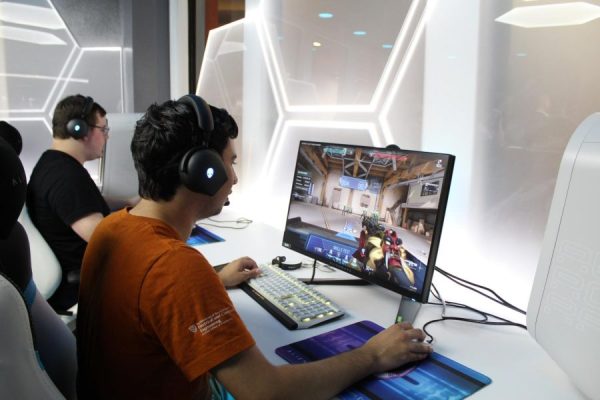
UT alumnus Austin Espinoza, who served as president of Longhorn Gaming from 2018 to 2019, advocated for the space to be built after noticing gamers on campus needed a more accessible and community-oriented space.
After graduating in 2020, Espinoza came back to work as the Esports Student Program Coordinator and run the Esports clubs on campus.
“It’s a dream job,” Espinoza said. “Every single time I see new people come and are in love with the space as much as I am, and all the students I get to employ, it’s a huge brightener of my day and (a) heartwarming feeling.”
Biology sophomore Madelynn Kearney, a member of Longhorn League of Legends, uses both the esports arena and underground bowling lanes for club events.
“It really helps to have the arena and the lounge so that everybody can come together and practice in person if they don’t have a set-up at home,” Kearney said. “ I always like how (the Union) brings people you don’t know together through something we all love.”
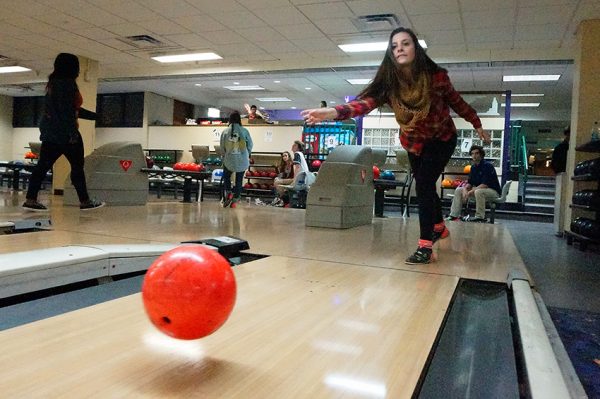
The Texas Union provides communities and facilities for students with diverse interests or who are looking to expand their interests.
“It can be in a small way, but I think even in those small moments, those are things that the students will carry with them,” Buckley said.
Former students say the memories they made in the Union have shaped their lives today.
“My most foundational experiences (are) coming in and playing board games in the 40 Acres area during my freshman orientation (and) coming in and taking my wife on our first date to watch a movie inside of the (E+E) Showtime,” Espinoza said. “Those experiences are what the Union wants to do more of, and make it a home.”