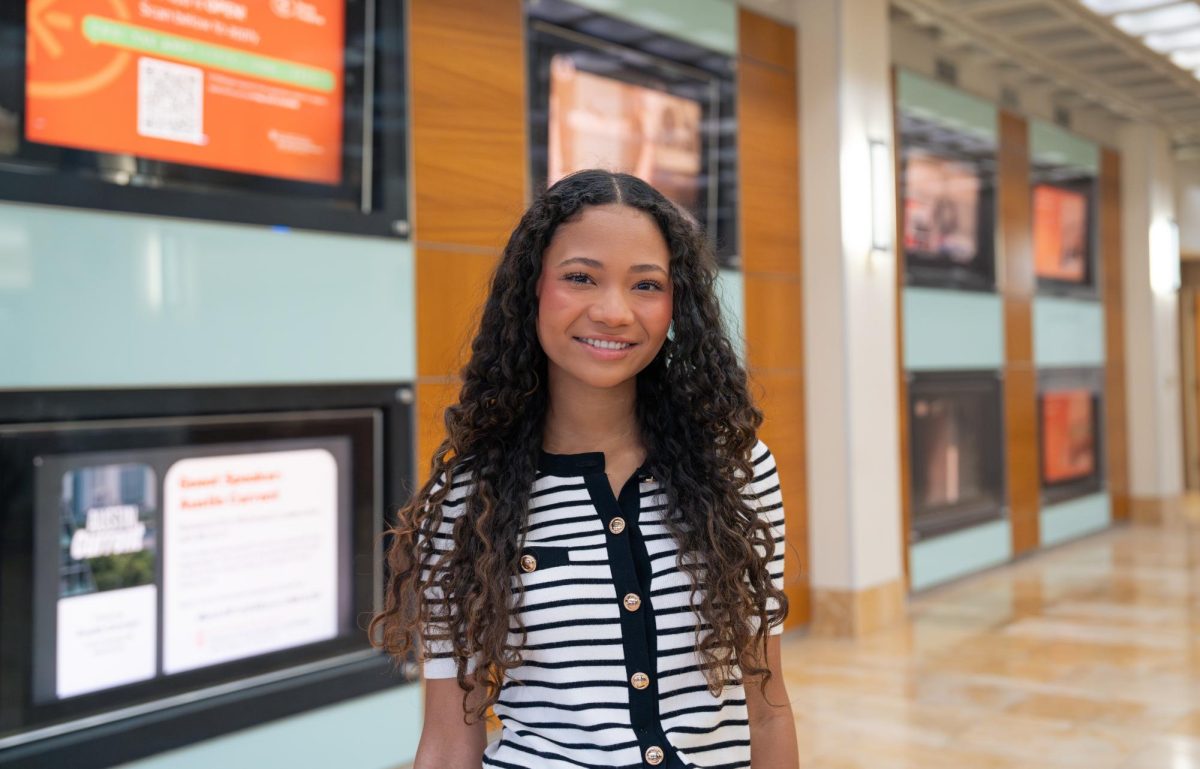
Audio Producer Rachael Gray explores the unhoused population in UT Austin’s West Campus following the recent renewal of the West Campus Ambassadors program. Rachael speaks to members of the West Campus community and West Campus Ambassadors leadership to see how they are supporting and interacting with the unhoused people of ‘Wampus.’
Recorded and produced by Rachael Gray. Cover art by Hrishita Das. Music by Blue Dot Sessions.
*Stop light sound: “Wait to cross Guadalupe at 24th.”*
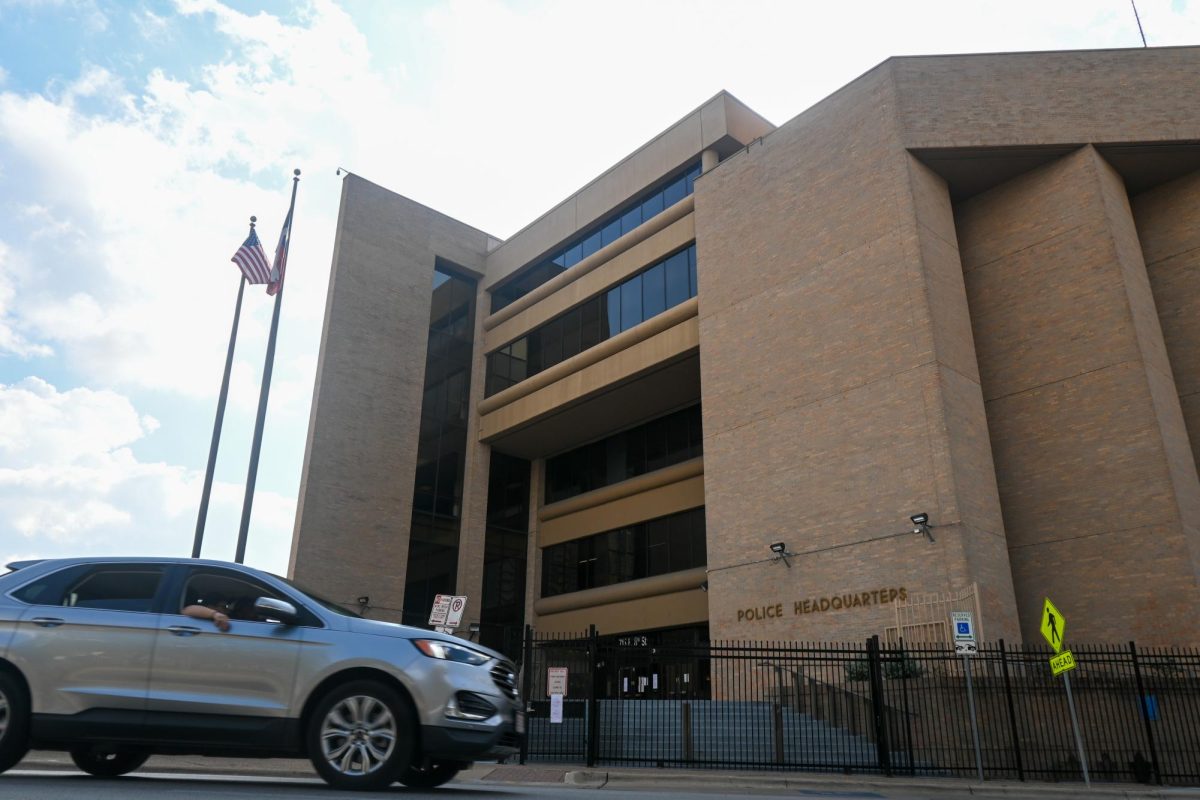
Rachael Gray: Guadalupe Street is what divides UT from the very popular West Campus. West Campus is its own mini city, filled with restaurants, convenience stores, bars, fraternities, and sororities, and lots of off-campus housing. Even though West Campus sounds like an ideal mini city, it still faces some of the same real life issues just like any other city. One topic that is impossible to ignore while living in, working in and visiting West Campus is the topic of homelessness in this area. Living alongside some of the most luxurious high-rise student housing, there are many people that do not have a place to go home to. This made me want to hear the stories of the unhoused people that live in West Campus and discover more about the University’s response to the unhoused population in this area.
*Music*
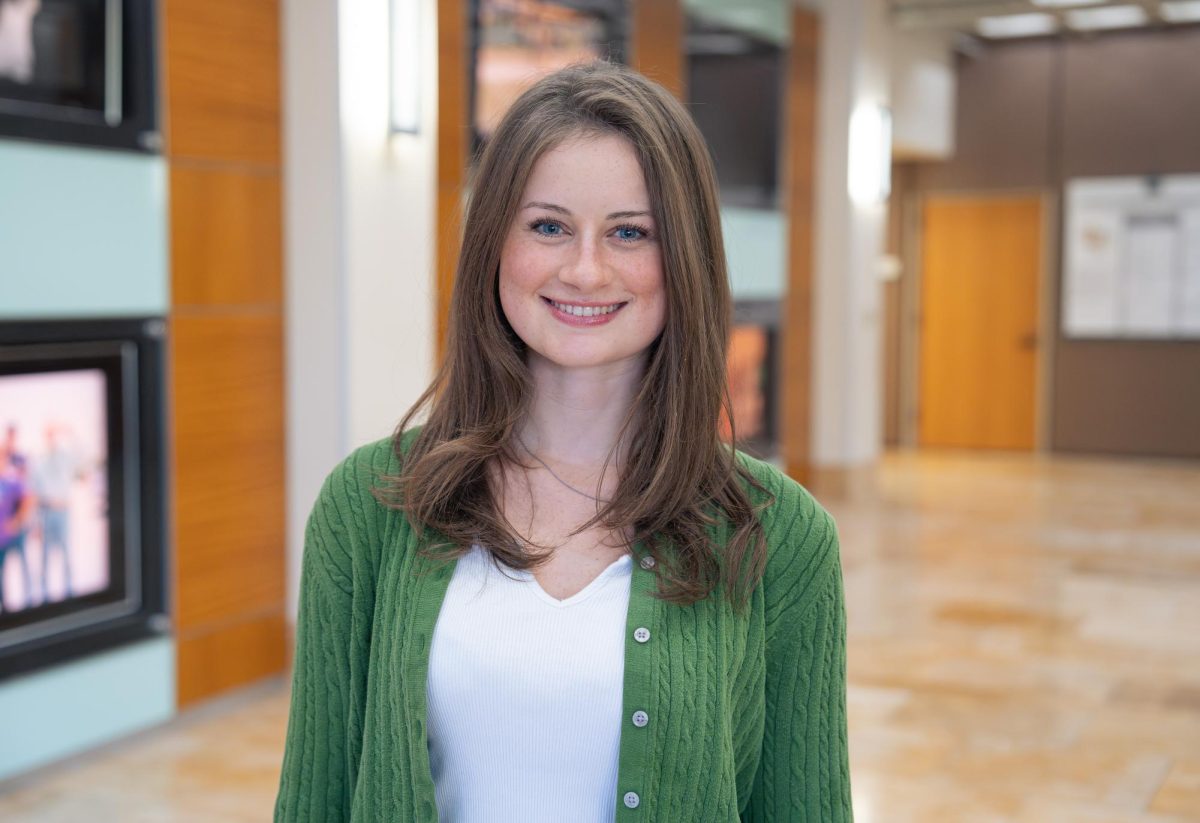
Rachael Gray: Hi, my name is Rachael Gray, an audio producer at The Daily Texan, and today I’m here to explore the answers to some of these questions.
As someone who has lived in West Campus for almost two years, I have noticed how much the unhoused population is discussed. I grew up in San Francisco and always saw unhoused people as part of my community, but when I started living in West Campus, I met many people that were quick to make comments about the unhoused population and that it made them feel unsafe or scared. Although being a city girl, I was not phased by West Campus. I was intrigued when I saw that this August, UT had renewed its West Campus Ambassadors program. According to their website, West Campus Ambassadors are dedicated to the revitalization of Austin’s West Campus neighborhood. When I saw this, I wondered how the unhoused community is affected by this revitalization. I wanted to know if this revitalization included supporting and uplifting the unhoused community, or if this revitalization meant pushing them out. But first, before I dive into what I discovered, I wanted to define exactly where West Campus is in order to give some context to all of our listeners in Austin. Jonathan LaBorde, head of operations at West Campus Ambassadors, says their program defines West Campus as…
Jonathan LaBorde: …Guadalupe to the east, Lamar to the west, and then 29th to the north and MLK to the south.
Rachael Gray: And specifically on the topic of the unhoused community in West Campus, West Campus Ambassadors’ website states that one of the hospitality functions includes homeless outreach and deescalation. This jumped out to me because I noticed how a main focus of West Campus Ambassadors is the unhoused population, and just like I said before, it was also a main topic discussed around my fellow peers at UT. So to learn more about this topic, I spoke with a man named Richard, who lives in West Campus and also works as an Uber Eats driver. Richard is often spotted on his electric bike whizzing through West Campus. He has a unique definition of his living situation and does not like to be referred to as homeless or unhoused.
Richard: People call it homeless. I call it street. Because there’s definitely a difference.
Rachael Gray: When I asked him to describe this further, he shared.
Richard: Hybrid. It’s a great word. I’m kind of in the middle, which I kind of like.
Rachael Gray: Richard then went on to tell me how this hybrid lifestyle involves spending some nights on the streets and benches of West Campus and some nights in a local hotel room. Richard describes the nights he spends living on benches in West Campus as a very positive experience and told me…
Richard: …Because a lot of people like will say to me like, um, oh, like, feel, I could tell they’re like, they feel bad for me. And it’s like, oh, that must, that must be terrible. And I’m like, dude, this is like being at St.Thomas Virgin Islands right now. You know what I’m saying? I lay down on that bench, that’s no different than a couple people laying on a grassy hill looking up in the sky on a camping trip.
Rachael Gray: I love Richard’s description of his life in West Campus, and although he has a very positive outlook on life, he also shared some of the very real and challenging issues he has faced and described how the cold of winter in Austin had almost cost him his life.
Richard: So, but in one, one way to toughen the job is the elements, like when it’s winter time. I almost died. I ended up in the, in the, um the hospital with the flu and pneumonia and then it said dangerously low oxygen in your cells.
Rachael Gray: Richard also highlighted another obstacle he has faced living in West Campus and told me how he always feels like he needs to watch his back to defend himself, or everything he knows could be taken from him in the blink of an eye.
Richard: You, you slip just once. You forget, just once it’s—bye, it’s gone. You know, you put your, you put your wallet down just for a second ’cause I want to get something out of this bag—bye, bye, wallet. You have to know where all your stuff is at all times.
Rachael Gray: Richard has learned that he needs to be on high alert at all times, and even paused our interview in the middle to double check that his phone was still with him. He also told me about the nights of the week that he’s been sleeping on the bench, and he described to me how the most issues he has ever faced sleeping on these benches did not come from the police or West Campus Ambassadors, but from the security guards at fraternity and sorority houses.
Richard: He woke me up in the middle of the night. I was on a city bench. This is like, this is fairly decently recent, maybe two months ago. And he was decked out like he was a SWAT agent or whatever, you know, officer. And he, he, he said he woke, somehow he woke me up. I don’t remember if he touched me. I doubt he touched me, but he said, Hey, hey. And I woke up there he was with his light right in my face. He’s like, You’re trespassing on private property. And I started laughing. I was like, are you, are you that stupid? Or do you think I’m that stupid? This is a public sidewalk. What are you fucking talking about that it’s private property?
Rachael Gray: Richard has faced some trials unimaginable to most, but has shared with me a very positive picture of his life living West Campus. He told me how he loves the students of UT and the people who work in the surrounding area.
Richard: I bet you even, even with the students, at least if you say, Hey, you know that guy with his Uber Eats on the bike? You might get a percentage of ’em saying, Oh, you talking about Richard? But any of these restaurants in, University Market, Potbelly, there’s not a single, not one employee here, unless they just started today, that won’t, if you say, Hey, do you know who Richard is? Fuck, who are you fucking talking to? Of course you know Richard. Everybody knows fucking Richard.
Rachael Gray: Although Richard’s street life is one that works very well for him, it’s important to recognize that not all people living in the streets of West Campus are experiencing a positive living situation or have the same abilities or resources as Richard, and they can unfortunately face many hardships because of this. After I spoke to Richard about his experience, I wanted to see next how UT Austin is providing support for or taking action in response to the unhoused population in West Campus. Given the recent renewal of the West Campus Ambassadors program, I spoke about this to the Head of Operations of West Campus Ambassadors Jonathan LaBorde.When speaking with him, he described their practice of greeting and interacting with the unhoused people of West Campus.
Jonathan LaBorde: People typically put their head down. They don’t acknowledge the homeless people, they don’t speak to ’em. They walk to the other side of the sidewalk to avoid them, and throughout the day they feel dehumanized. Um, and to have somebody that’s out here on a regular basis and dealing with ’em, if they just have a simple conversation with ’em on a day-to-day or every other day basis, it starts to build that rapport.
Rachael Gray: Jonathan notes how the dehumanization and misunderstanding of the unhoused population can be very damaging and how it is key to make them feel seen and heard.
Jonathan LaBorde: We’ve got one guy down here that is blind and, uh, you might have run into him. Um, he can be very vocal and very loud, and it can come across as intimidating or abrasive and make you wanna walk to the other side of the street. He’s actually a super nice guy. Um, he’s just, his mannerisms and who he is is just loud and abrasive. He doesn’t mean anything by it. He’s typically looking for the Starbucks. So our guys will, we’ll get calls on him, you know, guy in the middle of the street yelling, um, and he’s in the middle of the street because he is not a hundred percent sure where he is at, and he is trying to get to the Starbucks. So our guys will go over there, talk with him, and walk him to the Starbucks. Um, so I mean, it’s, it’s situational. It depends on what’s going on. But at the end of the day, if they’re not breaking a law, if they’re not doing anything that is immoral, all we can do is go into the area, assess it.
Rachael Gray: Stories like this and Richard’s are important because these stories highlight how the unhoused population are members of our community, and just like everybody else, need a little help finding their local Starbucks. I then wanted to talk more to Jonathan about why there are such a significant number of people that are unhoused in the West Campus community and he told me a story of a man he has met.
Jonathan LaBorde: I can tell you, I can tell you a quick story of a guy that lived under 15th Street and 35, nicest guy in the world. Uh, we never had any issues with him, but we would have to go and do cleanups under there, and that’s just where he lived. And he had lived there for close to 15 years and then he finally got on the housing list, got housing, was put up in an apartment, had an apartment to himself, and within two or three months he was back under, uh, 35 at 15th [street]. And I had the conversation with him, like, why? Like, you had the apartment, you had everything that you needed. And he was like, I just, it was quiet. He was like, I couldn’t handle not having the noise. It was too quiet. It drove me nuts. Like, this is what I’ve been used to.
Rachael Gray: This story shows that not everyone has the same goals of what they want their life to look like. Many people see the best way to help support the unhoused population is getting them off the streets and into homes. But my interviews with Richard and Jonathan highlighted how supporting the unhoused population in other ways, like humanizing them and making them feel like they’re part of the community, could be just as effective and important. After speaking with Richard and Jonathan, I wanted to hear the perspective of a student in West Campus. So I spoke to Isis Reyes, a senior Journalism major living in West campus. Isis shared with me that although she has never felt any physical threats coming from the unhoused population while living in West Campus, she does always feel the need to carry around protection. Because I noticed she had safety concerns, I asked her about if she had ever thought of using the West Campus Ambassadors safety resources, like Safe Walk, that provides a student with a West Campus Ambassador to walk home with, and she said…
Isis Reyes: …I think I’ve, I’ve always had it in the back of my mind when I’m out late, but, um, it’s nice to have, it’s nice to have as an option, but I’ve never, never had to, had to use it, use the resource.
Rachael Gray: Although Isis is just an average college student worried about her safety, listening to her story illuminated to me what is missing between the unhoused population and the students living in West Campus. Even if they have no ill intentions, many students experience fear or negative feelings towards the unhoused population. Through my research and my story, I found fostering community between the students of UT and the unhoused population is the most productive way to create a better living environment for everyone involved. Jonathan’s message of humanizing the unhoused population and making an effort to understand their stories displayed to me how we have to remove our biases that we may have about the unhoused population and instead listen to one another. Richard’s story emphasizes the importance of understanding someone’s story and fostering community. He’s full of joy and is extremely positive and passionate about his life, and has built relationships with people all around UT.
*Music*
Rachael Gray: Overall, finding a way to help support members of the unhoused community does not always have a single answer, but through this story, I found when you take the time to understand and listen to someone’s unique story, it will help foster understanding and make a community stronger and more connected. My hope is that through this story, more conversations are started and more connections are made to create a better life, not only for the unhoused population, but for students, faculty, and everyone living in West Campus.