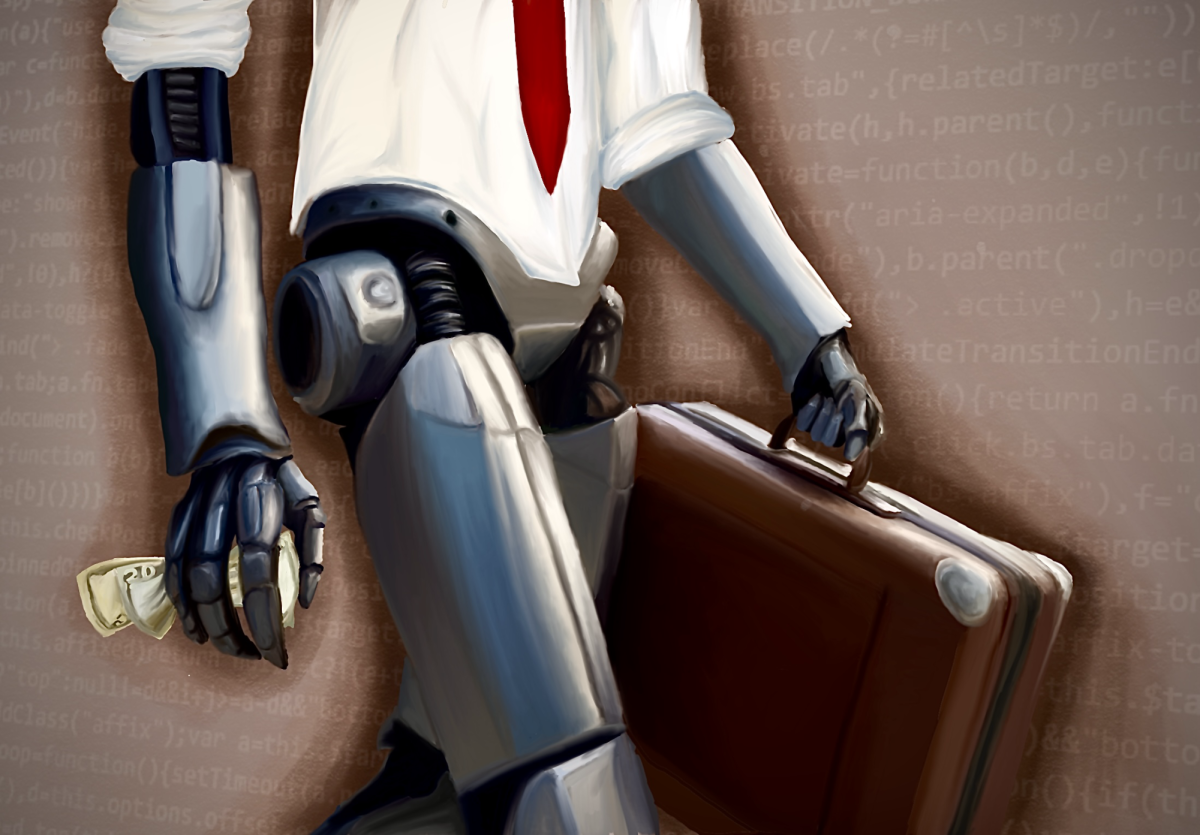
With the widespread application of technology into our lives, most recently with artificial intelligence enhancing the efficiency of our everyday tasks, a slight fear of a “WALL-E” world creeps into my mind. Unambitious, uninspired people weighted (literally) by loneliness don’t seem all too unfamiliar.
In our world, especially at a prestigious, high-achieving university, students are always striving for efficiency, making use of easily available technology which can generate ideas, structure their essays and correct their grammar. People prefer to skip on what they perceive as ‘hard’ things for convenience’s sake — why spend time buying ingredients and cooking a meal for friends when you can order food straight to your door? But these shortcuts can halter conversations, negotiation and stimulation, thus preventing personal growth.
This business-like language doesn’t just apply to life-altering decisions; it can be as small as asking a friend for a ride instead of ordering an Uber. It can be going to meet with someone in person instead of emailing them. The idea goes: the more direct interaction, the more personal growth. Robert Sutton, the New York Times best-selling author of “The Friction Project,” and professor of management science and engineering at the Stanford University School of Engineering, elaborates on this concept.
“It turns out, independently of the value of something, the harder you struggle (for it), the more you value it,” Sutton said.
Technology might add a difficult layer to this connection and thus encourage isolation, as the Disney movie “WALL-E” hints at. Computer science professor Risto Miikkulainen offers a counter-argument defending human use of technology, such as AI, to our benefit.
“Humans can adapt and use these tools to be creative and productive,” Miikkulainen said. “AI natives know what the role of AI is, and it’s an assistant, it’s a companion … a tool, and then they know how to use it so that they can live for life.”
My perception of AI might be too pessimistic. There are conflicting, confusing messages over its use for students. Most teachers ban its use in assignments, but new technology is too integrated to be ignored. At the very least, you should learn how to let it enhance your tasks. But don’t let it take the lead. There are benefits to asking a person whose opinion you respect to read your work and offer feedback, or beginning a conversation and debate, rather than letting AI do all the ‘hard’ work for you. We shouldn’t let the challenges go so easily.
Don’t be scared to ask friends for favors and be willing to give back in return. Ask them to pick you up from the airport, chat about nonsense on the way and promise them a lift back. Add friction into your life and lean on people along the way. It gives back to you and to them.
Slimmon is a history junior from London, England.