UT’s Black student population makes up 4.6% of the undergraduate student body. However, Black students are more than just a statistic — we’re a community, legacy and history. We need to increase awareness of Black history at UT to address the issues that Black students currently endure.
By overshadowing the perspectives of current Black students to prioritize perceptions of progress, we’re complicit in the disregard and erasure of perspectives that support future Black students’ success.
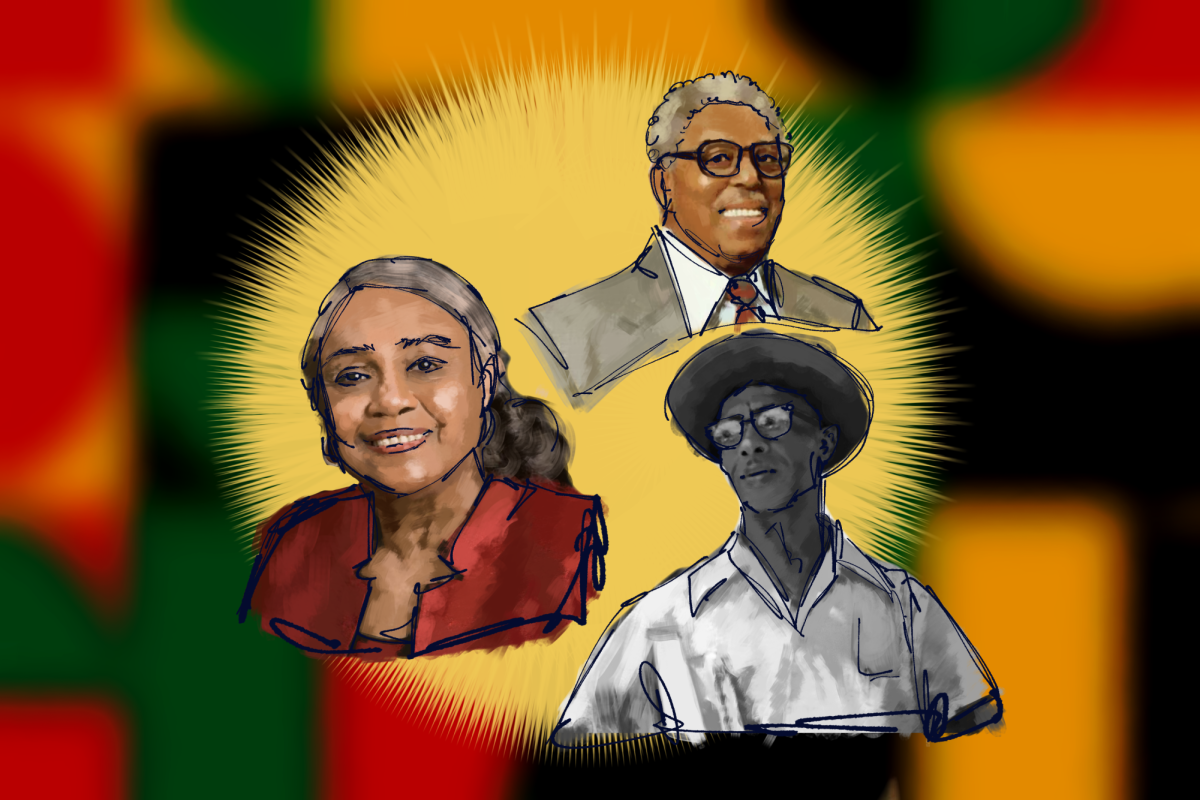
In the pivotal case of Sweatt v. Painter (1950), the Supreme Court held that Heman Marion Sweatt, a Black man automatically rejected from UT because of his race, should be admitted to UT’s Law School rather than a “separate but equal” facility. Sweatt’s case sparked a future for Black students to receive a graduate education at UT. However, undergraduate integration did not officially occur until six years later.
Repairing the university’s history of segregation and racial injustice doesn’t mean burying the experiences of the first Black students, but confronting the brutal realities of educational pursuit as a Black person in the 1950s.
“We can’t do the work of repair if we’re not even honest about what our story is,” said Virginia Cumberbatch, former director of UT’s Division of Community Engagement and Social Equity and co-author of the book, “As We Saw It: the Story of Integration at the University of Texas at Austin.”
“As We Saw It” (2018) describes UT’s integration through the experiences of the Precursors, the first Black undergraduate students who attended the University. As the first comprehensive record of the Precursors’ identities, this book illuminates how UT initially overlooked preserving these accounts at the university level.
It was common for the Precursors to be the only Black students in their classes, an isolating experience that many Black students continue to face. Thus, safe spaces for the Black community to connect within the large campus became fundamental.
Today, the Black Student Alliance provides Black students with opportunities for professional, social and academic development — offering communal spaces to learn about the Black student experience. Kayla Price, African and African diaspora studies and advertising junior, said connecting with alumni and Precursors as the Alliance’s president has helped her identify ways to motivate and mobilize students in spite of campus changes.
“Struggles for me as an individual (and) being a Black Studies student (involves) having to always worry, ‘Are we still going to be able to have these courses … (and) spaces?” Price said. “In my time here, the students (have) always been (in) an uphill battle to try to preserve things.”
After the passage of Senate Bill 17, programs run by DEI offices referencing race, color, ethnicity, gender identity or sexual orientation were dismantled, including the Multicultural Engagement Center. With the disappearance of culturally inclusive campus spaces and the imminent consolidation of ethnic and gender studies departments, including the African and African diaspora studies department, students are being stripped of resources that once facilitated cross-cultural engagement and produced an inclusive campus.
“One of the images (in ‘As We Saw It’) that always sticks out to me … is a young woman holding a sign that says, ‘Assimilation is a lie,’ from a protest in the late 50s,” Cumberbatch said. “The other image that I always found interesting … (says) ‘Is Austin progressive?’ . . . You could easily be attending a protest with those same signs in 2026.”
Academic excellence and prestige don’t have to come at the expense of a representative community. If Black history at UT has taught me anything, accepting hard truths and uplifting underrepresented perspectives can mend prolonged issues at UT.
Williams is a psychology and government freshman from Richmond, TX.