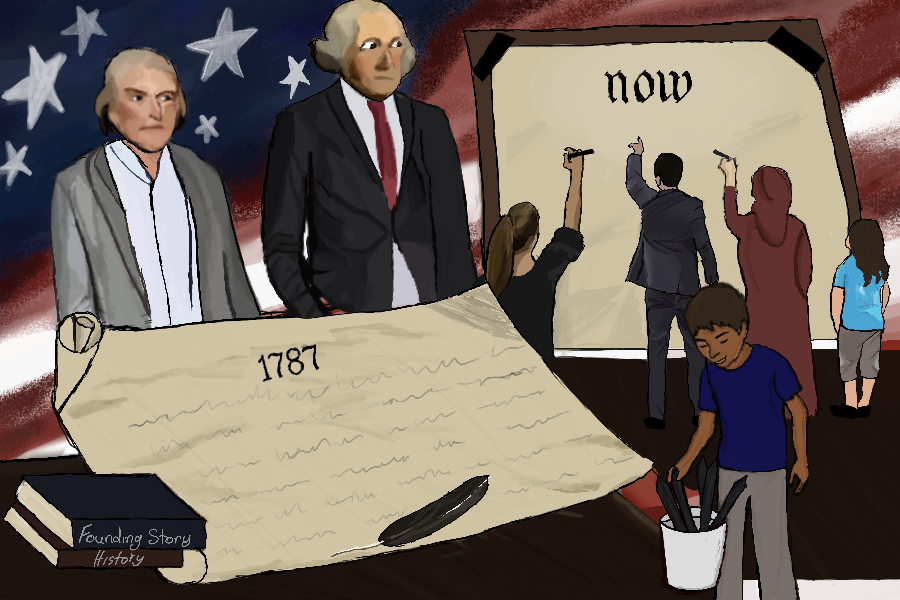
We look back on historical events like the Holocaust, the Rwandan genocide and the Civil Rights Movement and wonder, “How could people just stand by and watch this happen?”
“Hindsight is 20/20,” government professor Derek Epp said.
These tragedies didn’t occur just because of the people directly responsible, but also because of those who were complicit with their silence, who chose to stay out of it and chose to be bystanders. To avoid complacency, we should be holding others accountable, even when they’re our loved ones.
While history may not always repeat itself, it does rhyme.
Nowadays, when every part of the world experiences a crisis, we say we should leave politics out of our personal lives. However, politics are not just about taxes or the economy. They’re a matter of human rights.
Who has the right to marry? Will food stamp funding be cut? Are women’s reproductive rights protected? Are immigrant lives in danger?
Those are the questions we are asking, and they aren’t “just an opinion.”
“Opinions are reflective of our values,” Epp said.
Yet, we make excuses by saying it’s complicated, we don’t know enough about it or we don’t want to ruin Thanksgiving. Staying quiet feels neutral and mature, but history rarely remembers silence as neutrality.
When your partner shrugs off a law that violates human rights, your friend reposts something dehumanizing or your family talks about certain demographics in a degrading way — that isn’t a difference of opinion. It’s a difference of values, morals, right and wrong.
Our values shape the world we live in. So, it doesn’t make sense to say “agree to disagree” when people’s lives and rights are on the line. Silence is a choice we make — a dangerous one. What we excuse in private inevitably becomes what we tolerate in public.
Holding people accountable doesn’t mean heatedly arguing with your family or cutting friends off but refusing to minimize issues, asking why they believe that and not changing the subject or laughing it off.
“It’s important … to have healthy conversations around things that are controversial,” sociology sophomore Sia Patel said.
Our country is currently plagued with crises, yet political disengagement is widespread. Having conversations about political issues and holding the people around us accountable is how we make sure history doesn’t repeat and make sure posterity doesn’t look at us and ask why we stood by and let things happen.
“You can talk about how (these issues are) important to you, and insofar as you were important to them, maybe that has an impression,” Epp said.
Who you date, who you are friends with and who you choose to surround yourself with is a reflection of yourself. When we say we don’t want politics to interfere with our relationships, what we mean is that we don’t want them to require courage.
Courage is uncomfortable.
The idea of creating social tension with our loved ones is scary, but necessary. Perhaps it can even strengthen bonds by talking about difficult subjects.
“Nobody cares enough,” Patel said. “We’re not mad enough.”
Of course, many are fighting back; this is not an indictment of everyone. However, apathy and avoidance remain dangerous realities.
Years from now, people will say they were always against all the injustices we are living through. The red hats will come off. The reposts will be deleted. New excuses will be written. The question is whether we will be able to break the pattern and say we spoke up, even when it costs us something.
Thakkar is a government and economics sophomore from Winter Park, Florida.