In a room shrouded in darkness, a ghostly light reveals a trapped man’s outline. His expression appears unmoving, but his narration sparks hope.
“I used to sit in the cell and imagine being on the road,” Kay, one of the stars of “The Inside Scholars,” said. “Just imagine interviewing people and being inspired.”
The harrowing scene kicks off a two-part series centered on three people pursuing college degrees while incarcerated, changing the trajectory of their lives. After being released, the trio set off on a cross-country road trip organized and documented by Roadtrip Nation, a program helping people explore careers through national tours. Along the way, they take in magnificent views, share personal stories over a campfire and interview formerly imprisoned and highly educated acquaintances
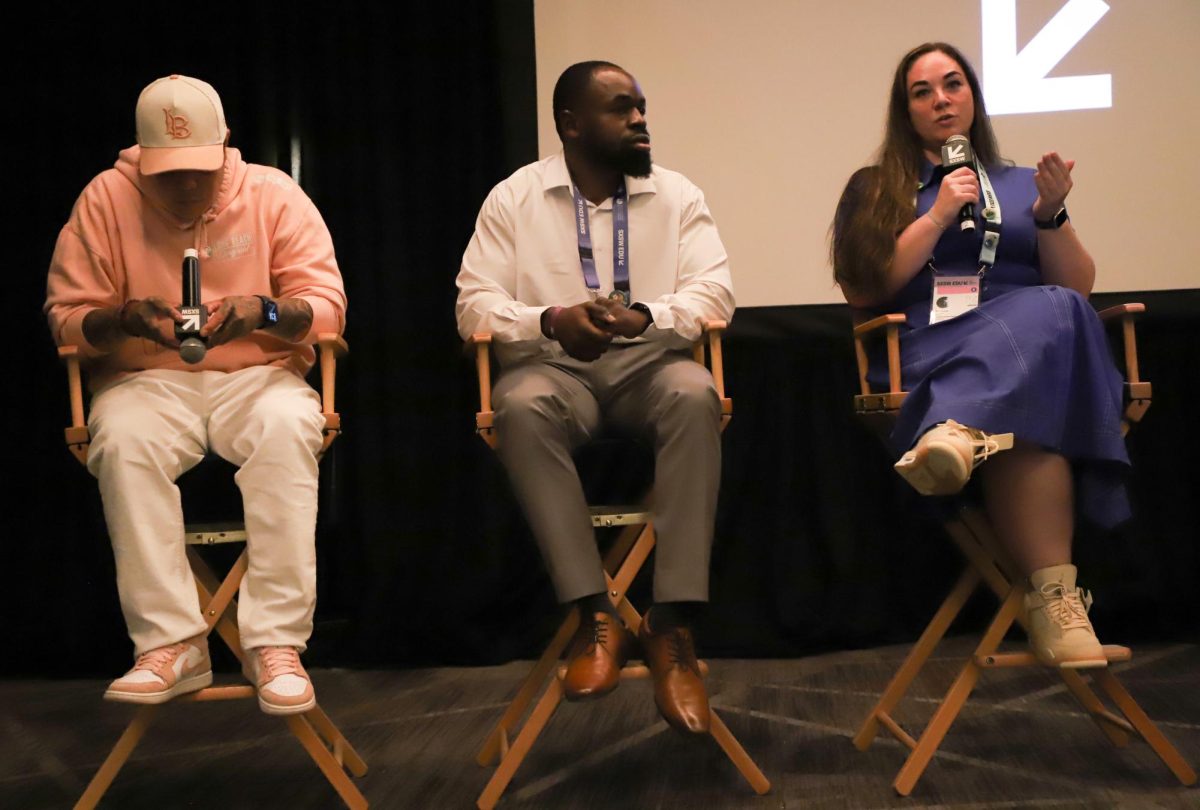
The film screened at the South by Southwest Education Conference on Monday and will be available starting April 1 on Roadtrip Nation. The event concluded in a Q&A segment between director JoeBill Muñoz, producer Jasmine Spearing-Bowen and a surprise appearance from the three “inside scholars,” referred to in the series as Kay, Nurudeen and Nichole.
“Opportunity is important for everybody,” said Nurudeen Alabi, the first graduate of the Boston College Prison Education Program. “Even (a) minute thing, gesture or helping hand, or that yes for employment, or that extra time for assignments.”
“The Inside Scholars” highlights trailblazing figures such as Tarra Simmons and David Carillo, the first formerly incarcerated legislator and professor in the United States, respectively. Their experiences reveal the need for educated ex-convicts in mentorship and policymaking roles, allowing opportunities for upward mobility and ending cycles of violence and crime.
Kay said his reentry into society proved challenging, partly since he hadn’t learned about things like iPhones and Google Docs while imprisoned.
“There was nothing for me,” Kay said. “But what education taught me is how to network, how to speak as a communications major. … I knew I had to put myself in front of people, but for the average formerly incarcerated person, (there is) nothing. You have to go get it, and that’s unfortunate, but that’s why there’s people like us.”
Muñoz said an important theme in making the film was how transformative education could be.
“Something changed in your life that was profound,” Muñoz said. “Either that was through your own making, through your own doing, or that was an institution, a school, a program, or that was that one teacher who did not let you walk away.”
In the final minutes of the series, the trio participated in an adrenaline-churning activity embodying freedom: skydiving. Kay’s initial reservations about the freefall and his subsequent emotional revelation make the experience even more critical. It marks a poignant conclusion to a necessary story that spotlights three diligent people — not in their suffering, but their inspiring growth.