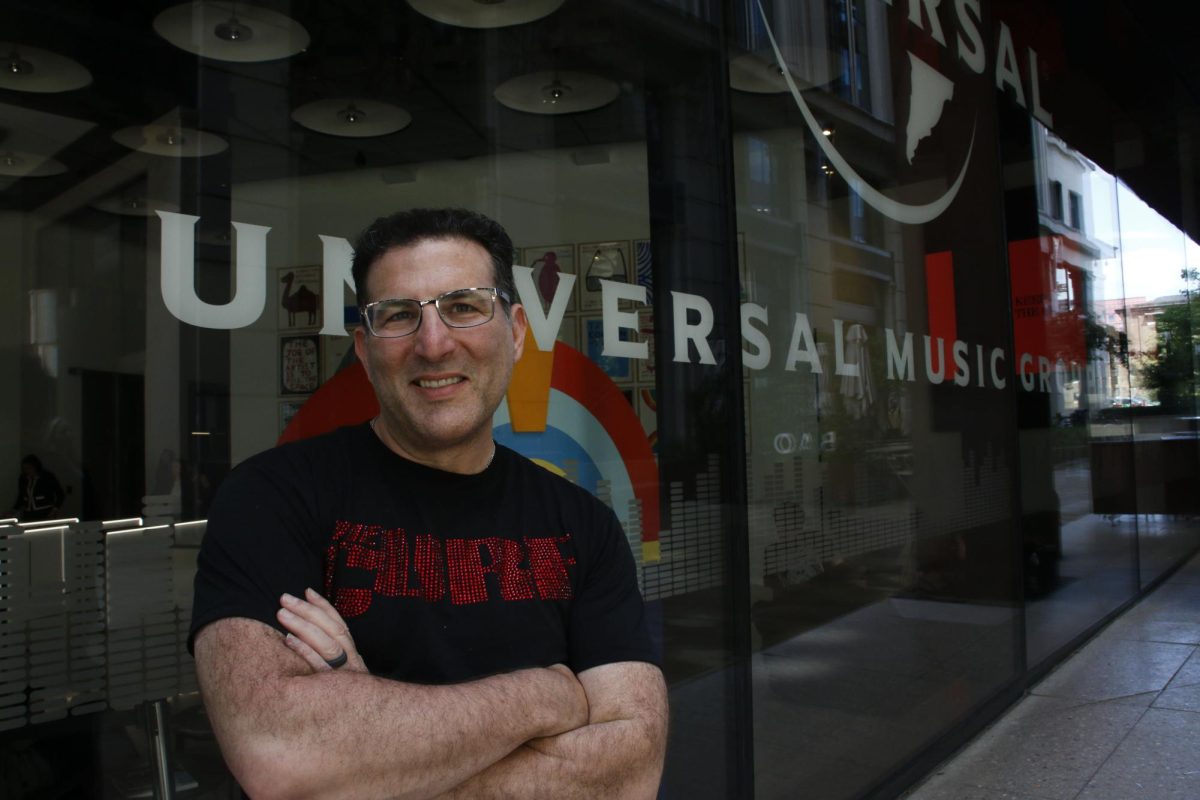
In an effort to put production back in the hands of cinema owners, pioneer of Austin’s Blue Starlite Drive-in, Josh Frank, sparked the idea for labels to revive older bands’ catalogs by rescoring silent movies. Frank’s company Silents Synced caught the attention of Universal Music Group UK after he released “Radiohead x Nosferatu” and “R.E.M. x Buster Keaton’s Sherlock Jr.” Despite never showing a film at SXSW in Austin, his latest work “The Cure Meets The Man Who Laughs” made its world premiere on June 5 at SXSW London.
Frank said “The Cure Meets The Man Who Laughs” marks the first of four Silents Synced projects set for release in the next year. The Daily Texan sat down with Frank to discuss his creative process and experience working in England’s capital city.
The Daily Texan: What drew you to coming to SXSW London?
Josh Frank: I was invited by South By London. … Universal Music UK … (was) interested in premiering what we were working on. … That was so cool because, of the 30 years that I’ve lived in Austin as an artist, I’ve never been invited by my hometown festival to participate. It’s funny that when I finally do get into South By, it is across the ocean, not 10 minutes from my house. … I was familiar with London because I’d been here, but I never really got into London. … Since I’ve been coming here over the last year, I’ve come to really appreciate London and really consider it a place that I feel just as comfortable as I do in Austin.
DT: With “The Cure Meets The Man Who Laughs,” what songs did you feel you needed to include?
JF: Universal handed me the list of their roster of bands that I had access to. First of all, that was fucking amazing. Basically, to have a label be like “Take your pick, man,” and I was like, “Holy shit.” … The Cure seemed like an obvious (choice) because their mood overall is very cohesive, and I knew there was a number of Gothic scene-themed features that I could mess with. The first one that came to mind was “The Man Who Laughs,” because it’s about a character that wears makeup, and I won’t say looks like Robert Smith, but you could see similarities between (them). If there was ever a goth character in the 1920s, it’s the man who laughs. …
With The Cure, (using) remixes … you’re able to have a suspension of disbelief and get into it as if it was a new piece of art, and that’s what I think I pulled off with The Cure one.
DT: Do you think you’ll show it back in Austin?
JF: The nice thing about working with these big guys is it’s able to be released internationally, as opposed to just when I released (films) myself, (as) a national release in the US. So, whenever the international release is, it will come to America and it’ll be in major cinemas, and I’m sure that it’ll play, if not just one place, in a number of venues in Austin.
DT: Anything else you want to add?
JF: Independent cinemas, independent films, independent creators — those are the ones that have the opportunity to think outside the box and come up with new ideas for how our industry should work, and I don’t think that enough people are working to solve those puzzles. … I think everybody needs to take a look at how insulated they are because there’s not enough collaboration and communication within our pocket of the industry.