“I just want to show my art.”
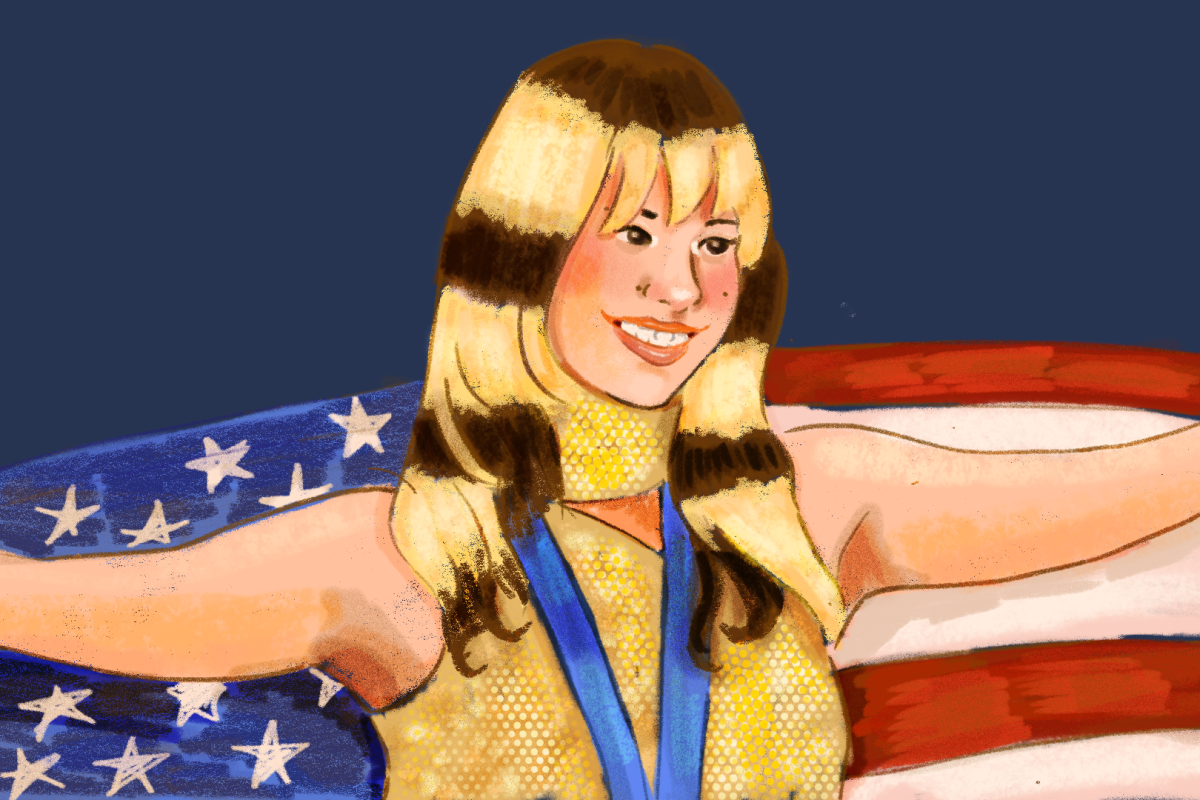
Last month, Alysa Liu took the nation by storm, winning gold in figure skating at the Olympics. It made me feel patriotic, and I’m not even American. She glitzed her way to the top, beaming throughout every performance with an infectious joy. She’s sharing her art and pulling the audience in completely. She’s the kind of cool that I wanted to be when I was eight — fun, carefree and confident. Twelve years later, I’m watching her Olympic performances like I’m gouging pop music videos.
“I don’t need a medal, I just need to be here and show people what I can do,” Liu said in an interview.
Prior to her win, news outlets were more critical of Liu — shocker! The media was focused not on her skating, but on her appearance and attitude. From her original halo-dyed hairstyle to her smiley piercing, Liu proved to be “too punk” for the Olympics.
When she said she visited Milan to have fun rather than win medals, people deemed her unworthy of her medal. Why is joy connected to a lack of success?
“(There’s) a vibrant feeling that everybody (in the arena) has,” acting freshman Fred Wara said. “That shared experience just wouldn’t happen the same way if (Liu) were stoic.”
The tortured artist trope is one heavily adorned, but perhaps this fallacy is finally getting old. Great art does not have to come from pain and anguish. From drug addicted, alcoholic rock stars who cheat on their wives to great writers who commit suicide by 30, the weight of greatness is sold as devastating. However, Liu is proof that the pinnacle of success is achievable, not after decades of painstaking sacrifice but even at a joyful age of 20.
Having retired at 16, Liu is not the conventional “starving for success” athlete. We so rarely get to see a young professional athlete who seems to be carving her own career, especially young women. She’s punk in rejecting the drudge, slog and disdain of the tortured artist.
“Seeing someone like her, who doesn’t look like a lot of other Olympians, she’s out of the mold,” said Zoe Mullins, government and philosophy sophomore. “It’s interesting to see a new face in someone who’s closer to my age being so successful and also having so much joy about what she’s doing.”
Post-winning media confirms that this is the kind of role model America has been craving — enthusiastic, exuberant and spirited. It’s such a relief at a time when I feel like my future is being dictated by old farts.
For many students, creativity isn’t a part of their degree or prospective career. I’m not sure how many doctors, analysts or finance bros will be embracing “punk,” but the battle of striving for success and retaining joy applies to everyone. Fifty-seven percent of students feel pessimistic about starting their careers. As a junior, I feel the impending doom to secure a fulfilling and successful career. Nevertheless, I’m determined to find joy in my work. Make your contribution to the world through your art. You’ll be doing it for the next 50 years anyway, as my dad helpfully reminds me. Embrace authenticity. It’s easy to get wrapped up in the sobriety of hard work, but I’d rather feel like punk rock star Alysa Liu dancing my way to the top.
Embrace joy and trust that success will follow.
To quote Liu herself, after her gold-winning final performance: “That’s what I’m f— talking about!”
Slimmon is a history junior from London, England.