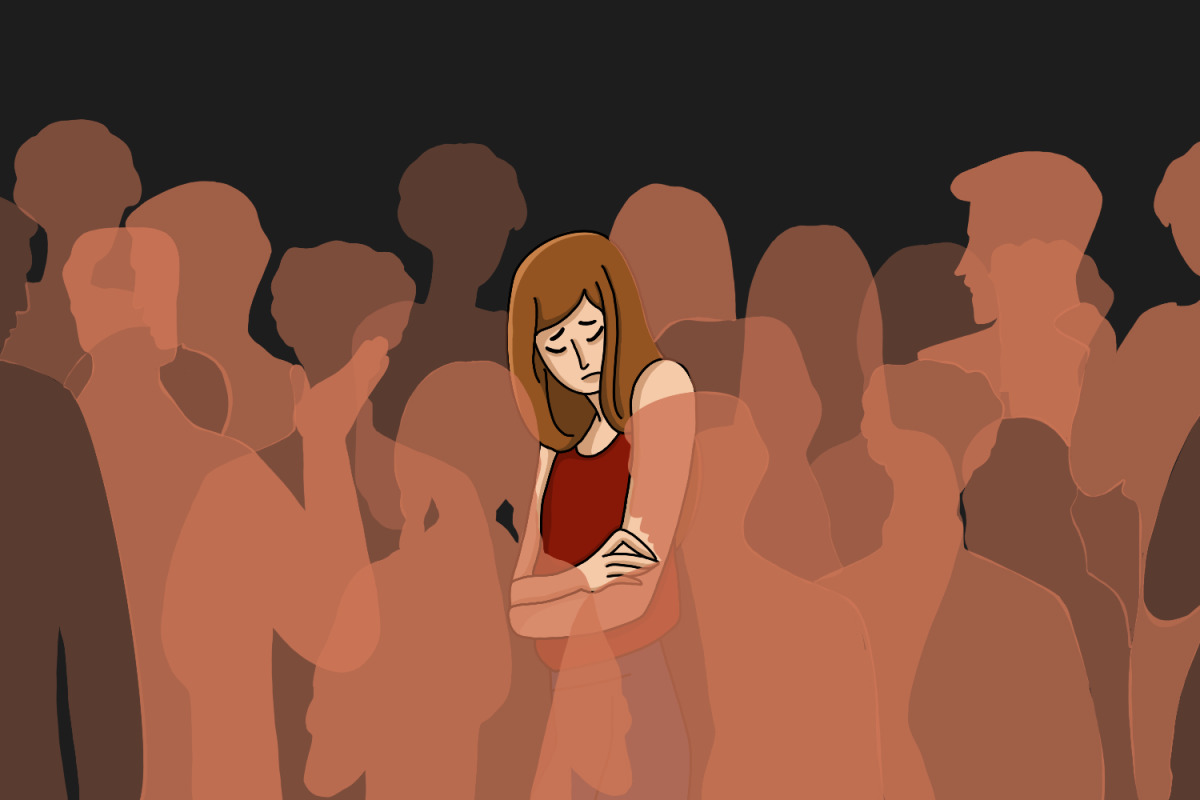
Having grown up in a mixed-faith household in an accepting community, it wasn’t until I came to UT that I experienced overt antisemitism for the first time in my life.
“I think people are underestimating by a huge amount how much (antisemitism) there is,” said Naomi Lindstrom, Gale Family Foundation professor in Jewish arts and culture. “It just will pop up just very casually in conversations.”
The first time anyone ever said something to me about Judaism was January 2025. I was sitting with my friends, talking about my family, when someone came up to us. He started making hateful remarks that were rooted in antisemitic rhetoric. Since then I have heard people make similar comments, which are sometimes even phrased as jokes.
Gabrielle Beacken is a PhD student in the School of Journalism and Media whose research largely focuses on antisemitism in social media spaces.
“A lot of antisemitic rhetoric has become so normalized and so widely disseminated, and sometimes it is coming from hate, sometimes it’s a joke.” Beacken said. “There are so many misconceptions and assumptions that I think if we break down those barriers, then people can start sharing the information within their own networks, their own non-Jewish networks.”
Antisemitism exists in many spaces due to stereotypical media or conspiracy that is pushed out into the world. One of the most infamous instances of conspiracy is the publication of “The Protocols of the Elders of Zion,” which Adolf Hitler and other Nazi Party leaders used to spread antisemitic disinformation. This book is still used as an antisemitic justification.
It is incredibly important that universities and the people within them continue to break down antisemitic rhetoric. By having open conversations about the religion and harmful beliefs that are commonly spread, people can begin to deconstruct the harmful barriers that surround it.
“I think we just can’t keep isolating ourselves and polarizing ourselves. We need to keep building the tools to have conversations,” Beacken said. “There’s always going to be people who are on the extreme … who are not going to listen. But if there is a mutual understanding that we’re going to actually have a good faith conversation, that would be extremely productive and helpful.”
There is so much blame and hate directed at Jewish people, and there needs to be a push for conversations and a greater understanding of Judaism. The problem began because of prejudice and hate towards Judaism, and it is unjustified in every way. People need to make an effort to speak out against it and start conversations to end it.
Healy is a journalism junior from San Antonio, Texas.