Almost 31 years since the first “Toy Story” movie was released, audiences can return to a familiar sense of comfort with “Toy Story 5,” directed by Andrew Stanton. The latest installment welcomes back the gang of toys and places cowgirl Jessie, voiced by Joan Cusack (“School of Rock”), at the center of the movie. Pixar’s flagship franchise leans heavily into nostalgia. As sentimental as the movie may be, its overbearing anti-technology message gets in the way of play.
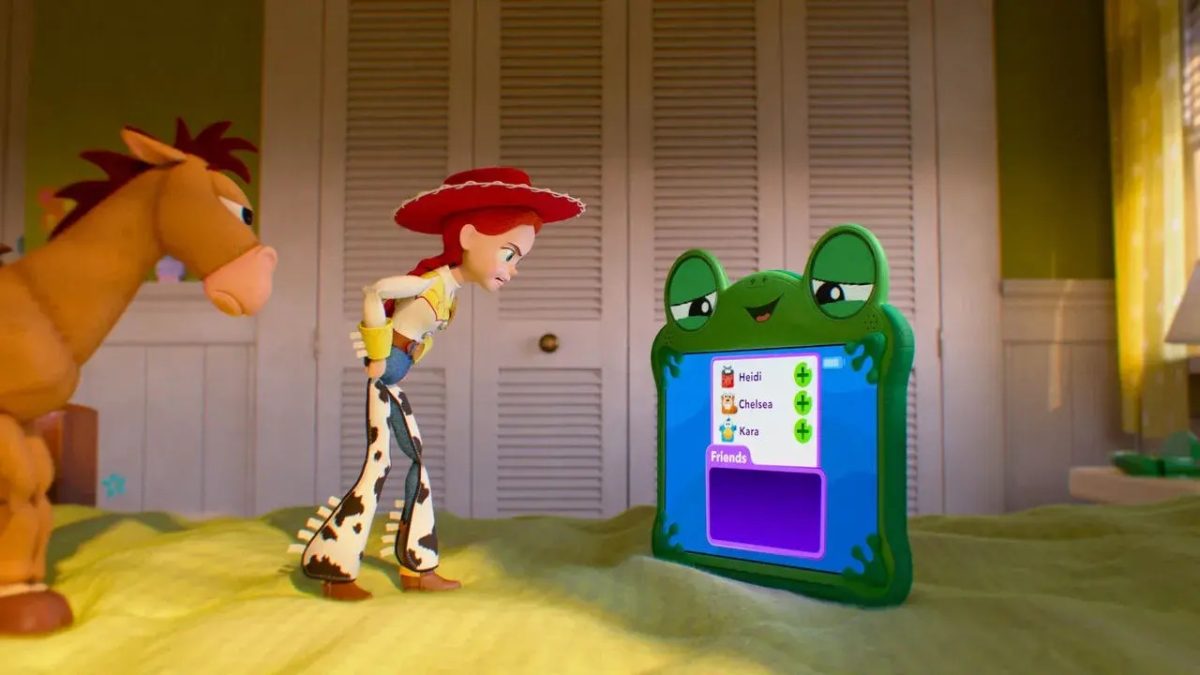
The film follows Jessie, who still belongs to 8-year old Bonnie, one of the last kids in the neighborhood to still be using her imagination and playing with toys. That is until she is given a Lilypad, a children’s tablet voiced by Greta Lee (“Past Lives”). Refusing to let Bonnie become another kid entranced by a screen, Jessie endeavours to keep “the age of toys” alive and connect Bonnie to friends in real life.
The movie’s choice to portray Jessie as the protagonist and leader of toys and tech is commendable, as it seems time has not treated past hero Woody well, who appears older, complete with a bald spot and a potbelly. The movie’s emotional weight falls on Jessie, who spends much of the movie lamenting the days when children played with traditional toys. While her concern for Bonnie fits the movie’s theme, the constant complaints become repetitive.
The movie presents a simple idea: Kids should spend time outside and play with friends in real life. Though a well-intentioned and relevant message, the film repeats it so frequently that it overshadows everything else. Audiences aren’t trusted to understand the movie’s moral themes through plot alone and must be reminded so continuously that you forget you’re supposed to be watching a children’s movie and not a lecture.
Lilypad, the main villain of the movie, though not comparable to Lotso Bear in “Toy Story 3,” remains an effective obstacle for the toys to face. The premise and setup of the movie showed promise of an innovative story that seemed perfect for the 21st century, however, the resolution of the movie felt simple and underdeveloped. In addition, for a movie so focused on positioning technology as a threat to childhood imagination, it seems contradictory to release a “Toy Story 5” branded tablet marketed to children, available for approximately $29.99.
“Toy Story 5” still finds moments where creativity and childhood play shine. The movie’s strongest scenes are when Bonnie’s imagination is brought to life with a different animation style, transforming the toys into participants in elaborate weddings, spy thrillers and bomb-defusal missions. These sequences capture the magic in childhood and are nostalgic of the fun the franchise brought to audiences.
Beneath its commentary on screens and cyberbullying, “Toy Story 5” remains entertaining enough for young audiences. It delivers familiar characters and a message that has potential in encouraging conversations about online behavior. Whilst falling short at recapturing the magic of its predecessors, spending one more nostalgic adventure with these toys makes the lectures somewhat worthwhile.
2 ½ IP exhaustions out of 5