Among the many films at the 11th annual Indie Meme Film Festival — Austin’s premier event for South Asian cinema — viewers can expect stories about a safe yet socially controversial male contraceptive and the politics underlying an Indian man’s neighborhood in Poland.
“We strive to push forward socially conscious and relevant South Asian cinema, independent cinema specifically,” said Uma Riddle (geography ‘22), a member of the festival’s programming team. “That’s our niche.”
The festival, which takes place April 22-26 at the AFS Cinema theater, arrives at a time when non-stereotypical South Asian films increasingly experience the global spotlight.
“These films are … breaking the mold of the kind of South Asian content that you would typically see Western press receive well,” said Ananyaa Ravi, president of Indie Meme, the nonprofit that hosts the festival. “(That) is usually what some might describe as poverty porn, or it has to be about hardship.”
One of these films is “New Moon Rain,” directed by Santosh Dahal. The fictional short centers on the moment a Nepali immigrant father disciplines his daughter, reflecting the norms of his own culture but bearing severe consequences in her American upbringing.
“From South Asia … people usually think the USA is like a dream country,” Dahal said. “It is (a dream country), but still, they (don’t) know the ground reality of the people over there. As a filmmaker, it’s my responsibility to tell (that) story, which is hidden.”
Kovid Gupta (radio-television-film ‘10) produced the documentary “An Unquiet Mind,” about harmful tendencies associated with obsessive-compulsive disorder.
“It’s something that I hid for a long time from the world, and I don’t want others to have to hide their stories,” Gupta said. “So, this movie is a way of encouraging dialogue around not only OCD, but also mental health in general, especially in ethnic minority communities like South Asians, where mental health is just not discussed the way it should be.”
Gupta said their team faced a challenge navigating the film’s serious content with sensitivity and empathy.
“At the end of the day, if we’re not taking care of the mental health of our own participants and our own crew members, we’ve defeated the purpose of making this movie,” Gupta said. “We can’t make a movie about mental health at the cost of the mental health of those behind it.”
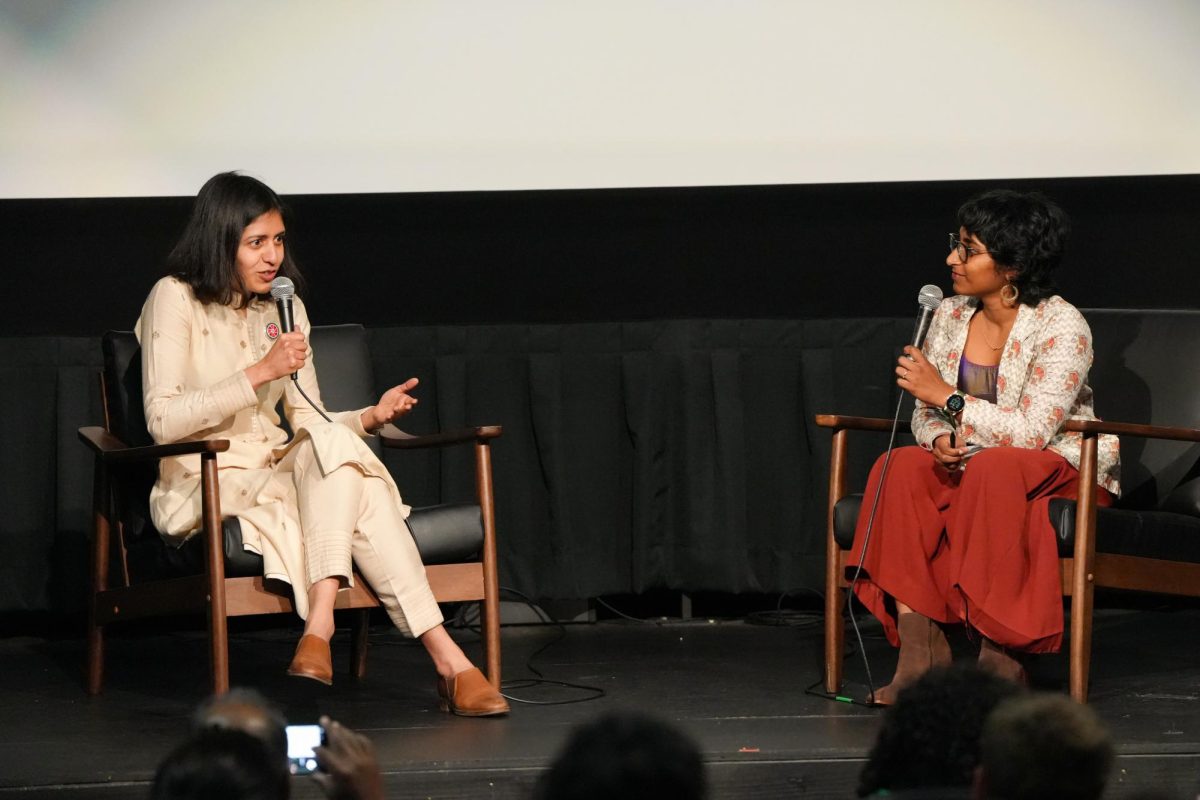
In addition to the boundary-pushing screenings, the film festival will host director Q&As and networking opportunities.
“They have other programs, which (help) us to connect with local filmmakers or other South Asian filmmakers,” Dahal said. “I feel that’s a great opportunity for us.”
The festival’s efforts contribute to broader ethnic representation in Austin, which, for Riddle, goes beyond seeing South Asian faces on television.
“It’s not just about, ‘Oh, look at us, look at our stories,’” Riddle said. “Art is working through things as well, working through challenges or issues or internal experiences that South Asian people go through. It’s so relevant and important to see that on screen.”
Editor’s Note: This story has been updated to better reflect the meaning behind Gupta’s documentary.