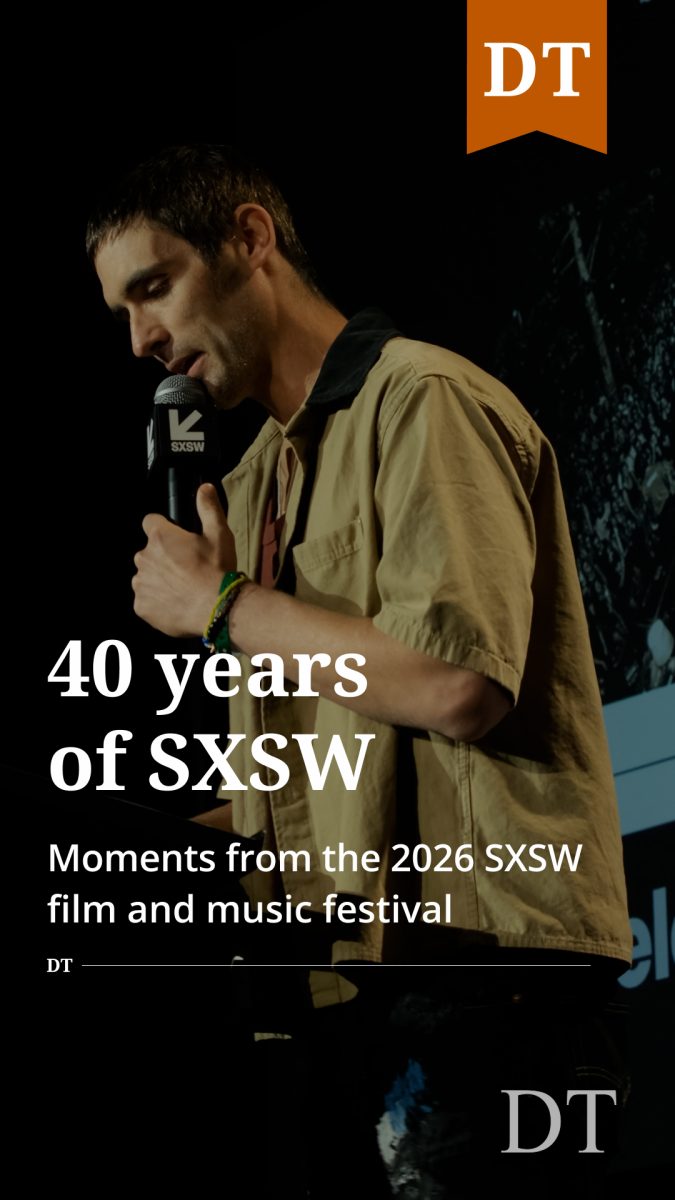
R.T. Thorne, a Canadian filmmaker who got his start directing music videos, held the United States premiere for his feature debut “40 Acres,” which premiered at the Toronto International Film Festival last September. The Daily Texan sat down with Thorne to discuss his career and perspectives on the film industry.
The Daily Texan: What was it like premiering at TIFF? How important is it to get the film in front of both Canadian and American audiences?
RT Thorne: I’m a Toronto kid, so having it at my hometown festival was just an absolute dream. … It’s a similar thing coming to SXSW … music is a huge part of my film journey. That strange language — that music and film speak — is a universal language. It’s a connective language. It unites us all; we see ourselves in music and in film. SXSW has been one of those festivals that recognizes the fusion of that creativity and has always championed it. I’ve wanted to come here for years, but I never had the right project, so it’s kind of this weird full circle moment for me to come to SXSW and be able to have my first film here, (one) that music plays a prominent part in as well. (“40 Acres”) is sort of a U.S.-Canadian story. The family (in the film) has generational roots in the U.S. and their generational farm in Canada.
DT: Were there any lessons you learned in your time directing music videos and television projects that you brought over to the film world?
RT: For sure. I always tell any person who’s looking to direct (to) direct some music videos. It’s one of the freest forms of filmmaking. No one can tell you what’s right or wrong in a music video. … It’s a wonderful form to experiment in and really get your visual side down. … When I wrote scenes, … I already knew how to render them from doing so many music videos.
DT: Were there any challenges you faced, and how did you overcome them, especially with getting into the festival circuit and getting theatrical distribution?
RT: Every film is hell. It’s a miracle that films get made, especially independent films. Money falls through all the time, and that can be very, very difficult to handle. … The great Danielle Deadwyler blessed us and took in the script, read it and jumped on. But we were in the middle of the (Screen Actors Guild) strike, so we weren’t supposed to be shooting. … SAG had to give us a waiver, and we couldn’t wait to hear back. … We had no idea whether we (were) going to get the waiver or not, and it really happened at the last minute.
DT: What advice do you give to young people who are trying to get into the entertainment industry?
RT: If you want to be a director, I say go and direct. There’s no path to directing. It (isn’t) like some of these other jobs. … To be a director, you just have to have a vision for something you want to see, and you have to have good communication skills to be able to gather people around and get them to believe in that vision. … The industry is hungry for you, whoever you are out there. … It’s an industry of dreamers, but hardworking dreamers.