Gov. Greg Abbott signed Senate Bill 2972, known as the Campus Protection Act, into law on Friday.
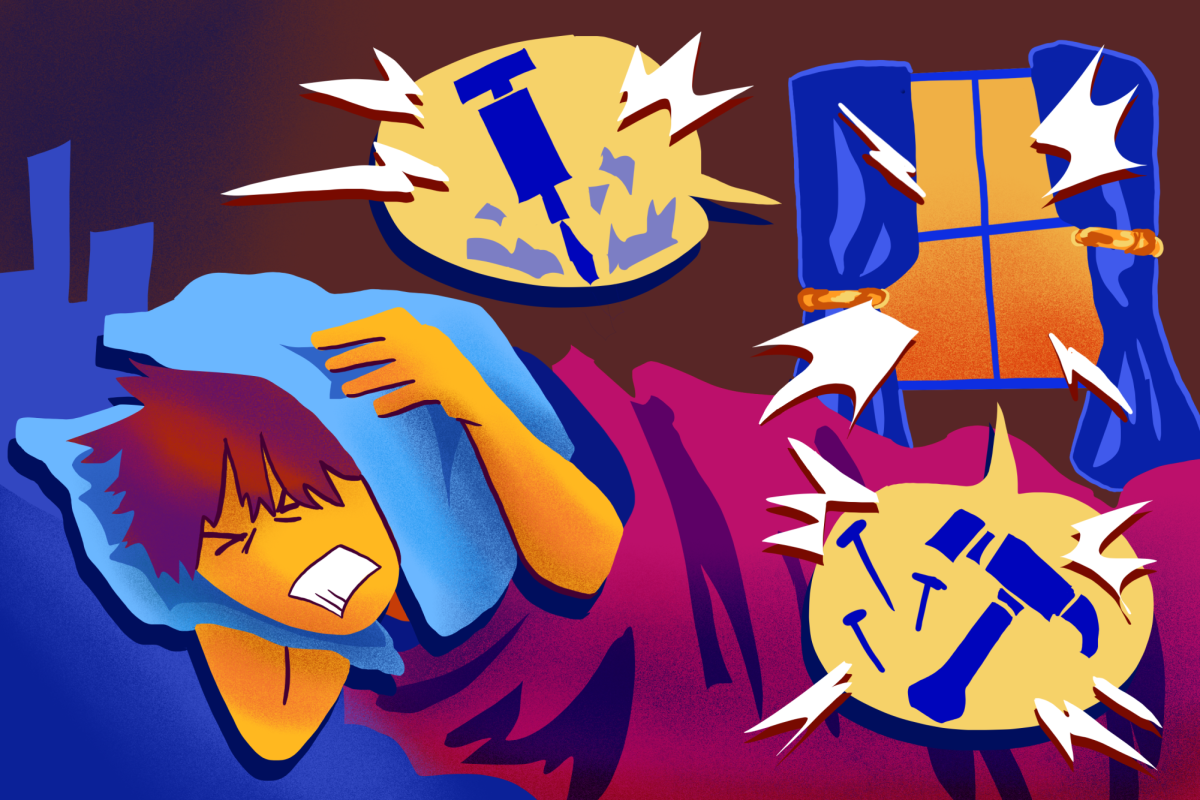
The bill, authored by Sen. Brandon Creighton, limits “expressive activities” on Texas public campuses. It places restraints on who is able to attend protests, the time of day students can assemble and what students are able to wear to protests.
SB 2972 restricts students’ constitutional rights to free speech.
The vagueness of these policies creates room for overreach by governing officials. Section II (F) of the bill does not allow for “engaging in expressive activities on campus between the hours of 10 p.m. and 8 a.m.,” yet the bill does not outline what constitutes “expressive activity.” If misinterpreted, heated dialogue or artistic expression could be prosecuted. The lack of clarification puts students at risk.
“Outright banning expressive activity during certain hours … could require that all kinds of speech be disallowed, … and that’s not how the First Amendment works,” said Kristen Shahverdian, the program director for campus free speech at PEN America. “(Time, place and manner restrictions) have to be very narrowly tailored. (Otherwise,) it leaves open the ability for any administrator to determine what makes or does not make (an) expressive activity.”
While SB 2972 does not outline the consequences of noncompliance, it requires universities to establish their own method of punishment. With the severity of these consequences still unknown, the bill doesn’t just risk barring aspects of free speech but could also produce a chilling effect, silencing dissent by discouraging students from protesting in fear of legal and academic consequences for crossing ambiguous lines. Even wearing a mask for health reasons could be punished if seen as concealing a student’s identity.
Emma Estrada, co-founder of 725 Dream, a nonprofit that provides legal and financial aid to prospective U.S. citizens, believes the bill will do more harm than good.
“It’s almost like (legislators) don’t want us to protest at all,” said Estrada, a government, economics and Plan II junior. “I can understand if it’s loud and affecting student life detrimentally, but if it’s a peaceful gathering, … I don’t understand why it should have a curfew. I think (this bill) would negatively impact the student activism that we have here on campus at UT.”
UT students and orgs can’t progress forward when the bill places invisible chains around our ability to act.
“We’ve always seen higher education as a place where students really can get activated and practice their civic responsibility,” Shahverdian said. “We’re really losing a huge opportunity for young people (to grow). It’s both unfortunate and actually quite detrimental to our democracy.”
This bill reverses the previous free speech and assembly protections, which Sen. Creighton helped create. Creighton co-authored legislation in 2019 to preserve college campuses as “traditional public forums,” or open spaces for public assembly, at a time when conservative voices were under threat. Sen. Creighton was unavailable for comment on this story.
SB 2972 strips college campuses of their traditional public forum status, limiting expression to only students and university employees. The bill was passed following a period of mass protests on college campuses from a primarily left-leaning population. Given the fact that these bills directly oppose each other and were written by the same lawmakers during very different political climates, it is difficult to see the Campus Protection Act as anything but a legislative attempt to limit free speech that doesn’t align with their points of view.
Additionally, despite SB 2972’s focus on regulating speech, the bill did not go through the usual public process. While there is no state law requiring public hearings, the controversial nature of this bill necessitates public input. However, the bill only had one hearing in the Senate, and the House did not have any hearings.
“It’s deeply ironic that a bill that is regulating expressive activity, the language that’s often used is, ‘You should do it the right way, you should use the proper channels and appropriate mechanisms to engage in expressive activity and protected speech (because protest is disruptive),’” said Caro Achar, the engagement coordinator at ACLU Texas. “‘One of those key, proper channels is public testimony, and the opportunity for public testimony on this bill was never given.”
In trying to regulate when, where and how students can speak out, SB 2972 not only undermines constitutional freedoms, but it also exposes the hypocrisy of silencing public input on a bill meant to govern public expression.
The Campus Protection Act represents a national shift to tighten free speech policies at universities. While other states have similar legislation regulating campus protests, none are as sweeping as Texas’ SB 2972. Georgia’s pending House Bill 602 strips arrested student protesters of their financial aid and Arizona’s House Bill 2880 bans protest encampments on campus.
“We saw (this bill) in Arizona, signed by their Democratic governor, that also prohibited encampments on their campus,” Shahverdian said. “However, this Texas bill really ramps it up and has the potential to be a bill that other states copy.”
Arizona’s bill specifically defines an encampment as “temporary shelter” on campus used to stay overnight or “for a prolonged period of time.” Alternatively, Texas’ bill fails to clearly define the term. This lack of clarity leaves room for university governing boards to use their own interpretation instead of following a clear set of regulations.
The Constitution clearly states that Congress cannot abridge the right for people to peacefully assemble, yet the bill’s language attacks students participating in any form of peaceful protest tactics. SB 2972 is a clear attempt by the Texas legislature to silence student voices.
The Editorial Board is composed of associate editors Tiffany Lam, Belle Xu, editorial assistant Tenley Jackson and editor-in-chief Ava Saunders.