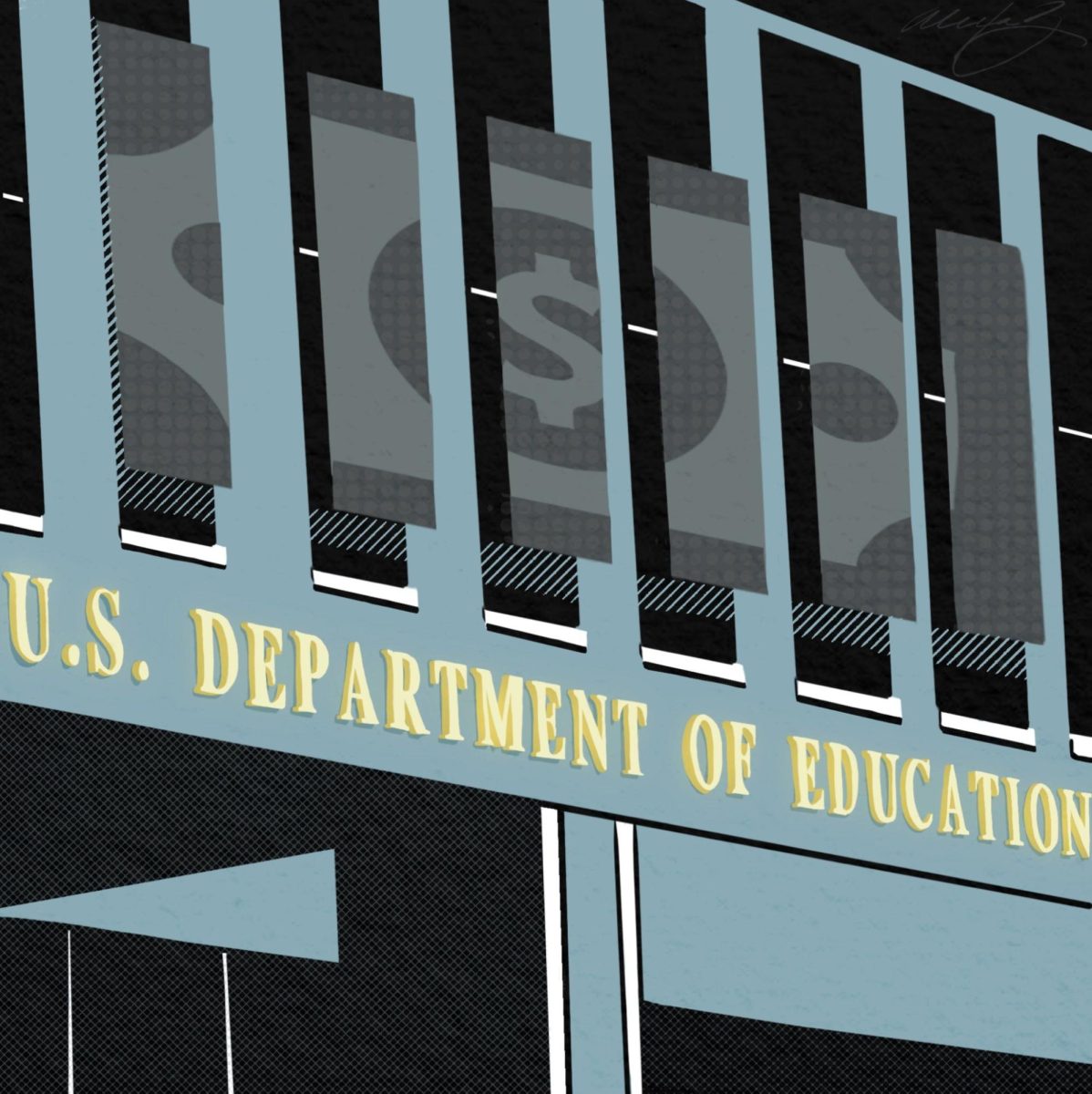
A presidential proclamation issued Sept. 19 imposed a $100,000 fee on petitions for H-1B visas, which allows foreign professionals, such as graduating international students, to work in the United States.
The proclamation requires employers to pay the fee for each new H-1B visa petition filed after Sept. 21. Prior to the proclamation, it would cost employers $2,000 to $5,000 per petition depending on employer size, according to the American Immigration Council.
The H-1B nonimmigrant visa program allows U.S. employers to hire foreign professionals working in “specialty occupations” that require a bachelor’s degree or an equivalent, according to U.S. Citizenship and Immigration Services. Employers must register a petition on behalf of the worker to stay in the U.S. for an initial 3-year period that can later be extended, according to the agency.
“By putting a $100,000 price tag on it, you are all but pricing out everyone except for the largest employers in the world,” said immigration attorney Jason Finkelman. “Small and medium-sized employers, who are often the primary users of the H-1B visa program, will no longer be able to hire the talent they need.”
Congress limits the number of H-1B visas issued each fiscal year to 65,000, with an additional 20,000 reserved for people with a master’s degree or higher, according to the U.S. Citizenship and Immigration Services. If registrations for the visa exceeds this cap, the agency uses an annual lottery to select which registrations can proceed to the petition stage, according to the American Immigration Council.
The proclamation also instructed the Department of Homeland Security to establish rules that prioritize “high-skilled” and “high-paid” beneficiaries in the H-1B lottery. On Sept. 24, the department published a public notice proposing to “weight the lottery” based on the salary paid to the worker by the employer rather than at random, Finkelman said.
The agency will accept public comment on the proposed rule until Nov. 24, a USCIS official wrote in an email.
Finkelman said employers use the H-1B visa program across almost every sector, such as information technology and medicine. According to the H-1B Employer Data Hub, Texas had more than 27,000 foreign professionals, or beneficiaries, approved in Fiscal Year 2025, the second highest in the country behind California.
“It was really created, and still is, designed to bring in highly skilled, highly intelligent and highly educated foreign talent to fill critical employment sectors in our economy,” Finkelman said.
Prior to becoming eligible for an H-1B visa, international students with an F-1 visa can use practical training programs embedded in the F-1 visa program, said Nitin Agrawal, co-founder and chief executive officer of Interstride, a technology platform that works with higher education institutions to support international students and students going abroad.
“We are giving them seats at some of our most prestigious universities, UT-Austin being one of them,” Agrawal said. “Why do we want to send talent that we’ve nurtured and developed to another country?”
According to the proclamation, the purpose of the changes is to protect “American workers” and address abuse, which Finkelman said is “very, very minimal.”
The program did not need a lottery to select beneficiaries when it first began in 1990, and everyone who applied received it, Agrawal said. He studied in the U.S. as an international student, and said he went through one of the first H-1B petition cycles to require a lottery.
“Regardless of wherever the immigration policies are, the innovation will continue,” Agrawal said. “Innovation will continue where immigration policies are favorable, because that’s naturally where the global talent will flow.”