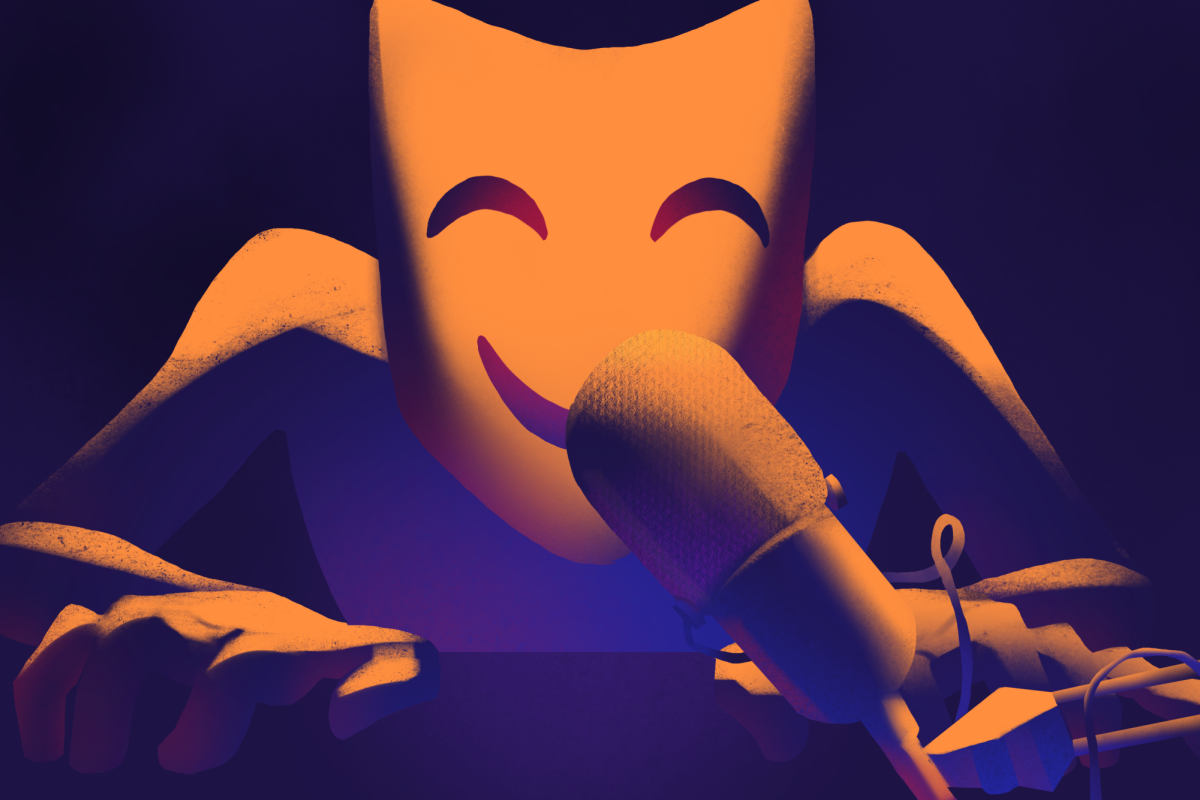
There’s often controversy on social media about celebrities going on podcasts and talk shows. People get frustrated with hosts’ questions and guests’ answers, but these means of entertainment are more for publicity than revealing information. Audiences must educate themselves on media literacy and not expect journalistic standards from entertainment shows.
“(Journalists) try to deliver more accurate, truthful information to their audiences,” said Yeonsoo Kim, associate professor at the School of Advertising and Public Relations. “But for public relations, our main goal is maintaining the relationship with important stakeholders.”
Professional journalism has its own set of standards and code of ethics that all practicing journalists must adhere to. Podcasters and talk show hosts typically do not follow these standards, nor should they be expected to. Journalism seeks truth while PR manages reputations. Entertainment interviews often prioritize a celebrity’s comfort and brand protection.
“We usually make a strategic decision (about which) shows or news outlets the celebrity can appear,” Kim said. “There’s got to be a purpose of showing up … (or) planning internally done (on) why the person is going on that show.”
Most of the time, hosts work with their guests’ PR teams to determine how their appearance can be mutually beneficial. PR motives typically involve image protection, strategic appearances or controlled messaging. When a celebrity sits down for an hourlong podcast, the purpose is not to dig into controversy or demand transparency because hosts aren’t trained to challenge or investigate. The goal is to have a conversation that keeps the celebrity comfortable and the audience entertained.
Audiences want transparency, so people understandably feel disappointed or misled when a celebrity reveals nearly nothing in an hour-long interview. It’s natural to expect tough questions or complete honesty, like proper journalistic interviews. However, that expectation only makes sense when reporters are trained and obligated to hold people accountable. Entertainment platforms are not built for those types of conversations.
For example, when Kim Kardashian went on the podcast Call Her Daddy, there was a lot of backlash because she was not pressured to reveal more about herself. However, host Alex Cooper is not a journalist, and her goal was not to press for information; it was to make Kardashian comfortable enough to engage in conversation and entertain the viewers.
“Call Her Daddy is more like a conversation between two girls hanging out and having fun,” said Tamara Bell, assistant journalism and advertising and public relations professor. “We’re listening in on that conversation like we’re there with them, so it’s a completely different vibe. The whole goal of that show is (different) as opposed to a news program.”
It’s important to understand the underlying purpose of each format. Not all interviews are designed to inform. The purpose of some can be to entertain, promote something or shape public perception. Recognizing the difference between strategic communication and actual reporting allows audiences to adjust their expectations and avoid disappointment.
“(For) podcasters who are not part of a news organization, … audiences need to understand that they might come in with their biases,” Bell said. “Listeners need to be more aware … (and) active in seeking out (and) doing their own research as to which podcast is going to be more credible.”
Knowing the difference between PR and journalism work is the viewer’s responsibility. Recognizing the difference between entertainment and journalism doesn’t ruin any of the fun. It simply helps us consume media with fewer misconceptions.
At the end of the day, most podcasts and talk shows are entertainment spaces, not newsrooms, and we should not expect them to operate like part of one.
Cintron is a journalism sophomore from Houston, Texas.