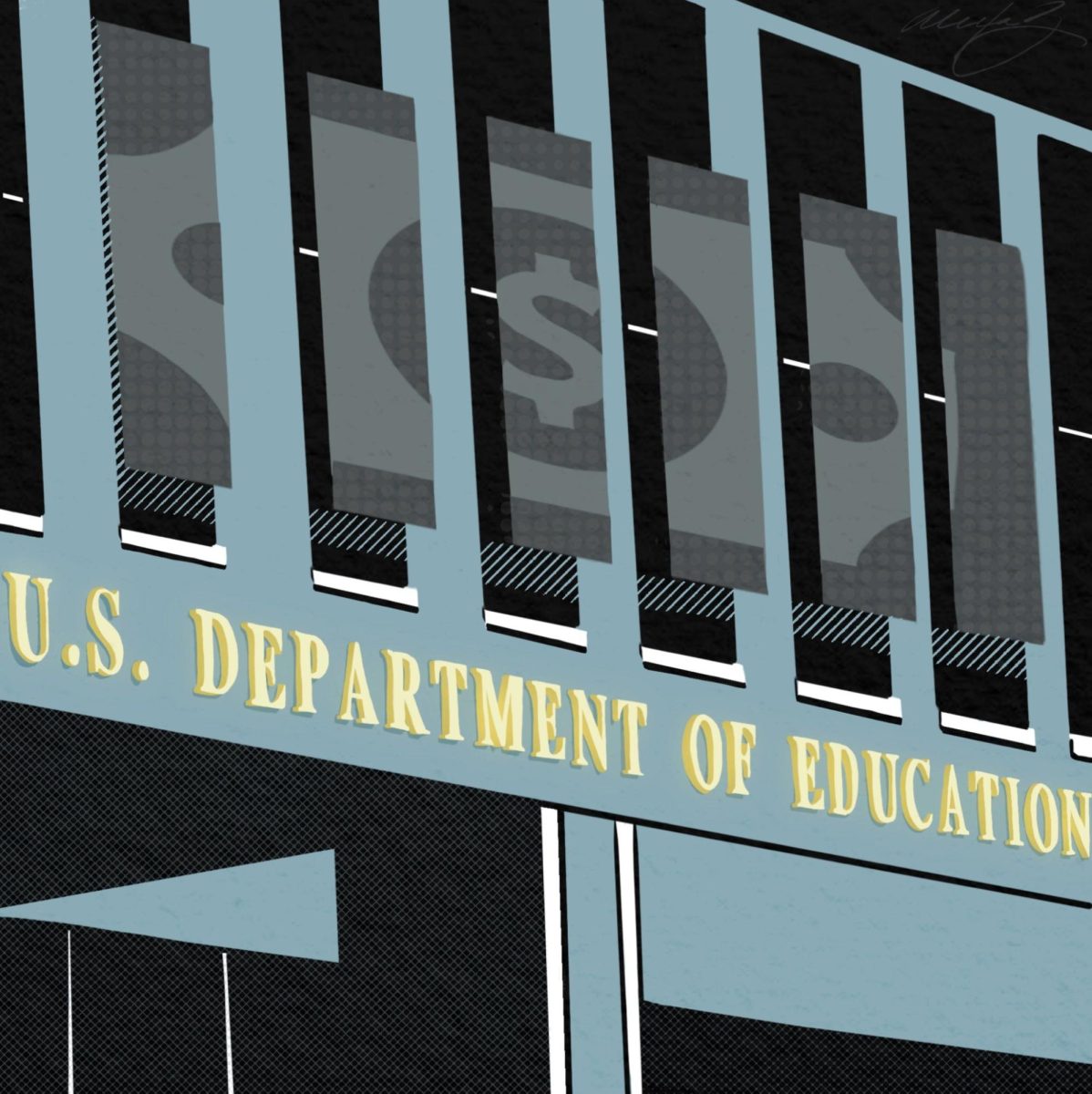
The U.S. Department of Homeland Security published a rule creating a weighted selection process for H-1B visas, which allow foreign professionals, such as graduating international students, to work in the U.S., according to a Dec. 23, 2025, U.S. Citizenship and Immigration Services news release.
Under the rule, USCIS will use a weighted selection process based on workers’ experience level as it corresponds to Occupational Employment and Wage Statistics data, which uses four wage levels to categorize employee experience and salary, according to the forum. The rule will go into effect on Feb. 27, before the H-1B cap lottery registration season in March for fiscal year 2027.
Registrations at wage level I are considered entry-level, while registrations at wage level IV are considered advanced experts, according to the forum. Wage level I registrations will be entered into the lottery once, while registrations at wage level IV will be entered into the lottery four times, according to the rule.
Graduating international students might have a lower probability of being selected because of the rule, said Lynden Melmed, partner with Berry Appleman & Leiden Immigration Law.
“Most foreign students, when they enter the workforce, are likely to be at level I or level II because they are early-career,” Melmed said. “Being an early-career level I or level II means it’s a lower probability relative to your peers.”
The H-1B visa program allows U.S. employers to register a petition on behalf of a foreign worker whose job requires a bachelor’s degree or an equivalent, to apply for an H-1B visa, allowing them to stay in the U.S. for a 3-year period that can be extended, according to USCIS.
USCIS previously used a lottery system to select registrations if they exceeded the annual limit of 65,000 new H-1B visas issued each year, with an additional 20,000 reserved for those with advanced degrees from U.S. institutions, according to the National Immigration Forum.
Multiple concerns shared during the public comment period were included in the rule. DHS disagreed with potential “Negative Impacts on International Students.”
“The new weighted selection will better serve Congress’ intent for the H-1B program and strengthen America’s competitiveness by incentivizing American employers to petition for higher-paid, higher-skilled foreign workers,” wrote USCIS spokesperson Matthew Tragesser in an email.
Ruby Powers, an immigration attorney with Powers Law Group, said she has already started consulting people and evaluating the H-1B process.
“We look at their resume, we explain the process … and then we start evaluating them,” Powers said. “Then, we say, ‘We need to talk to your prospective employer for the H-1B so that they can understand what they would be participating in.’”
Melmed said he does not know how the system will play out in practice, given the $100,000 fee employers must pay for H-1B visa petitions announced by the Trump administration in September 2025. The fee does not impact status changes, such as graduating international students on an F-1 visa, but it may lead to fewer registrations submitted.
The H-1B program has been a “lightning rod” in the immigration debate, Melmed said.
“Every single administration that I’ve (worked) with over the past two and a half decades has left their own imprint on the visa category,” Melmed said. “No doubt, we’ll see this Trump administration do the same.”