Warm light spills across the wooden floors of Mozart’s Coffee Roasters as the hum of conversation dwindles. Eight quick snaps cut through the room. “One…two…” a voice calls out, followed by a rhythmic “bup bup bup.” Then, the music explodes.
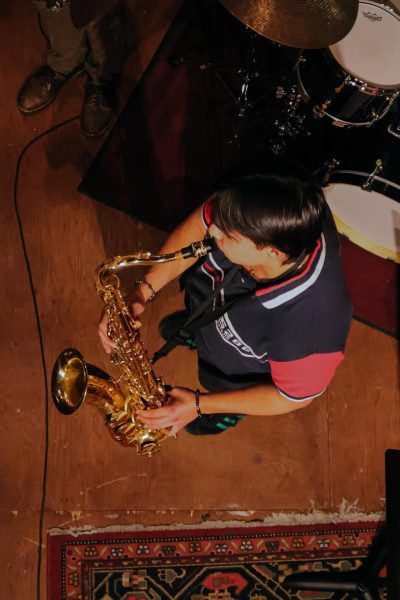
“Stompin’ at the Savoy” tumbles off the stage as the combo locks in. Student musicians lean into the sound, drawing the room’s attention note by note. Conversations stall, heads look up and phones raise to record as the melody passes through the instruments.
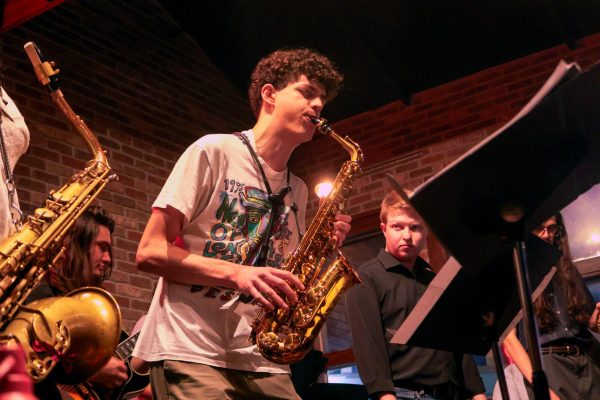
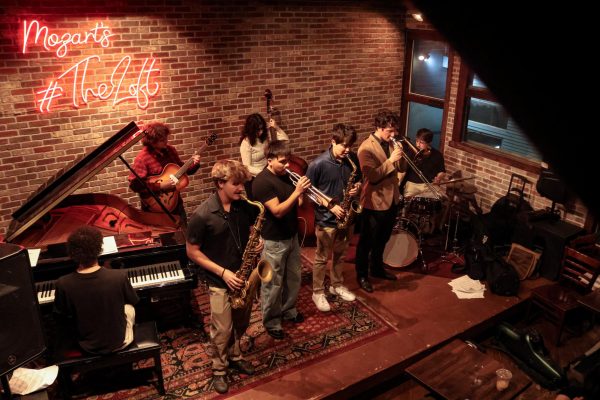
Every Wednesday from 7-9 p.m., The Loft at Mozart’s fills with Austinites — students, regulars and first-time listeners — as the Butler School of Music’s Jazz Combos take the stage. Each combo is led by a graduate teaching assistant who rehearses and performs alongside the group, shaping an environment centered on collaboration.
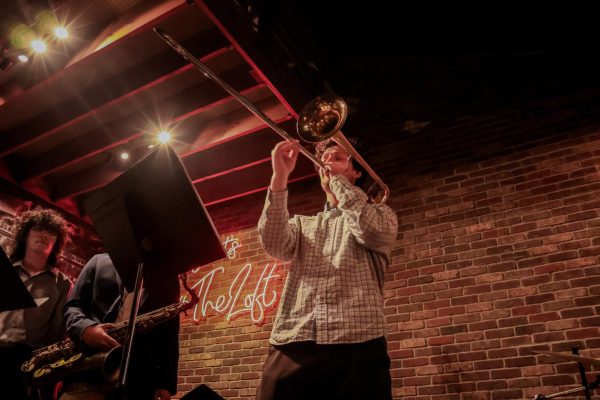
“It’s not about me dictating stuff,” said Bruno Avitia, an upright bass player and teaching assistant for the Atlantic and Milestones combos. “Everybody has a musical voice … we’re making choices collectively.”
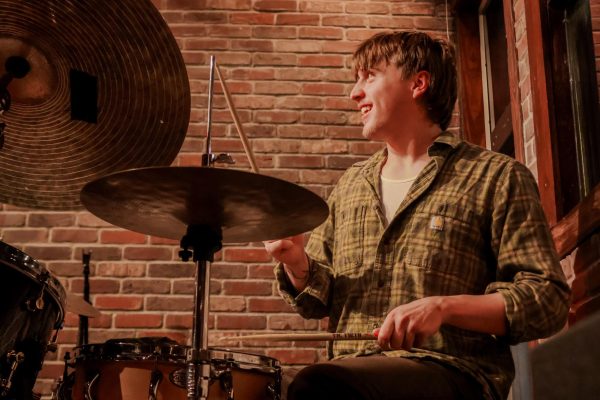
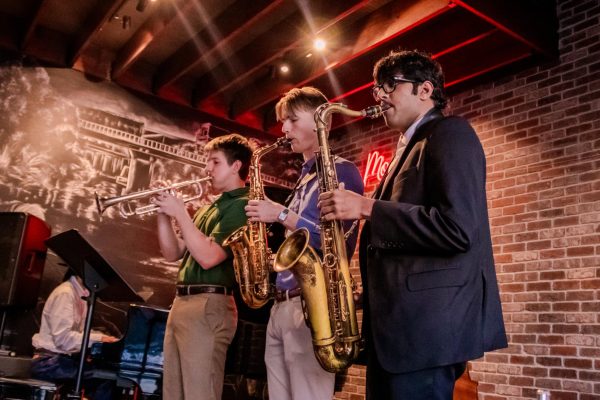
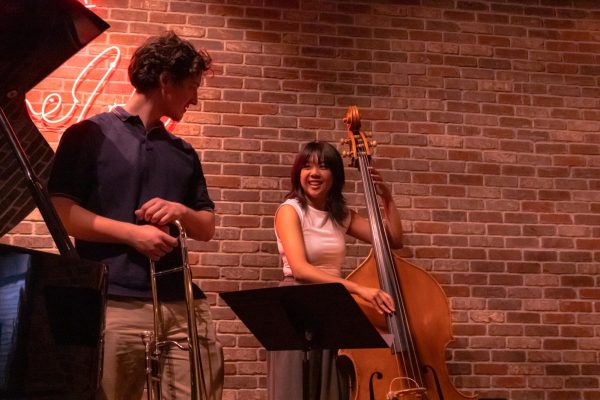
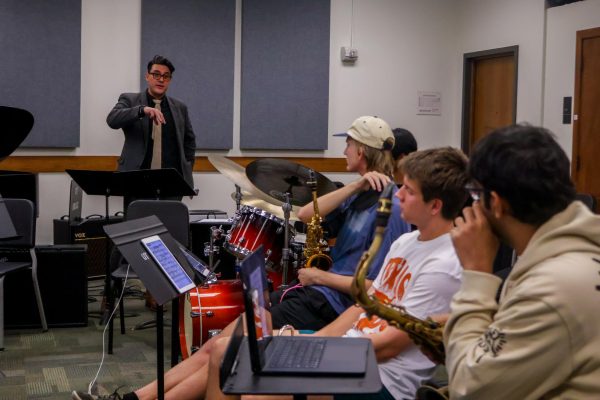
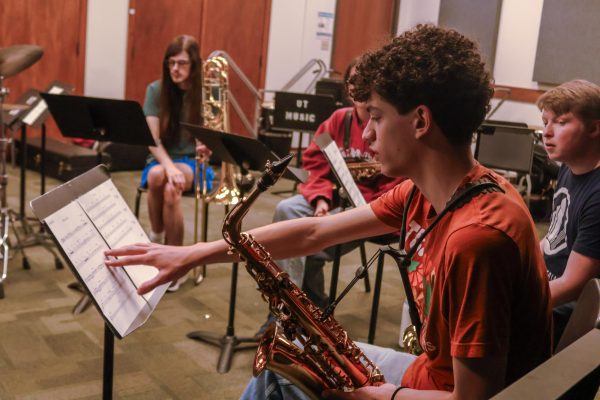
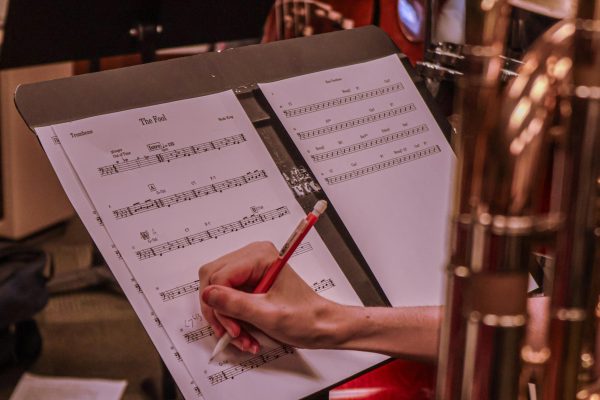
That approach carries into how the music itself is built. Student musicians are encouraged to bring in their own compositions to rehearsals, using the ensemble as a place to experiment. What starts as a melody written alone does not stay that way for long. In rehearsal, the group brings it to life by playing through ideas and offering feedback along the way, while the leading teaching assistants guide the group through arrangements, often pausing between bars to ask what each musician hears or wants to try next.
“From a writing perspective, when you’re alone on your laptop, sometimes you get lost in the sheet music, and it’s a lot easier to write when you’re bouncing off of other people and actually (hearing) people playing the music,” jazz performance sophomore Wade King said.
Rehearsal is only part of the experience. At Mozart’s, a different energy is introduced, one that can’t be brought into a practice room.
“You could shoot a million free throws on the practice court, but there’s nothing like fourth quarter, 10 seconds on the clock,” Avitia said. “You’re at the line … there’s a lot of pressure.”
That pressure plays out in real time. The room fills quickly, with audience members packed inside The Loft and gathered along the patio, some standing along the walls as music carries outside. Some come to listen closely, while others are there for a class assignment, encountering live jazz for the first time.
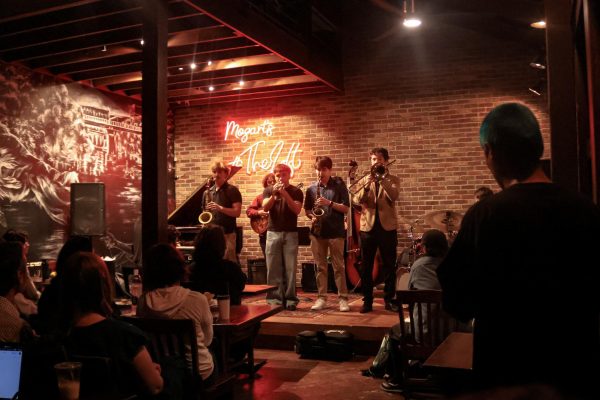
Performing off-campus thrusts the musicians directly into Austin’s live music scene. For Joseph “Joey” Risberg, an electrical and computer engineering senior, this is part of what makes the experience meaningful.
“It’s almost like a nice bridge between the world of jazz clubs, bars and gigging, those kinds of spaces, and in the classroom setting,” Risberg said.

Musicians linger after their sets, staying to watch other combos perform. Applause comes not just from casual listeners or students from UT’s Jazz Appreciation class, but from peers. The Loft becomes less a stage and more a shared space, where students support one another as much as they perform.
“Even when other combos that aren’t performing will come out and watch just to show support — that’s meaningful,” Ryan Townsend, a jazz piano performance sophomore, said.
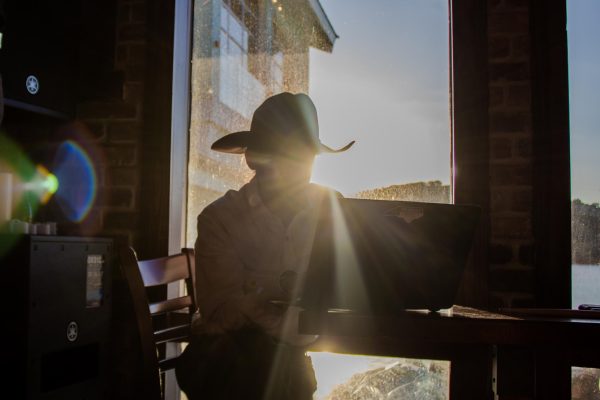
By the end of the night, it’s more than just a performance. It’s a space where musicians collaborate, take risks and grow together while inviting the audience into the process.
I like that it gets more people listening to jazz. It makes me happy,” jazz performance freshman Ben Goodman said.