On Friday night at Bass Concert Hall, the underworld rose from the stage. As part of Texas Performing Arts’ Broadway in Austin series, “Hadestown” invited audiences to descend into a smoky, jazz-infused retelling of the Orpheus and Eurydice myth. Tackling a cult favorite known for its distinctive sound and relatable themes, the production proved that even in the depths of darkness, hope still sings.
Hermes, played by Rudy Foster, seized control of the night with a booming “ALRIGHT!,” echoed back enthusiastically by the audience. Musician Haik Demirchian’s trombone beckoned audiences down the “Road to Hell,” its brassy, industrial timbre carrying viewers along steel tracks straight into the underworld. The chorus hums in call-and-response beneath Hermes, echoing his lines with a jazz-rooted pulse. Riding on that rhythm, he leads with the ease of a storyteller who knows the tragedy coming, yet insists the audience follow him anyway.
In “Wedding Song,” when Orpheus and Eurydice first meet, Jose Contreras and Hawa Kamara establish their compelling chemistry. Contreras leans into Orpheus’ innocence, keeping his tenor light with an angelic feel. Minimal props like the rag he offers as a rose reinforce the character’s poverty. Kamara’s performance grounds the moment vocally; her deeper belt gives weight to Eurydice’s emotional performance.
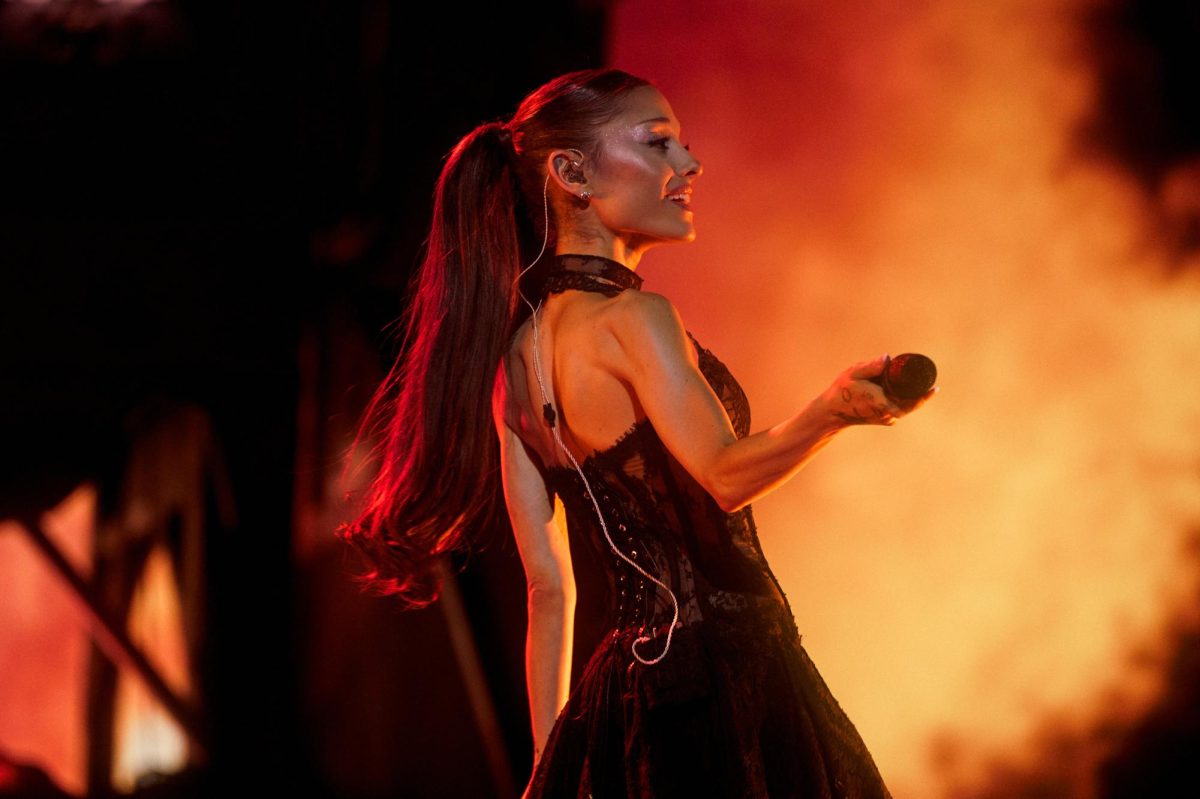
Though the set remains largely fixed, the lighting design carries every shift in the world. Burnt reds and shadowed ambers saturate Hadestown with industrial weight, while cool blue spotlights isolate Orpheus’ hope against the surrounding darkness. In “Wait for Me,” workers swing hanging work lamps, the lights rising and fading as if the underworld itself were breathing, pulling the audience deeper into Orpheus’ descent.
The production’s most deliberate choice lies in its use of breaking the fourth-wall to draw the audience into the moral stakes. When Eurydice accepts Hades’ offer in “Gone, I’m Gone,” the Fates — Gia Keddy, Miriam Navarrete and Jayna Wescoatt — fix their gaze on the auditorium and sing with pointed conviction: “Wouldn’t you have done the same?” Her choice becomes a question the audience must answer for themselves.
Persephone and Hades’ relationship creates a clear push and pull between the plot. Hades, played by Nickolaus Colón, anchors Act I with “Why We Build the Wall,” his deep, raspy voice locking the audience into his rigid world. Persephone’s Act II entrance proved defiant, as Namisa Mdlalose Bizana commands “Our Lady of the Underground” with seductive charisma, loosening Hades’ grip on the room. Her stellar performance offers comedic relief with laughs bursting from the audience.
The final stretch builds through “Epic III,” as Orpheus’ theme briefly reunites both lovers and softens the stage. As they begin their ascent in “Doubt Comes In,” the suspense feels prolonged through a pounding bass that mimics a heartbeat. Darkness closes in as shadows surround Orpheus and Eurydice. The theater holds its breath until Orpheus turns, the heartbeat stops, and a stark white light strips the stage bare. The ending is sealed.
Hermes closes by returning the story to its beginning. But as the audience rose in applause, the night wasn’t quite finished. The cast invited everyone to raise their cups and join in a final farewell: “To Orpheus, and all of us. Goodnight.”
4 chips out of 5