Funding the future: A look into some of UT’s most influential donors
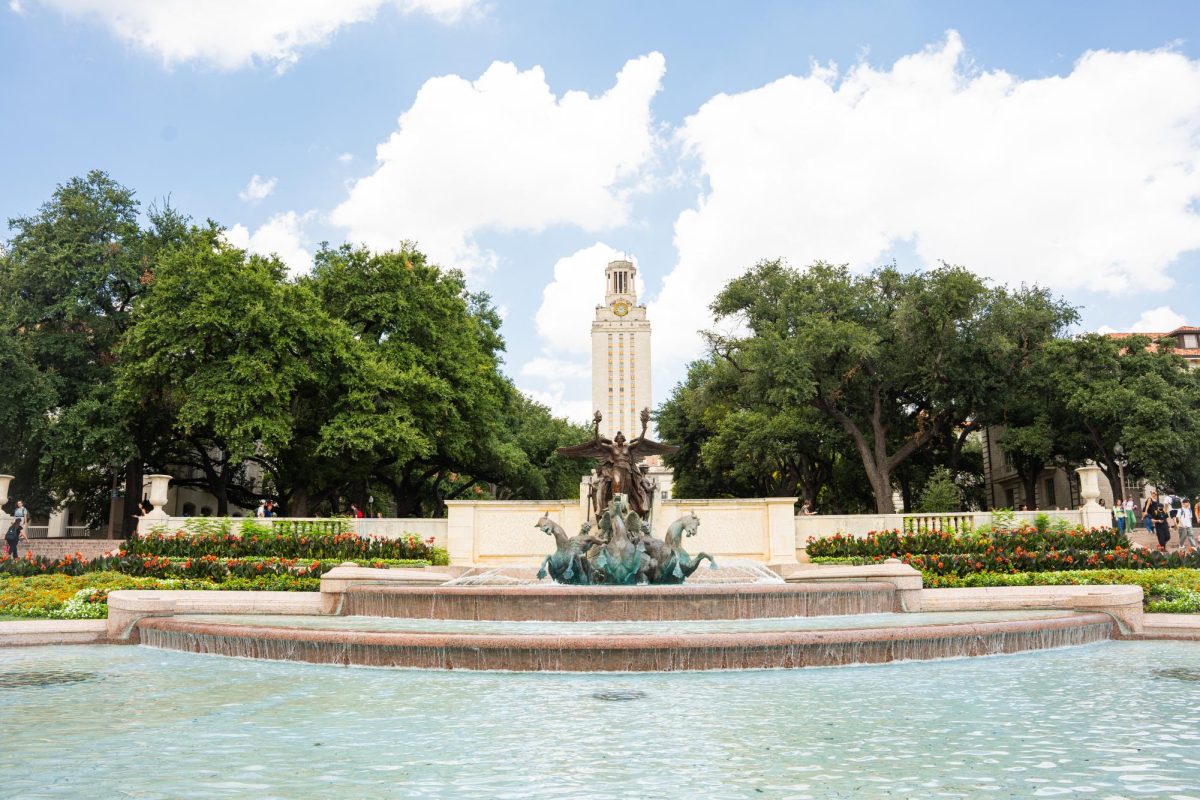
George Littlefield was the first major donor to UT, said Jim Nicar, director of the UT Heritage Society. He served in the Confederate army during the Civil War, and after getting injured and discharged, Littlefield acquired a fortune primarily through leading cattle, ranching and land investments.
After moving to Austin, Littlefield was appointed to the UT System Board of Regents in 1911. Littlefield became concerned that UT would lose its connection to its Southern heritage as it grew and as more students and faculty came from outside the South, Nicar said. To preserve research and writing about the old South, he established the Littlefield Fund for Southern History with a $100,000 donation. He also gave the University a $225,000 check to purchase a book collection, consisting of 6,000 first editions and rare copies of works by various English and American authors, called the Wrenn Library.
“If you wanted to be known internationally as a university, you needed to have a nice, rare book collection for scholars to want to come and do research,” Nicar said. “That’s what put UT on the map and started what, today, is the Harry Ransom Center.”
Littlefield also donated $250,000 for the construction of the Littlefield Gateway, now known as the Littlefield Fountain at the entrance to South Mall. Created as a memorial to UT students lost during the Civil War and World War I, Littlefield also wanted to include obelisks and statues featuring prominent Southern figures like Jefferson Davis and Robert E. Lee as well as former U.S. president Woodrow Wilson.
However, UT faculty, administrators and the sculptor working on the project, Pompeo Coppini, compromised with Littlefield to create the fountain seen today and the statues around the South Mall. The statues have since been removed due to their association with white supremacy and neo-Nazism.
“History is messy,” Nicar said. “People are products of their times. … Littlefield (was a) big donor, who (you) wouldn’t have always agreed with, but he did support the University.”
Littlefield left $500,000 to UT for the creation of a new main building and $300,000 for the Alice Littlefield Residence Hall. He also gave his own home, the Littlefield House, to the University right before he died in 1920.
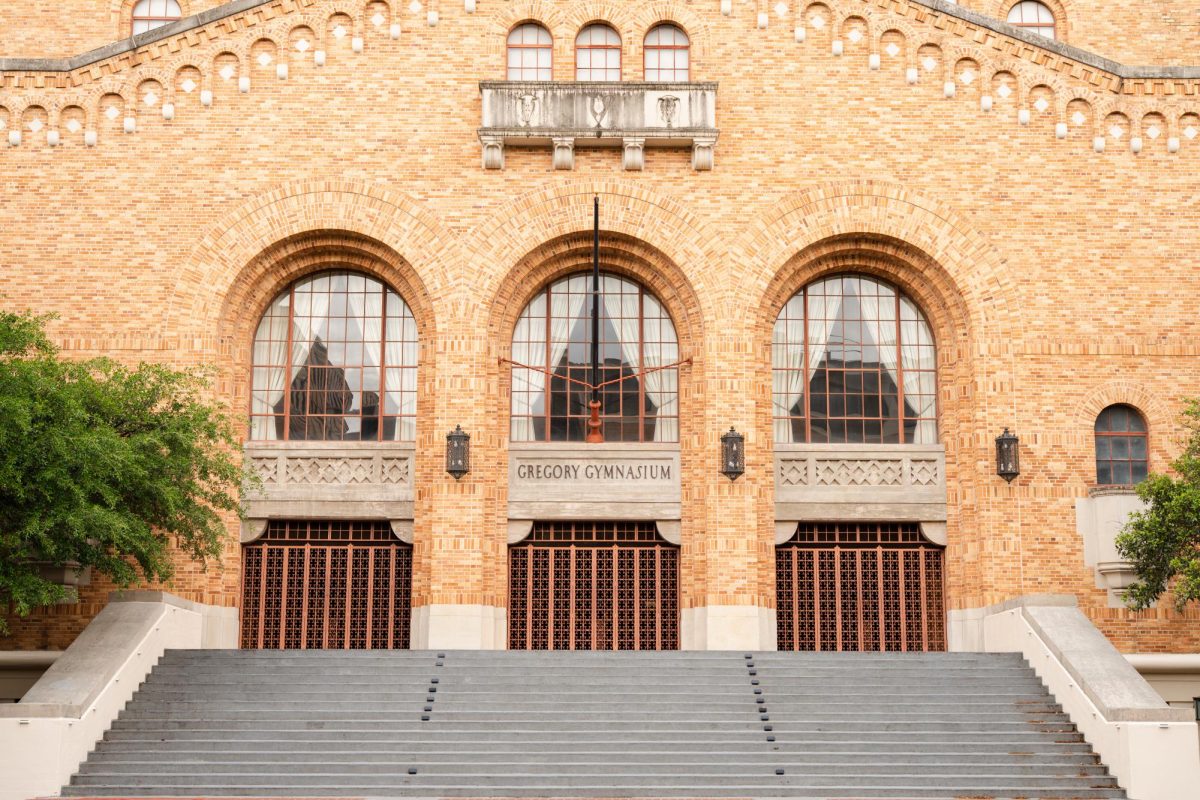
Thomas Gregory was a UT graduate and attorney general under President Woodrow Wilson. Despite spending only one year as a student at the University, he devoted a significant portion of his life to its improvement.
He became the first UT graduate to be appointed to the UT System Board of Regents, and in 1907, he began advocating for UT to create a men’s gymnasium, Nicar said. While not a significant donor, he used his influence to lead the fundraising for the men’s gym, named after himself, and three other buildings: Anna Hiss Gymnasium, Hogg Auditorium and the Texas Union.
“He’d be like the one-man development office or fundraising office,” Nicar said. “He would be the guy … who was your main fundraiser, the one that would advocate and organize.”
Gregory led the campaign through the Great Depression. While multiple small donors were unable to keep their pledges, Gregory and enough UT alumni continued their donations, and all four buildings were completed by 1933.
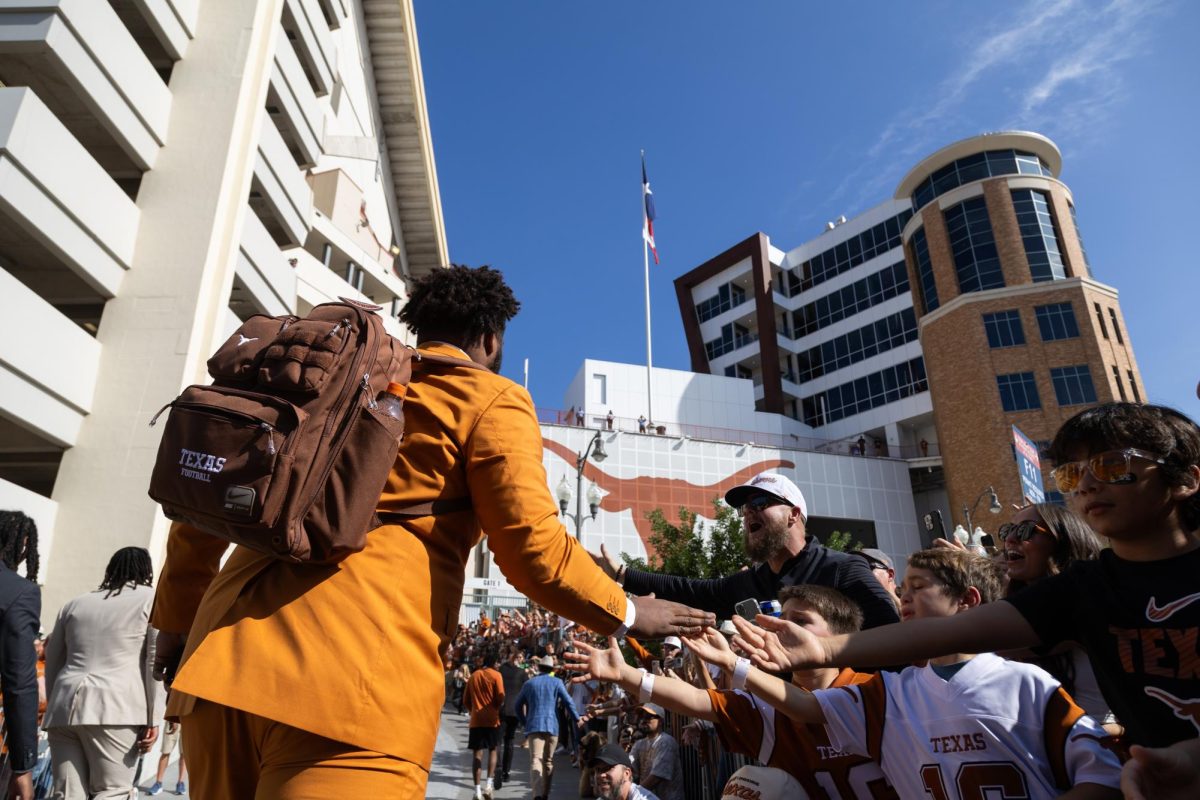
Lutcher Stark was a UT alumnus and a successful businessman. During his time at the University, he was the first student to own an automobile, and he managed the football team, Nicar said. However, his support of the University didn’t end when he graduated.
“(Stark) was the University’s first super booster as far as athletics is concerned,” Nicar said. “He was the first one to really give a lot of money toward athletics. He was like a Matthew McConaughey of sorts, in that he got to the point where he could sit on the sidelines for a while.”
He was appointed to the UT System Board of Regents in 1919, and he spearheaded the fundraiser for the Texas Memorial Stadium. He even pledged 10% of what students, faculty and staff donated, amounting to $16,600.
In 2009, the University opened the H.J. Lutcher Stark Center for Physical Culture and Sports, named in honor of his service and contributions.

In the 1940s, Texas-born billionaire Red McCombs attended UT’s business and law schools, but he left before graduating to pursue his business career.
“The impact of the (University) was still so big and important to him that UT, across many areas, was still a central focus of his time, effort and his philanthropic dollars,” said McCombs’ grandson, Joseph Shields.
McCombs would go on to make a name for himself in several areas, including automotive, communications and sports industries. Despite McCombs’ success, he never lost his love for helping people, Shields said.
“He wanted to help someone who is in immediate need,” Shields said. “But he also liked to make those more transformational gifts, the gifts that would change the course of the direction of a nonprofit or an institution, that would then impact thousands thereafter.”
McCombs gave many of these gifts to various organizations and academic institutions like Texas A&M, Texas Tech and Baylor universities, though some of his more notable donations went to UT, Shields said.
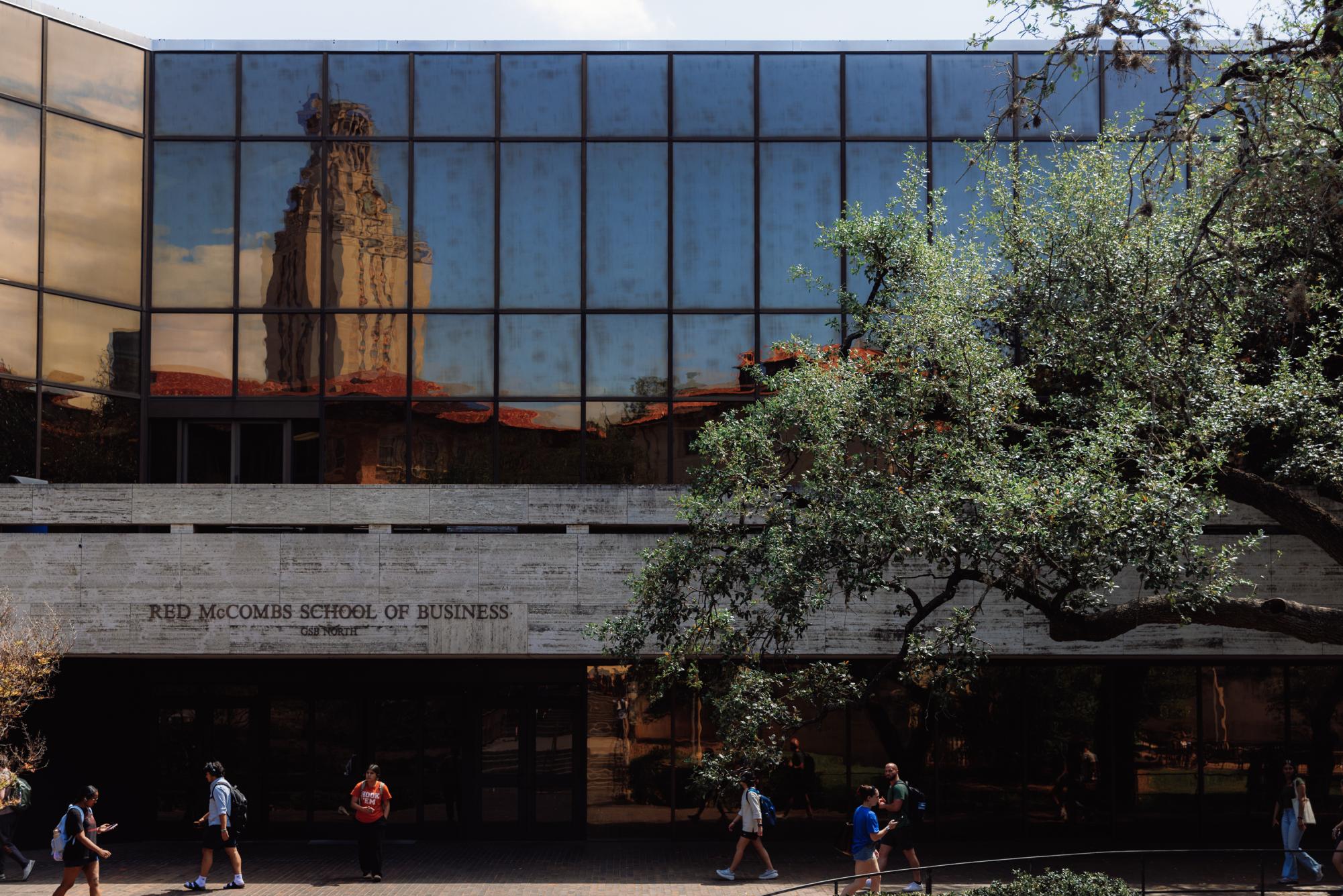
In 1997, he donated $3 million to finance a softball stadium for women’s athletics, the largest donation to a women’s athletics program in the U.S. at the time, and in 2000, he gave an unrestricted gift of $50 million to UT’s business school. This was the largest single gift made to the University at the time, and McCombs became the first non-campus leader to have an entire school named after him — the McCombs School of Business.
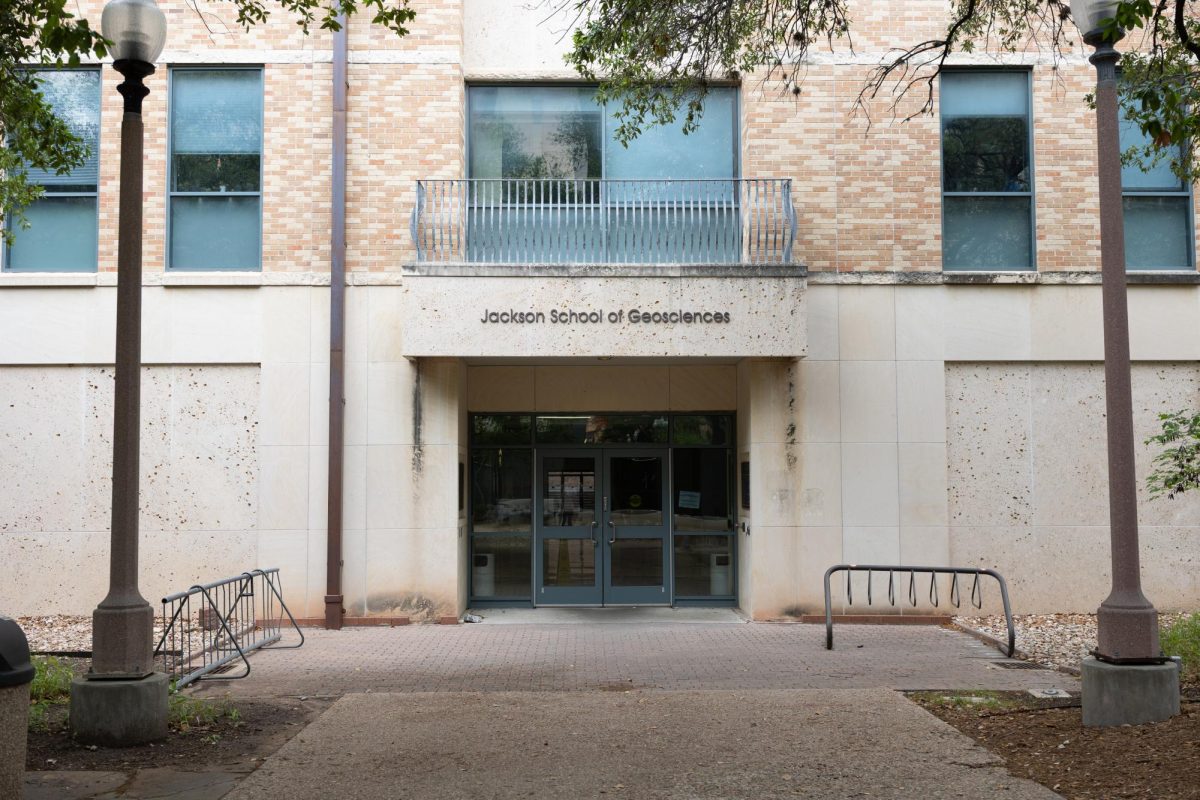
A 1940 graduate of the UT School of Geosciences, John Jackson worked as a geological consultant for oil companies. He discovered the Boonsville field in Texas, one of the largest natural gas fields in the nation. He started his own oil exploration and management business and invested in real estate, building his fortune. He used this money to support a number of organizations, including UT.
In 2000, Jackson gave $15 million to the School of Geosciences. A year later, he gave an additional $25 million to establish the John A. and Katherine G. Jackson School of Geosciences in honor of his late wife.
“He wanted (the Jackson School of Geosciences) to become one of the top departments and schools of geology in the world, and certainly within the U.S., which it has become,” said William Fisher, former dean of the school.
After he died in 2002, Jackson left his estate, worth $232 million, to the school. To this day, it remains the largest single donation to the University, cementing his legacy at UT and in geological education.
Editor’s Note: This segment has been updated to accurately reflect Fisher’s title. The Texan regrets this error.
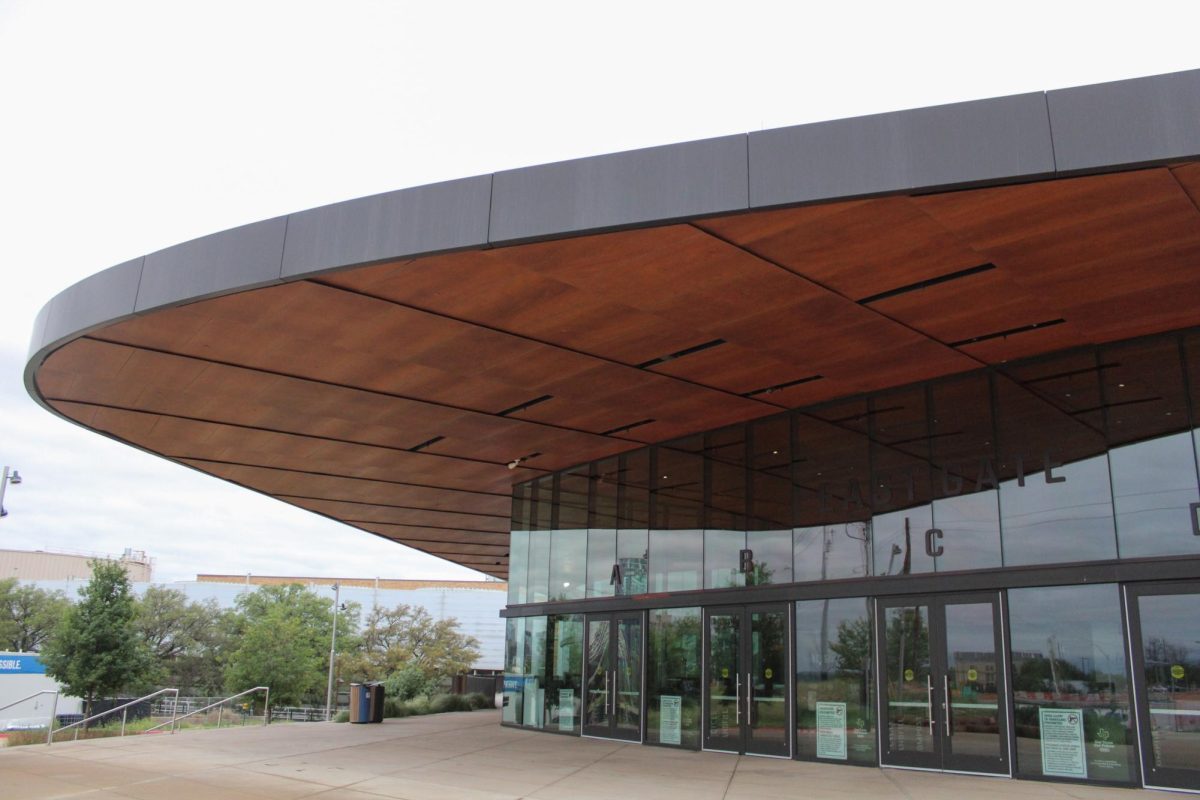
Established in 1942, the Moody Foundation is a family-operated philanthropic organization that contributes $2.6 billion to various causes, including higher education.
“We support higher education because it is one of the most powerful drivers of long-term opportunity and economic mobility,” wrote Ross Moody, a trustee of the foundation, in a statement to the Texan. “At scale, strong public universities can shape entire communities, industries and regions.”
In 2013, the foundation gave a $50 million endowment to what was UT’s College of Communication, renaming it the Moody College of Communication. In 2019, the foundation donated $20 million to renovate the Blanton Museum of Art and donated $130 million for the creation of a basketball arena and event center, which was named the Moody Center. The gift remains the largest donation to the University from a foundation.
“More than anything, I hope the gifts we’ve made continue to benefit generations of Texans long after we’re gone,” Moody wrote. “That’s ultimately what philanthropy is about, creating something that endures.”