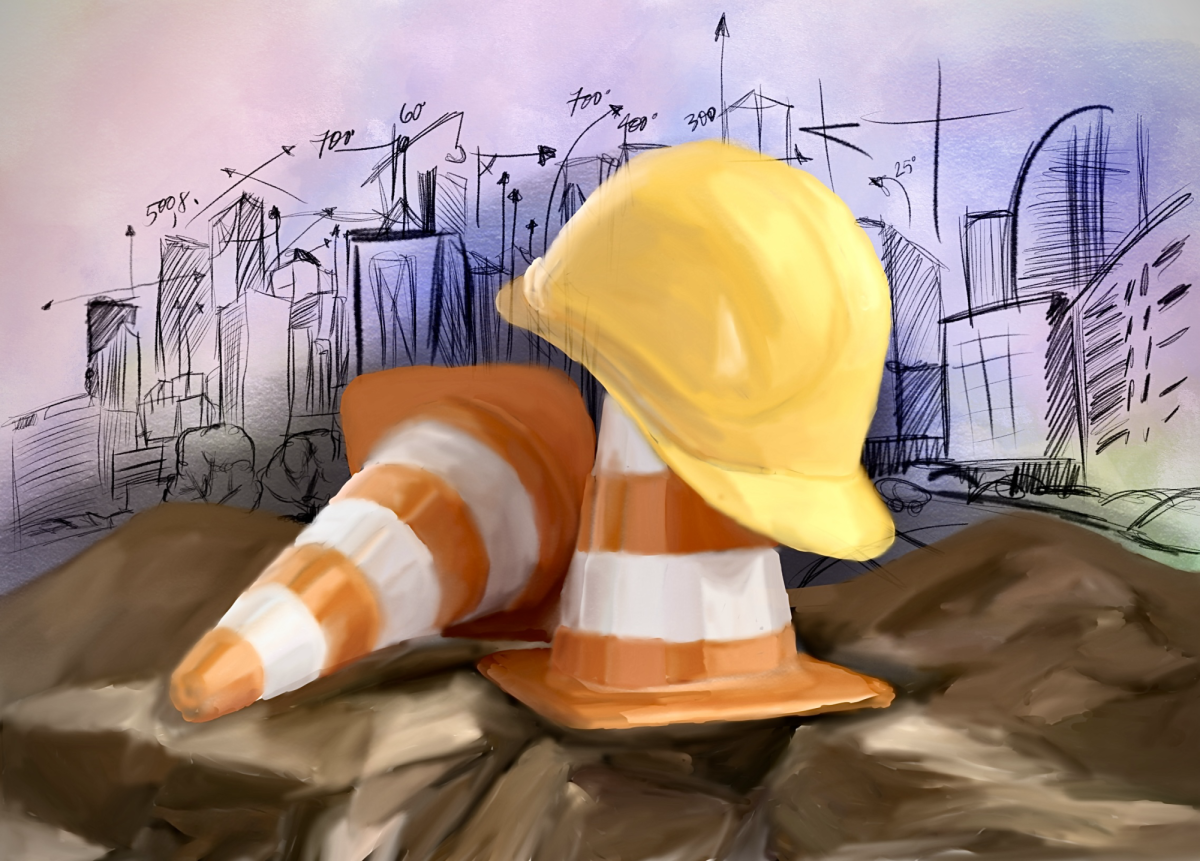
Every Tuesday and Thursday afternoon, I take the same route to my history class: past the Tower, up University Avenue and straight to Burdine Hall. At least, that used to be the plan. A few weeks ago, I rounded the corner, only to be met with towering barriers of metal and construction signs. Forced to take a longer detour, I power-walked across campus, dodging busybodies and cars, and barely slid into my seat before class started.
As I caught my breath, though, I realized the construction was more than an inconvenience. It was part of a larger effort to preserve and revitalize the campus. From restored landmarks to enhanced infrastructure, these projects pave the way for a more accessible and progressive University.
While the temporary inconveniences are undeniable, these construction projects are investments in UT’s future — ones that will ultimately make our campus a better place for students.
“As an architect, the quality of a space, … certain care and stewardship of a legacy come into play,” said Brent Stringfellow, associate vice president for campus operations and University architect. “When you come to the University of Texas, you’re building on a common legacy and history. … (Buildings) can’t just be functional. The architecture needs to be as aspirational as the work we’re doing here.”
Beyond new buildings, these construction projects aim to improve UT’s accessibility, including implementing more elevators, ramps, pathways and accessible restrooms. For instance, UT Campus Operations utilizes robots to map hazards along UT’s 40 miles of sidewalk for future renovations while following stringent guidelines around sustainability and resiliency.
UT has an ongoing Replacement Renewal Program, which allocates funds toward keeping buildings in repair, like patching leaky roofs, installing air conditioning and fixing doors.
“A big piece of that also goes toward an annual fund to help with accessibility improvements,” Stringfellow said. “Within buildings, that can be changing restrooms (and) providing access ramps.”
Campus Operations also prioritizes preserving the University’s architectural integrity. Projects like the UT Tower or Battle Hall restoration demonstrate a commitment to honoring the campus’s rich history, ensuring future generations of students can experience the same iconic spaces while benefiting from modern improvements.
This balance between preservation and progress reflects UT’s dedication to maintaining a timeless and innovative campus. Architecture freshman Lori Liu draws from her experience studying under professor Larry Speck, who’s helped design parts of Austin.
“(UT’s architecture team) wants to preserve the limestone usage, brick style and campus cohesiveness,” Liu said. “I like coming onto a campus and understanding that all the buildings are a part of this campus. It helps create an identity for the school.”
Most students’ main grievance with campus construction stems from its disruption of daily routines, especially during busy times of the semester. Thus, contractors work around certain “blackout days,” critical junctures in the year such as finals and move-in times, where they balance aggressive work versus the day-to-day needs of the University.
“Even I laugh (catching) myself complaining, and then realize it’s my own fault,” Stringfellow said. “There’s a certain (cost) when you’re undertaking all these ambitious projects in the constraints of being in a city like Austin (that) you have to work around. We try to plan with the parking team (and) partners on campus to (ensure) we’re being as least disruptive as possible, but sometimes, there is no avoiding it.”
As inconvenient as it may feel to navigate around construction zones, these projects are part of a broader effort to enhance the University’s legacy, accessibility and infrastructure. While the disruptions are temporary, the improvements they bring will last for generations of students to come.
Next time you detour around a construction site, remember that these projects are more than just a hassle. They’re an investment in the University’s future.
Lam is a computer science freshman from Mansfield, Texas.