Editor’s Note: This article was published for the first time on November 6 , 2025 by Rebeca Torres Jara, and was translated to Spanish by Valery Martinez Rodriguez on November 6th, 2025.
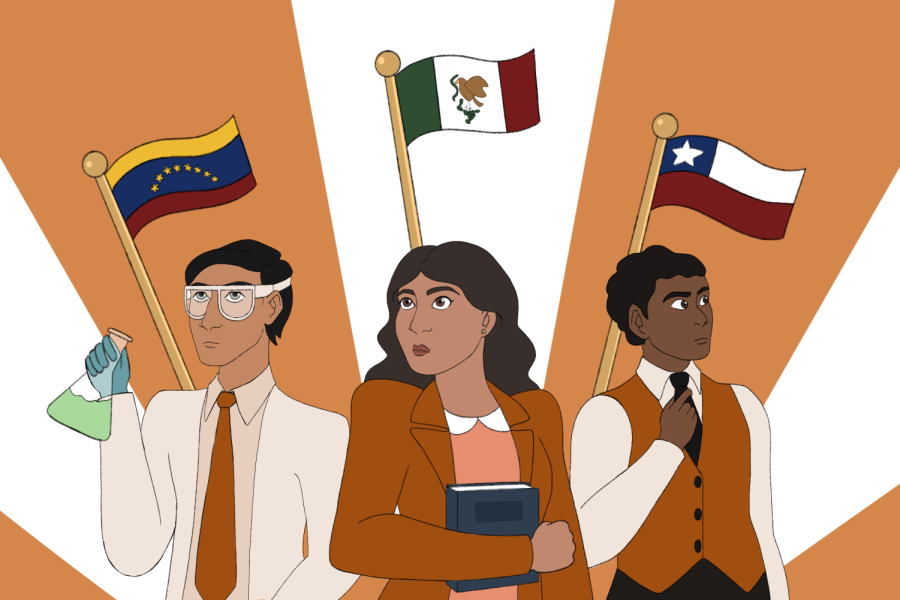
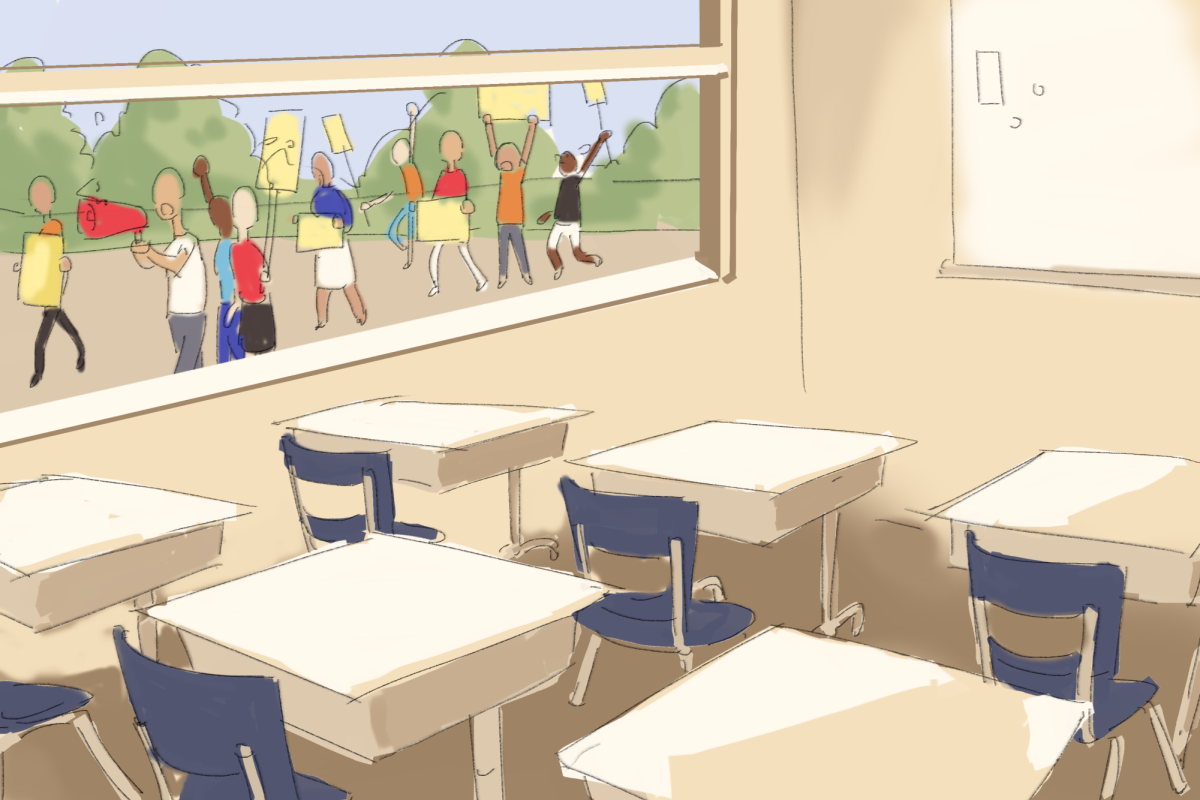
2025 has been a year of political tension for many. The second term of the Trump administration, the intervention of ICE, and the murder of conservative activist Charlie Kirk, are some of the events that have raised the tension within the population. Faced with this pressure, the Latino community has not passed on the moment to raise their voice and make their presence known in protests such as the No Kings Protest on October 18th, and the March Against the Trump Compact on the 20th of October.
Citlaly Perez, a first year government student, participated in the latest, to denounce what she perceived as an attack on higher education given the proposal that the Trump administration sent to UT and eight other universities. This contract aims to give financial priority to these institutions in exchange for them to protect conservative values, limit the enrollment of international students, and to not consider race, sex, or ethnicity in the admissions process, among other requirements.
“I firmly believe that the presence (of the protesters) goes far. Just by participating in this protest, whether you have a sign or not. Whether you’re accompanied or aloneI think it means a lot to simply be here because you are showing this administration and the government in general—simply to the world— that you are valuable,” said Perez.
Salvador Espinoza, board member of “Hands Off Central Texas” explained the importance of maintaining activism alive as political polarization increases in the country.
“The people might be tired. They marched, screamed, and even still nothing changed in the end. But that is simply reality because nothing changes easily. People get together and organize. That reality is only a spark. The real fire begins when…you join an organization and keep showing up,” said Espinoza.
As one of the main organizers of “No Kings,” Espinoza acknowledged the fear that exists within the Latino community when it comes to protesting.
“When it comes to a basic question like, ‘What do you do when you face fear? What do you do when you face these feelings?’ (The answer) Is to stand up for yourself, even if it’s just to say, ‘I shouldn’t be afraid.’ It can be enough to say, ‘Life doesn’t have to be this way; people like me shouldn’t have to go through this,’” Espinoza said.
Immigration lawyer Kate Lincoln-Goldfinch, who has interacted closely with the Latino community through her foundation “El Bus Sin Fronteras” (The Bus without Borders) and that also assisted No Kings, reflected about the importance of voting as the most effective way to raise your voice: “For anyone, especially latino citizens, the number one way to make your voice be heard in this country is exercising your right to vote. Let’s start there.”
For many first generation latinos that were present in No Kings like Alondra Solis, raising their voice is a symbol of freedom for the next generation.
Beyond expressing their frustration for the current political polarization, it is in the interest of many latinos like Solis to use their freedom of expression as a tool for a better future.
“You shouldn’t be afraid of raising your voice. You shouldn’t be afraid of sharing your opinion. You know, you should always be your authentic self.” said Solis, and added: “Let’s work towards a better tomorrow. It can be hard at times, but it will always be worth it to raise your voice and be there for your people.”