Editor’s Note: This article was published for the first time in Spanish on march 9th by Mia Sifuentes, and was translated to English by Lily Bonilla.
Every 10 years, the United States government collects information about the general population. They do this with a document called The Census, a form that asks about the number of people living in a house, their ages, and their race.
With this information, the government forms an idea of where they should allocate their funds; schools, public transportation, and hospitals can greatly benefit from these. But if we explore the history of the census, we realize that Latinos have not always been represented correctly.
The first Census took place in 1790, but Latinos (as they are known to be pan-ethnic) were not included until the year 1930 with a single category, “Mexican.” Then, we see that the “Mexican” category completely disappears; it wasn’t until the year 1970 that we see the “Hispanic” category integrated in the census.
However, “Hispanic” is found on the census as an ethnicity option, separate from the race options that scholars have debated as a social construct. This is a highly discussed topic, especially with the 2030 census. For the next census, they will fuse the race and ethnicity options into a single question. On one side, the combination of these two questions could simplify the data collected, but there are also concerns about the possibility that this combination could erase the diversity of the Hispanic/Latino community.
Lila Valencia, the demographer for the city of Austin, explains that the two-question system could cause confusion in the Latino community when they get to the question about their race. “They are more likely to describe themselves as ‘other’ if there’s two separate questions,” said Valencia. “Having the two questions separate has caused confusion for a lot of people…” Valencia continued explaining that, “So this, sort of, combined of the ethnicity and race questions can simplify the data somewhat.”
And the data does not lie, according to a survey conducted in 2022 by the Census Bureau, 22.5 million Hispanics of a single race identified themselves as “some other race.” The changes to the 2030 census can reduce the number of Hispanics who respond with “some other race.” However, there are concerns that this decision could undo the diversity of groups within the Latino community, such as the Afro-Latinos.
Angie Gutierrez, political scientist and professor in the Department of Mexican American and Latino Studies, explains that the integration of these two questions can cause groups like Afro-Latinos to identify with only one racial group. “We run the risk that people are not going to choose those other groups because they’ll only choose the Latino experience.”
Similarly, Dr. Wanda Hernandez, professor in the Department of Mexican American and Latino Studies, shared her thoughts on where the Hispanic category should be. “For me, it would definitely go under an ethnic dropbox,” expressed Hernandez. “I think ‘Latino’ particularly takes meaning in diaspora,” Hernandez continued, explaining that, “we are forced to reckon with the similarities and dissimilarities across different groups that are encompassed under this term, ‘Latino’.”
At the end of the day, the Hispanic/Latino category in the census winds up being important when assigning funds for the community, and we see it right here in Austin. District 4 Councilman and Mayor pro tempore José “Chito” Vela explains the need for the data collected in the census.
“Latinos used to be very concentrated in just a couple of neighborhoods in Austin,” said Vela. “But now, when you look at it, they have moved,” affirmed Vela. “The Census helps us track those changes, respond to them, and better serve our community.”
We see the importance of the Hispanic/Latino category in projects like the Hispanic Impact Fund. With data from the Census, the Hispanic Impact Fund decides where to invest money, helping support Latino families.
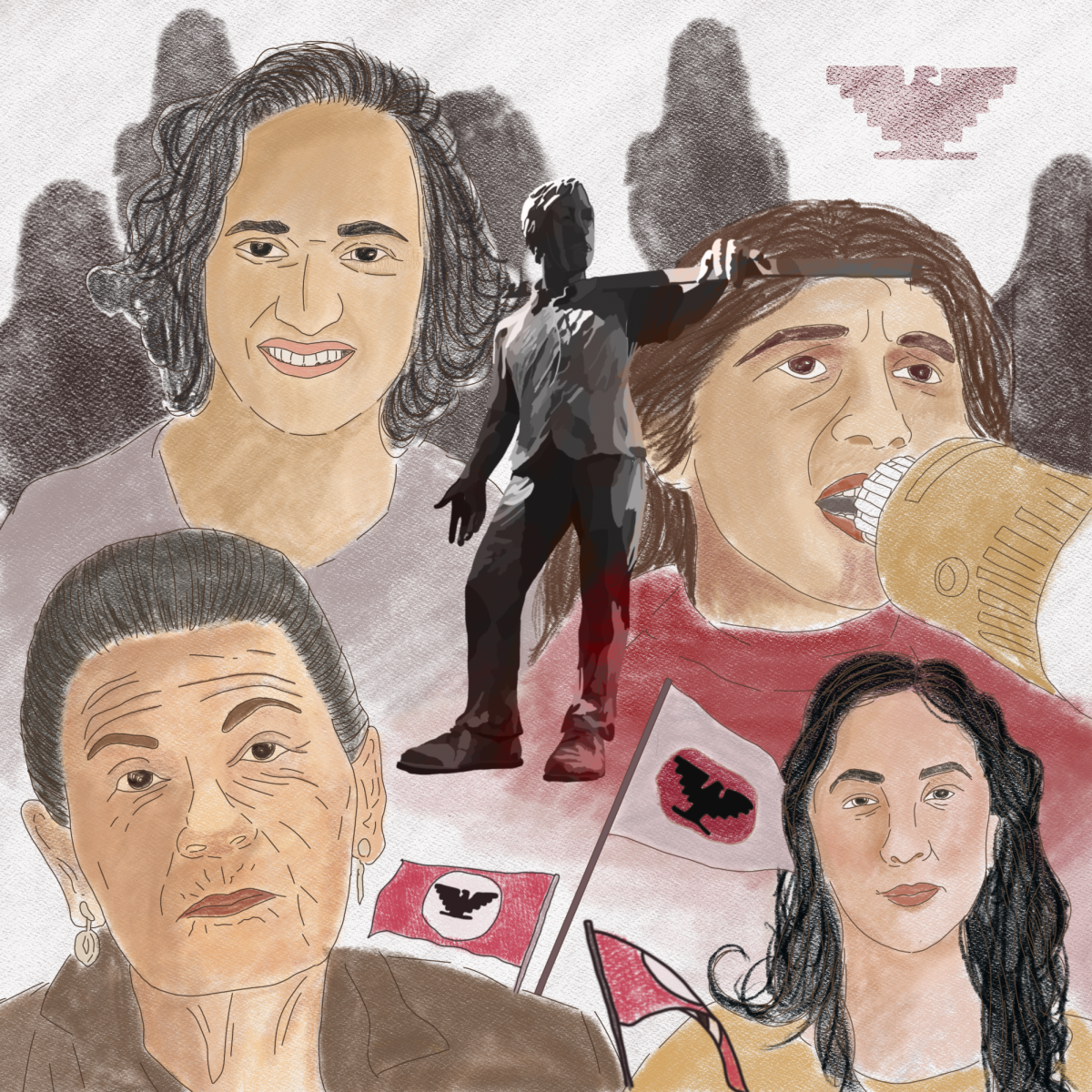
The inclusion of the term Hispanic/Latino in the census is the result of several years of activism from the community that identifies this way. Gutierrez explains that there was a push for better representation for Latinos during the civil rights movement in the 60s.
Today, the conversation revolves around the positioning of terms, and whatever the decision is come the 2030 census, Lila reminds us that “it’s important to have the research that lets you know how best to collect good quality data about people, but also offer an opportunity for people to continue to self-describe how they see their ethnicity and race.”