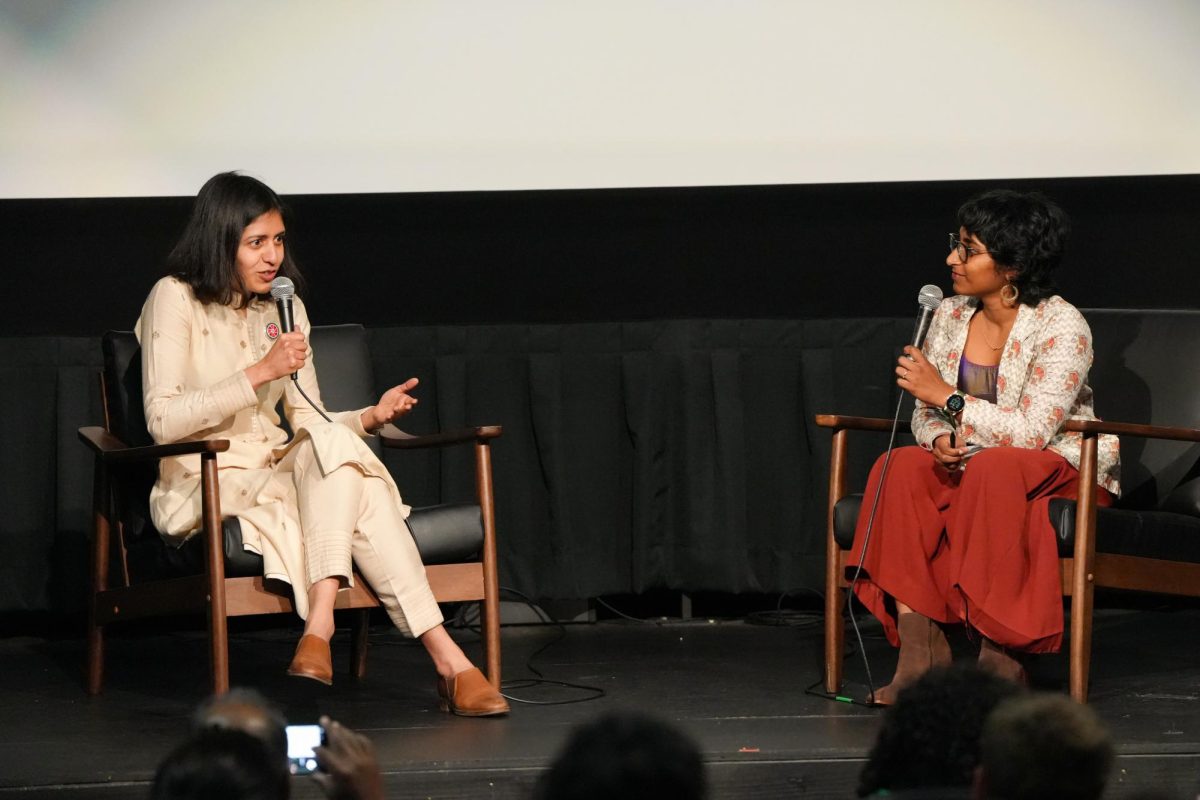
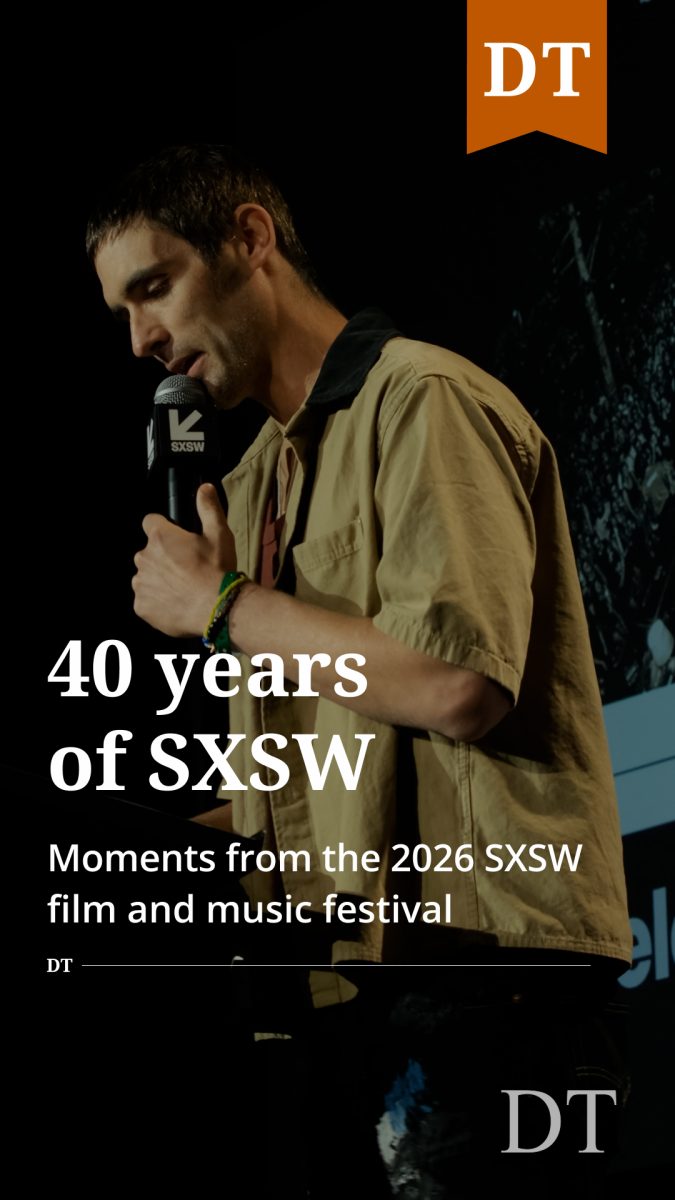
“We actually finished the movie on Friday,” writer and director Graham Parkes told a packed house at Zach Theater Thursday night. “(You) are truly … some of the first humans to ever see it.”
Parkes’ first feature film, “Wishful Thinking,” premiered at SXSW on March 12 as part of the festival’s Narrative Feature Competition. The film follows Julia and Charlie, played by Maya Hawke (“Stranger Things”) and Lewis Pullman (“Top Gun: Maverick”), as they navigate their tumultuous relationship and career aspirations. After visiting two love gurus in an attempt to save their relationship, the couple discovers that their emotions dictate the world around them, incorporating supernatural elements into their emotional lives. Parkes’ earnest, relatable writing paired with raw performances by the leading actors made for an unforgettable debut feature.
The film opens with music, a black screen switching to reveal the inside of Julia and Charlie’s Portland apartment. A montage of fights, make-ups and everything in between instantly pulls the audience into the couple’s complicated dynamic. Hawke plays a headstrong video game designer, focused on her career despite a toxic work environment. Her character allows audiences to enjoy Hawke’s incredible range, depicting scenes from sorrow to joy in a matter of minutes.
The love gurus, identical twins played by Kate Berlant, provide comedic relief through their absurdity, preaching about the powers of manifestation on their shared social media account. After meeting the twins, Charlie and Julia realize their relationship shapes the world around them, with fights leading to earthquakes, wilted house plants and the crypto market’s crash. At the couple’s best, their love contains the power to bring work successes and even fix their apartment’s hot water.
While the supernatural elements of the film foster funny moments, such as Julia’s decision to use their influence to get rich on crypto stock, Parkes’ writing emphasizes a deeper message about navigating external goals while being in love. Balancing the external world, such as Julia’s career ambitions, with internal feelings of love towards Charlie proves to be the biggest problem in their relationship. Instead of having the outside world dictate their relationship, Parkes smartly arranges the opposite through the couple’s powers, allowing for interesting commentary on the difficulties of being your own person while also being the ideal partner.
Parkes’ whimsical choices feel steeped in reality, with gut-wrenching lines of dialogue following ridiculous outward effects. A fight on a romantic weekend getaway creates a coastal storm. Charlie attempts to propose to Julia, who feels as though they both don’t know who they are yet, to which Charlie responds, “I know who I am, I’m the guy that loves you.”
The writing of the film, particularly the dialogue between Charlie and Julia in their many fights, illustrates that love is not enough to make a relationship work. The title, “Wishful Thinking,” takes on a melancholic meaning, as the couple wishes to make the relationship work despite all their differences.
Parkes succeeds in balancing emotional depth with humor. The often devastating nature of the relationship does not prevent Parkes from creating a witty, and often laugh-out-loud film. Crazy characters from Julia’s douchey boss to Charlie’s stoner-turned-alt-right band mate allow ridiculous moments to cut the thick, romantic tension. A hilarious Jon Hamm cameo makes for the comedic peak of the film, proving that Parkes fully commands his craft, from humor to sadness. As a debut film, “Wishful Thinking” cements Parkes as a filmmaker to watch.
4.5 Jon Hamms out of 5