This article was originally written by Julia Frías-Aguilar and Nathalia Cardiel on February 5, 2026, and translated into English by Priscilla Durling.
Amidst speeches filled with political messages and historic moments for Latin music, the 68th Grammy Awards ceremony of “The Recording Academy,” held this past Sunday, February 1st, marked a cultural shift in mainstream music. This event brings together some of the most influential artists in the music industry to recognize their achievements and, in this case, to shed light on the country’s immigration situation.
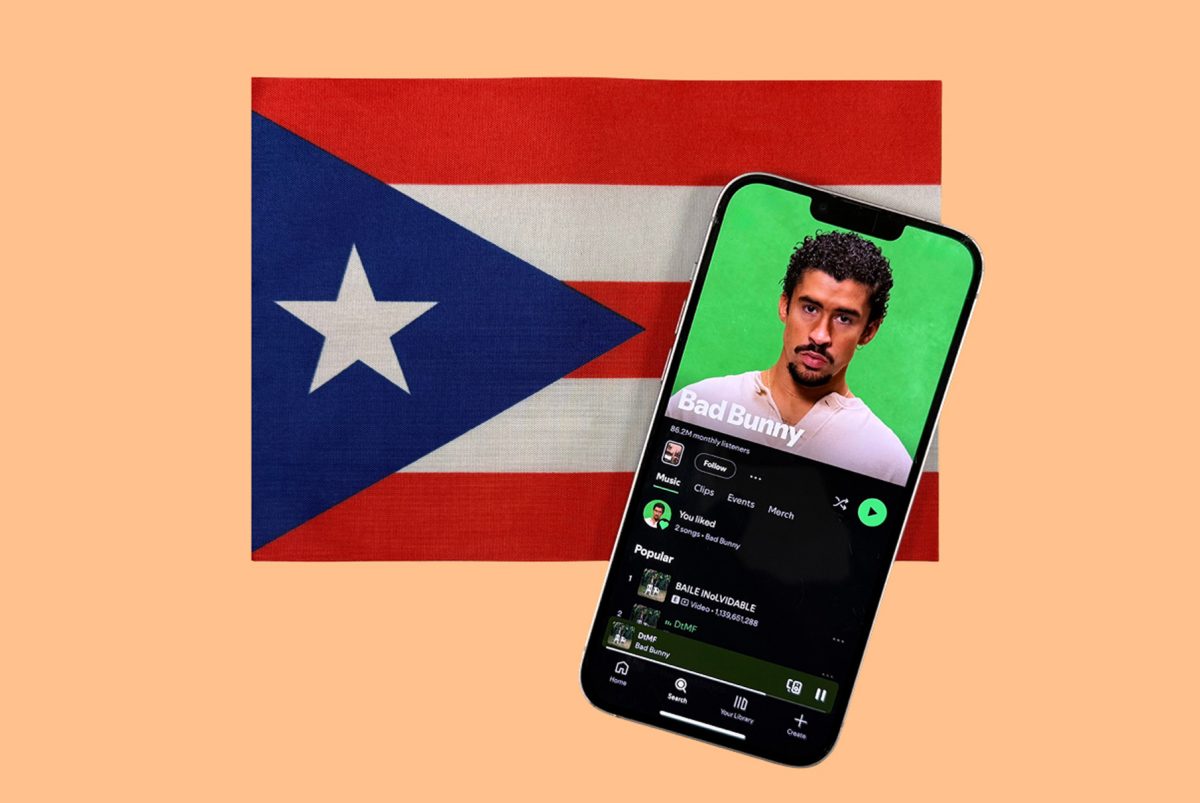
The most important award of the night, Album of the Year, was presented to Puerto Rican artist Benito Martínez, better known by his stage name Bad Bunny. The lead single, “DtMF,” had more than 1.362 billion streams as of February 5th, according to Spotify’s official website.
“DtMF” is the first album written entirely in Spanish to receive the award in this category. In an interview conducted by the Texan en Español with Associate Professor James Gabrillo, an expert in musicology and ethnomusicology at UT’s Butler School of Music, he explained that the industry has caught up with new musical trends, and that for the first time in the history of U.S. popular music, “Spanish is being used by default.”
Bad Bunny received three Grammys. His acceptance speeches focused on the Latino community, the migrant population, and the current political context faced by these minority groups in the United States.
Upon receiving the award for Best Urban Music Album, the artist addressed the U.S. Immigration and Customs Enforcement (ICE) directly during his speech. “Before thanking God, I’m going to say: ICE out,” he began. “We are not savages, we are not animals, we are not ‘aliens,’ we are human beings, and we are Americans.”
Later, upon winning Album of the Year, he dedicated his award to Puerto Rico and delivered the first half of his acceptance speech in Spanish, which caused a strong reaction from the audience. “I dedicate this award to all the people who had to leave their homes, their land, their country to pursue their dreams,” he said, “this award is for you all.”
Although political speeches at award ceremonies are nothing new, the current context has intensified their impact, as social media enables these types of events to be shared widely. Bad Bunny wasn’t the only artist to become a political symbol of resistance against ICE; artists like Justin and Hailey Bieber wore “ICE Out” pins, which have become increasingly popular on social media this week.
“Pop music is commercial, of course, but commercial doesn’t automatically mean apolitical,” Professor Gabrillo explained, adding that “the mainstream doesn’t feel politically neutral right now.” According to Gabrillo, for the Hispanic community, this new visibility and sense of validation from the general public can function as “a kind of flare…especially for fans who feel alone and suddenly see their reality acknowledged on the biggest stage.”
When artists use symbols and events at award ceremonies to bring attention to political protests, “people who didn’t come [to the Grammys] for the politics end up talking about ICE on Monday morning,” Gabrillo said.